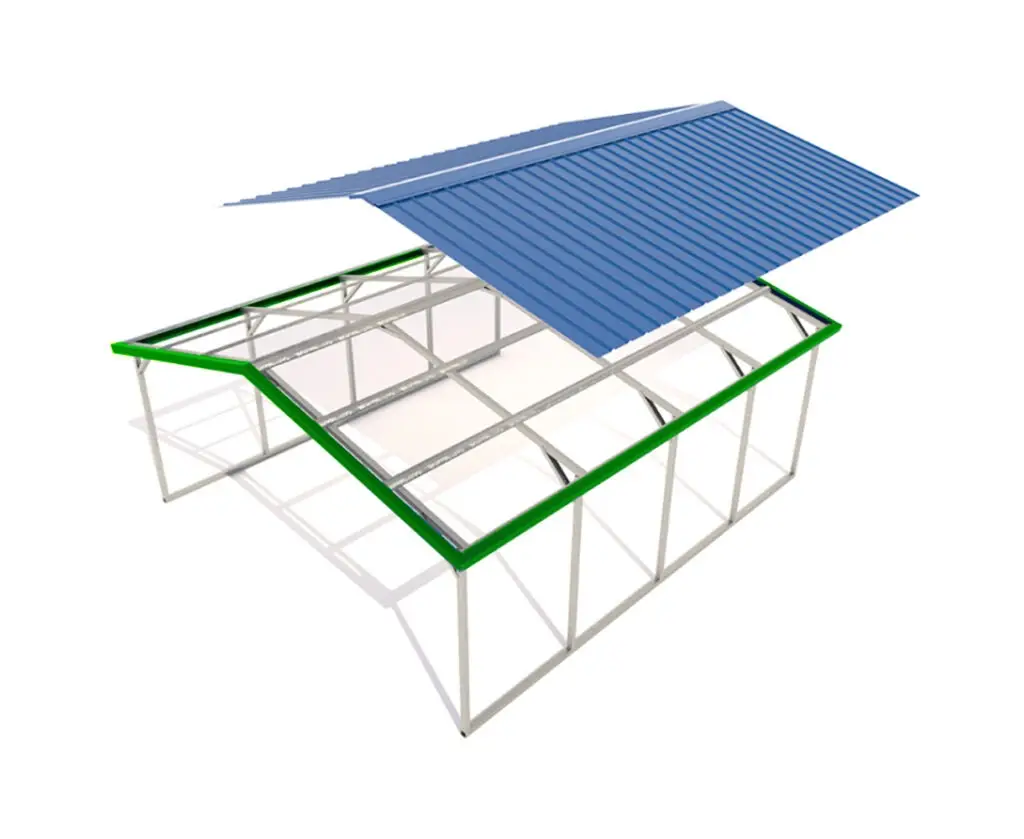


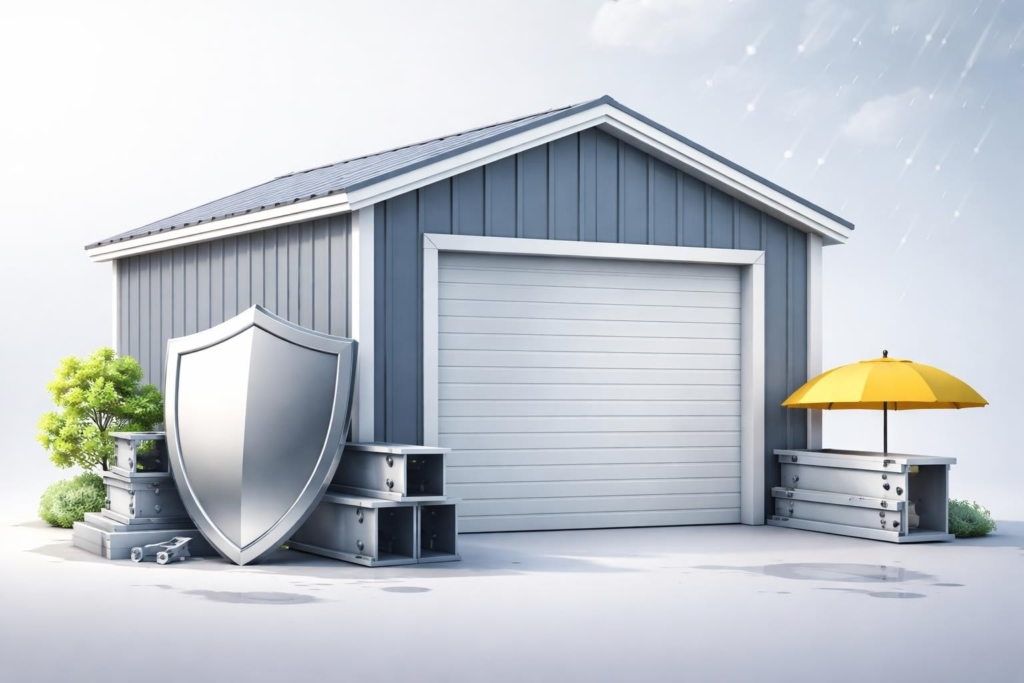
An all metal garage represents one of the most practical and durable investments property owners can make in 2026. Whether you're protecting vehicles, storing equipment, or creating a workshop space, steel construction offers unmatched longevity and versatility. Unlike traditional wood or masonry structures, metal garages resist rot, pest damage, and weather-related deterioration while requiring minimal maintenance over decades of use. The combination of affordability, quick installation, and customization options makes these structures increasingly popular across residential and commercial applications.
Why Choose an All Metal Garage Over Traditional Construction
The decision between an all metal garage and conventional building materials often comes down to long-term value and performance. Steel structures deliver consistent quality that wood and other materials simply cannot match in challenging conditions.
Durability stands as the primary advantage. An all metal garage withstands harsh weather conditions including heavy snow loads, high winds, and intense precipitation without warping, cracking, or deteriorating. The galvanized steel panels resist rust and corrosion for 20 to 30 years when properly maintained, significantly outlasting wood structures that require regular painting and repairs.
Cost-Effectiveness and Installation Speed
Traditional garage construction involves extensive labor, multiple material deliveries, and unpredictable weather delays. Metal buildings streamline this process dramatically:
- Reduced labor costs through prefabricated components that fit together precisely
- Faster installation timelines averaging 1-3 days versus weeks for conventional construction
- Lower foundation requirements due to lighter structural weight
- Minimal waste generation with factory-cut components
The design and construction process for metal structures has evolved significantly, allowing manufacturers to deliver complete packages with all necessary components included.
Environmental and Maintenance Benefits
An all metal garage delivers environmental advantages that resonate with eco-conscious property owners. Steel ranks among the most recycled materials globally, with most metal buildings containing 30-50% recycled content. At the end of their service life, these structures can be completely recycled rather than contributing to landfill waste.
Maintenance requirements remain minimal compared to alternative construction methods. Annual inspections and basic cleaning keep metal garages in excellent condition. Property owners avoid the recurring expenses of painting, sealing, and structural repairs that plague wooden buildings.
| Maintenance Task | All Metal Garage | Wood Garage | Frequency |
|---|---|---|---|
| Exterior Painting | Not Required | Required | Every 3-5 years |
| Pest Treatment | Not Required | Required | Annually |
| Structural Inspection | Basic Visual Check | Detailed Assessment | Annually |
| Foundation Sealing | Minimal | Extensive | Every 5-7 years |
Design Flexibility and Customization Options
Modern all metal garage designs accommodate diverse requirements through extensive customization capabilities. From basic shelter to sophisticated multi-bay workshops, steel construction adapts to virtually any specification.
Size and Configuration Choices
Size flexibility represents a significant advantage. Standard configurations range from single-car units at 12×21 feet to expansive multi-vehicle structures exceeding 60 feet in width. Height customization allows clearance for lifted trucks, RVs, boats, and commercial equipment.
Common size categories include:
- Single car garages (12-14 feet wide) for compact vehicles and storage
- Double car garages (18-24 feet wide) for standard family needs
- Triple car garages (26-30 feet wide) for multiple vehicles and workshop space
- Commercial garages (30+ feet wide) for business equipment and fleet storage
The modular nature of metal construction means expanding your garage later remains entirely feasible. Adding width, length, or lean-to attachments integrates seamlessly with existing structures.
Roof Styles and Architectural Elements
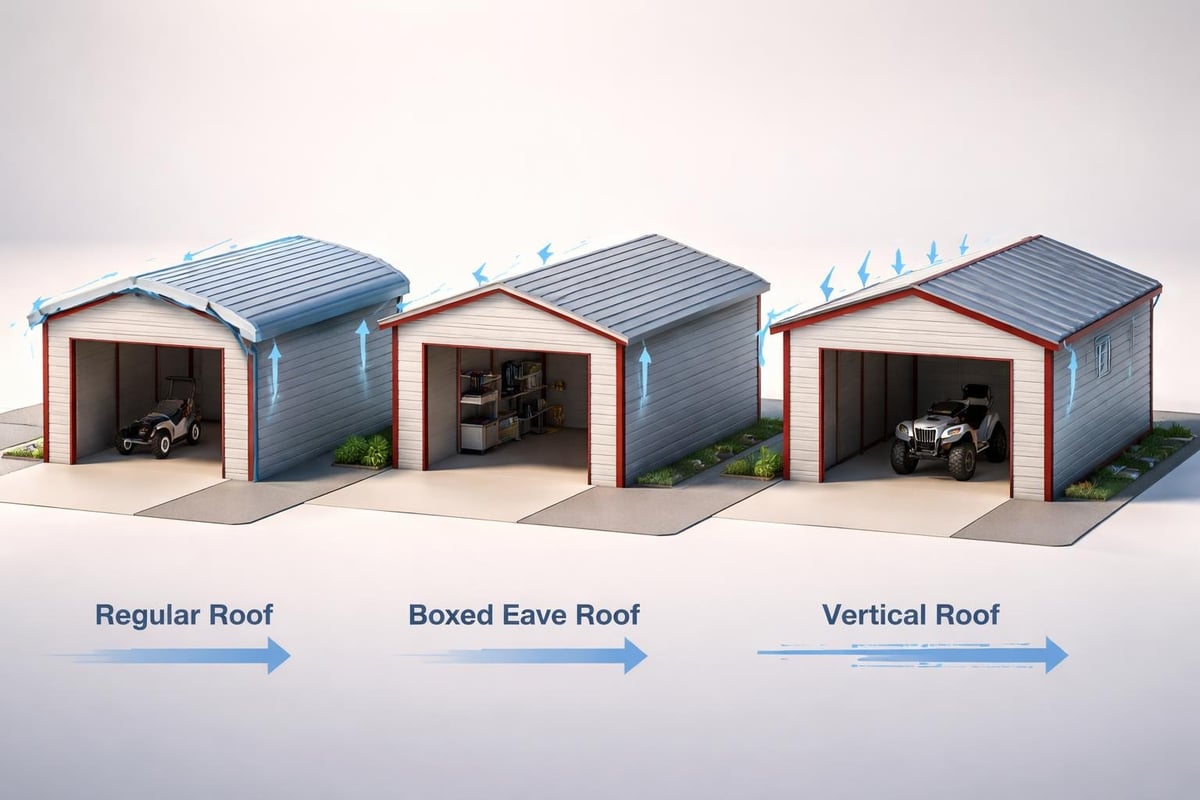
Three primary roof styles dominate all metal garage construction, each offering distinct advantages:
Regular roof style features rounded eaves and horizontal panel orientation. This economical option suits moderate climate zones with light precipitation and wind exposure.
Boxed eave roof style incorporates A-frame horizontal paneling that enhances water runoff. The slightly higher cost delivers improved weather protection and a more finished appearance.
Vertical roof style positions panels vertically from peak to eave, creating optimal drainage and superior snow load capacity. This premium configuration handles extreme weather conditions while offering the most sophisticated aesthetic appeal. For property owners seeking maximum protection and longevity, a Fully Enclosed Metal Carports configuration with vertical roofing provides comprehensive coverage against all environmental conditions.
Entry Points and Functional Features
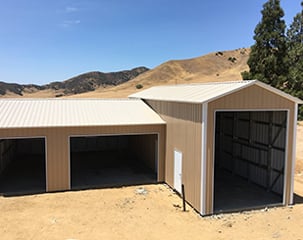
Garage door selection significantly impacts functionality and convenience. Roll-up doors, walk-in doors, and combination configurations address different usage patterns.
- Standard roll-up doors in 8×8, 9×7, 9×8, or 10×10 dimensions
- Commercial overhead doors for larger equipment access
- Walk-in doors with window options for daily entry
- Window installations for natural lighting and ventilation
Additional customization includes insulation packages for climate control, electrical conduit pathways, and interior partition walls for creating designated storage zones or workshop areas.
Foundation Requirements and Site Preparation
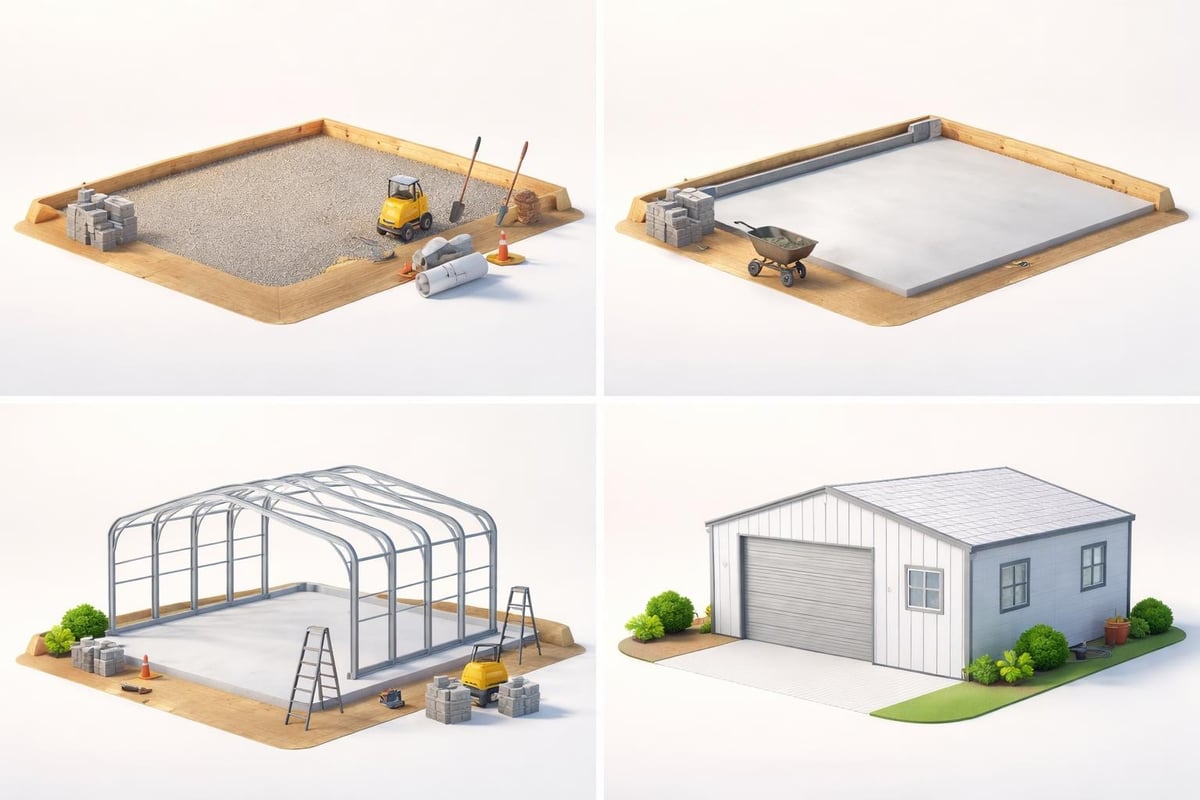
Proper foundation work ensures an all metal garage performs optimally throughout its lifespan. Unlike heavy masonry structures, steel buildings offer flexibility in foundation approaches based on soil conditions and intended use.
Foundation Types and Selection Criteria
The foundation must provide level support and anchor points for frame attachment. Several options accommodate different budgets and applications:
Concrete slab foundations deliver the most robust and versatile base. A 4-inch thick reinforced concrete pad provides a durable floor surface, moisture barrier, and solid anchoring platform. This investment adds significant value for garages used as workshops or storage facilities where floor quality matters.
Pier and beam foundations reduce material costs while maintaining structural integrity. Concrete footers at each frame leg support the structure without requiring a continuous slab. This approach works well for equipment storage applications where a finished floor isn't necessary.
Gravel or crushed stone bases represent the most economical option for basic shelter needs. Proper grading and compaction create adequate drainage and levelness for standard installations.
| Foundation Type | Cost Range | Best Use Case | Installation Time |
|---|---|---|---|
| Concrete Slab | $$$ | Workshops, Enclosed Storage | 3-7 days |
| Pier and Beam | $$ | Open Carports, Light Storage | 1-3 days |
| Gravel Base | $ | Temporary or Basic Shelter | 1 day |
Site Selection and Grading Considerations
Choosing the installation location requires evaluating drainage patterns, accessibility, and local building codes. An all metal garage performs best on naturally elevated ground where water flows away from the structure.
Site preparation checklist:
- Verify setback requirements from property lines per local regulations
- Identify underground utilities and mark locations
- Assess drainage patterns during heavy rain events
- Ensure vehicle access for delivery trucks and installation equipment
- Clear vegetation and remove topsoil from building footprint
- Grade site to promote water runoff in all directions
The care and maintenance requirements start with proper installation practices that prevent water pooling and ensure adequate ventilation around the structure's base.
Climate Considerations and Weather Resistance
An all metal garage must withstand regional weather challenges ranging from scorching heat to heavy snow loads. Engineering certifications ensure structures meet local building codes and performance standards.
Wind and Snow Load Ratings
Metal buildings receive certifications based on their ability to resist specific wind speeds and snow weights. Understanding these ratings helps property owners select appropriate specifications:
Wind certification ranges from 90 mph for light exposure areas to 170 mph for coastal hurricane zones. Frame spacing, anchor bolts, and bracing determine wind resistance capacity.
Snow load certification indicates the weight per square foot that roof panels can support. Regions with significant winter precipitation require ratings of 35-40 pounds per square foot or higher, achieved through vertical roof orientation and reinforced framing.

Temperature Management and Insulation
Uninsulated metal conducts heat and cold efficiently, creating temperature extremes inside the structure. For all metal garage applications requiring climate control, insulation becomes essential.
Insulation options include:
- Reflective bubble insulation as a basic thermal barrier reducing radiant heat
- Fiberglass batt insulation between framing members for moderate R-values
- Spray foam insulation delivering maximum R-value and air sealing
Proper ventilation works in tandem with insulation to manage condensation and maintain comfortable temperatures. Ridge vents, gable vents, and turbine vents create airflow that prevents moisture accumulation on metal surfaces. Moisture and pest control strategies prove particularly important in humid climates where condensation can compromise stored items.
Long-Term Maintenance and Care Strategies
Despite their low-maintenance reputation, all metal garages benefit from regular attention that extends their service life and preserves appearance. Establishing simple maintenance routines prevents minor issues from becoming costly repairs.
Annual Inspection Protocol
Conducting thorough inspections at least once yearly identifies developing problems early. Schedule inspections during spring or fall when weather conditions facilitate safe examination of all components.
Key inspection points:
- Panel integrity – Look for dents, scratches, or areas where protective coating has worn
- Fastener tightness – Check that screws remain secure, especially after severe weather
- Trim and flashing – Ensure edge pieces remain properly sealed and undamaged
- Door operation – Test roll-up doors for smooth function and proper alignment
- Foundation condition – Examine concrete or gravel for settling or erosion
- Drainage performance – Verify water flows away from structure without pooling
Document findings with photos and notes to track changes over time. This practice helps identify trends that may require professional attention.
Cleaning and Surface Maintenance
Regular cleaning preserves both appearance and protective coatings. Gentle cleaning methods prevent damage to galvanized surfaces while removing corrosive contaminants.
Use mild automotive soap mixed with water and a soft brush or cloth for general cleaning. Avoid abrasive cleaners, wire brushes, or pressure washers that can scratch protective coatings and accelerate corrosion.
Seasonal maintenance tasks:
- Spring: Remove winter debris, check for ice damage, clean gutters if installed
- Summer: Inspect for storm damage, touch up scratches with matching paint
- Fall: Clear leaves and organic matter, prepare for winter weather
- Winter: Remove heavy snow accumulation, monitor for ice damming
Addressing Minor Damage and Repairs
Small scratches and paint chips require prompt attention to prevent rust formation. Touch-up paint matching your garage color provides a quick remedy for minor surface damage.
For larger dents or panel damage, professional repair may prove necessary. However, the modular nature of an all metal garage allows individual panel replacement without disturbing the entire structure. Keep contact information for your installation company readily available for warranty service and expert repairs.
If you're looking for ways to maintain steel garage doors, focus on lubricating moving parts quarterly and checking weatherstripping for proper sealing.
Maximizing Functionality and Interior Organization
An all metal garage reaches its full potential when interior space receives thoughtful organization. Strategic planning transforms basic shelter into a highly functional workspace.
Storage Solutions and Space Optimization
Vertical storage maximizes available square footage by utilizing wall and ceiling areas. Wall-mounted shelving systems, pegboards for tools, and overhead racks for seasonal items keep floors clear for vehicles and work activities.
Effective organization strategies:
- Install heavy-duty shelving along sidewalls for bins and equipment
- Use ceiling-mounted platforms for rarely accessed items
- Create designated zones for tools, automotive supplies, and recreational gear
- Implement mobile storage carts for flexibility in workspace configuration
- Add workbenches along rear walls for project areas
Proper lighting enhances functionality significantly. LED shop lights provide bright, energy-efficient illumination for detailed work. Consider both overhead lighting for general visibility and task lighting above specific work areas.
For those seeking comprehensive functionality improvements, explore tips to make steel garages more functional through workspace optimization and smart organization systems.
Electrical and Utility Integration
Running electrical service to an all metal garage enables power tools, lighting, and climate control systems. Work with licensed electricians to ensure safe installation that meets local codes.
Standard electrical considerations include:
- Service panel installation with appropriate amperage for intended use
- Multiple outlet circuits spaced around the perimeter at workbench height
- Dedicated circuits for heavy equipment or welding applications
- GFCI protection for outlets per electrical code requirements
- Lighting circuits separate from outlets for independent control
Climate control options range from portable space heaters to permanently installed mini-split systems. Insulation significantly improves efficiency for any heating or cooling equipment.
Investment Value and Return Considerations
An all metal garage enhances property value while providing immediate functional benefits. Understanding the financial aspects helps justify this investment and guides decision-making about features and specifications.
Initial Cost Factors and Budget Planning
Several variables influence the total investment required for an all metal garage installation. Size represents the primary cost driver, with larger structures requiring more materials and labor.
Cost components include:
- Base structure price (frame, panels, roof)
- Foundation preparation and installation
- Delivery and setup fees
- Customization additions (extra doors, windows, insulation)
- Permit fees and engineering certifications
- Site preparation (grading, clearing, utility connections)
Comparing quotes from multiple suppliers ensures competitive pricing. However, focus on total value rather than lowest price alone. Quality materials and professional installation prevent future expenses that can exceed initial savings from budget options.
Property Value Enhancement
Real estate professionals recognize that an all metal garage increases property marketability and value. Potential buyers appreciate the low-maintenance durability and versatile space these structures provide.
The value enhancement varies by region and property type, typically ranging from 50-80% of the installation cost. In areas where vehicle protection and storage space remain at a premium, the return can approach or exceed the full investment.
| Property Type | Typical Value Increase | Buyer Appeal Factor |
|---|---|---|
| Rural Residential | 60-80% of Cost | High – Equipment Storage |
| Suburban Residential | 50-70% of Cost | Moderate – Vehicle Protection |
| Commercial Property | 70-90% of Cost | Very High – Business Utility |
| Investment Property | 40-60% of Cost | Moderate – Tenant Amenity |
Beyond resale value, an all metal garage delivers ongoing utility value through vehicle protection, equipment storage, and workspace creation. This functional benefit often justifies the investment regardless of property value considerations.
Permitting and Regulatory Compliance
Navigating local building codes and permit requirements ensures your all metal garage meets legal standards. While regulations vary by jurisdiction, understanding common requirements streamlines the approval process.
Building Permit Requirements
Most municipalities require building permits for permanent structures exceeding certain size thresholds. An all metal garage typically falls under standard accessory building regulations.
Typical permit application requirements:
- Site plan showing structure location and setbacks
- Building specifications including dimensions and height
- Engineering certifications for wind and snow loads
- Foundation design details
- Electrical permit if adding power service
Working with experienced suppliers like Metal Structure Sales LLC often simplifies permitting since they provide necessary documentation and engineering stamps as part of their service.
Homeowner Association and Deed Restrictions
Properties within planned communities or subdivisions may face additional restrictions beyond government regulations. Review HOA covenants and deed restrictions before proceeding with installation.
Common HOA requirements address:
- Aesthetic standards for color, style, and materials
- Size limitations beyond what local codes require
- Placement restrictions regarding visibility from streets
- Approval processes requiring architectural committee review
Obtaining necessary approvals before ordering prevents costly modifications or removal after installation. Submit detailed plans including dimensions, colors, and placement to expedite HOA review.
Setback Requirements and Utility Clearances
Building setbacks mandate minimum distances from property lines, easements, and existing structures. These regulations prevent overcrowding and ensure access for emergency services.
Standard setbacks typically require 5-10 feet from side and rear property lines, with greater distances from front property lines. Verify exact requirements with local building departments before selecting your installation site.
Underground utilities present additional considerations. Contact your local utility notification service before excavation to mark buried lines. Maintaining proper clearances from septic systems, water lines, and electrical service prevents damage during installation and future maintenance needs.
Seasonal Performance and Year-Round Benefits
An all metal garage serves property owners throughout all seasons, adapting to changing weather conditions and storage needs. Understanding seasonal performance characteristics helps maximize utility across the calendar year.
Winter Performance and Cold Weather Benefits
Cold weather showcases the advantages of steel construction. Unlike wood structures that contract and crack in freezing temperatures, metal maintains dimensional stability. Vertical roof configurations excel at shedding snow, preventing dangerous accumulation that could compromise structural integrity.
Winter advantages include:
- Superior snow and ice shedding from smooth metal surfaces
- No moisture absorption causing frost damage or warping
- Consistent performance regardless of temperature fluctuations
- Protection for vehicles from ice, snow, and road salt exposure
For comprehensive protection during harsh winter conditions, many property owners invest in fully enclosed configurations that shield vehicles and equipment from all sides.
Summer Heat Management
Summer brings intense solar radiation that can heat metal surfaces significantly. However, reflective roof coatings and proper ventilation mitigate heat buildup effectively.
Light-colored roof panels reflect solar energy rather than absorbing it. This simple choice can reduce interior temperatures by 10-15 degrees compared to dark colors. Combined with ridge vents and cross-ventilation through open sides, metal garages remain surprisingly comfortable even during peak summer heat.
Spring and Fall Versatility
Transitional seasons bring variable weather patterns that test structure resilience. An all metal garage handles rapid temperature swings, heavy spring rains, and autumn storms without the expansion and contraction issues that plague other materials.
These seasons prove ideal for conducting maintenance, organizing interior spaces, and completing improvement projects. Moderate temperatures make working inside the garage comfortable without climate control systems.
Common Applications Beyond Vehicle Storage
While vehicle protection remains the primary use, an all metal garage serves numerous alternative purposes. This versatility contributes to the structure's value proposition.
Workshop and Hobby Spaces
Dedicated workshop space appeals to DIY enthusiasts, craftspeople, and hobbyists. Metal construction provides a fire-resistant environment suitable for welding, woodworking, automotive restoration, and other activities requiring specialized tools.
Adding electrical service, workbenches, and tool storage transforms a basic garage into a fully functional workshop. Epoxy floor coatings over concrete foundations create easy-to-clean surfaces resistant to oil, chemicals, and heavy use.
Agricultural and Livestock Applications
Rural property owners rely on metal structures for equipment storage, hay protection, and livestock shelter. Metal horse barns and equipment storage facilities withstand agricultural demands while requiring minimal maintenance.
The same durability that protects vehicles serves tractors, implements, and harvested crops equally well. Customization options include tack rooms, feed storage areas, and wash stations integrated into cohesive agricultural facilities.
Commercial and Business Uses
Business applications range from equipment storage to customer service facilities. Contractors store tools and materials securely, while service businesses create mobile workshop spaces. The professional appearance of modern all metal garages suits commercial settings while delivering practical functionality.
Proper planning and protecting your investment through regular maintenance ensures commercial structures serve reliably for decades.
An all metal garage delivers unmatched durability, versatility, and value for property owners seeking reliable protection and functional space. From weather resistance to customization flexibility, steel construction addresses diverse needs while requiring minimal maintenance. Whether you need vehicle storage, workshop space, or agricultural facilities, Metal Structure Sales LLC provides high-quality metal structures with delivery and installation included, helping you create the perfect solution tailored to your specific requirements.