

Understanding carport cost is essential when planning to protect your vehicles from the elements while staying within budget. Whether you're considering a basic single-car structure or a larger custom design, the investment varies significantly based on materials, size, roof style, and installation requirements. In 2026, homeowners and property owners have more options than ever, with metal carports leading the way in durability and value. This comprehensive guide breaks down everything you need to know about carport pricing, helping you make an informed decision that balances protection, functionality, and affordability.
Average Carport Cost by Size
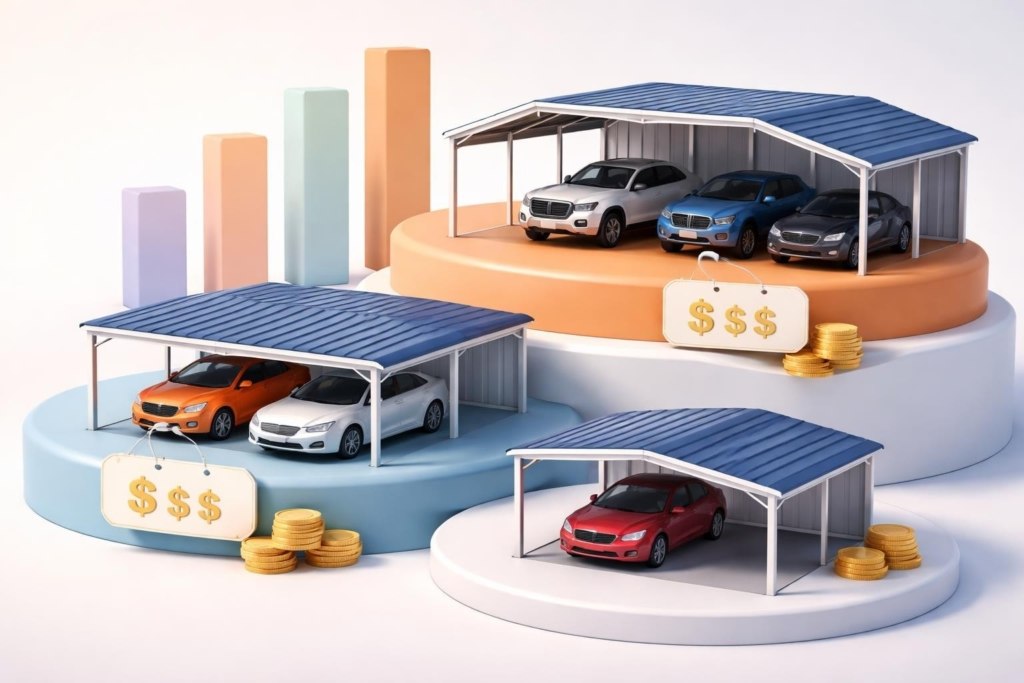
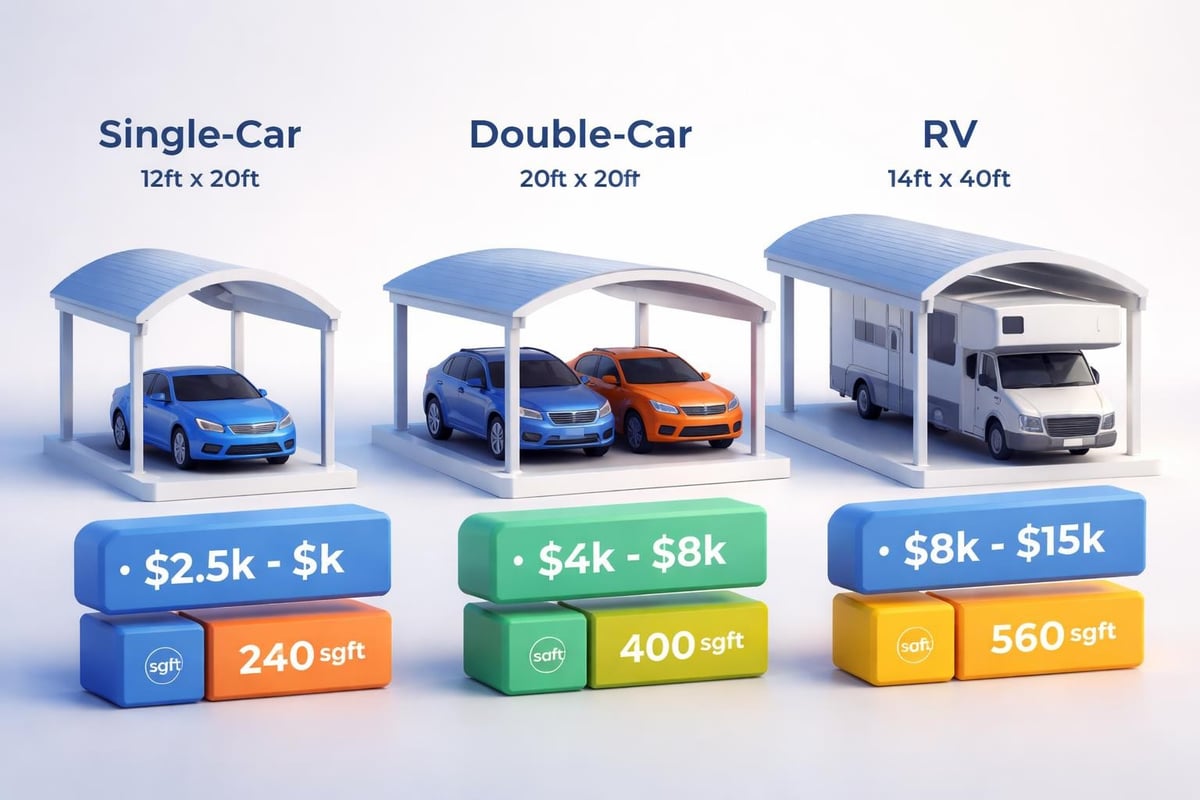
The size of your carport directly impacts the overall expense, with larger structures requiring more materials and labor. A single-car carport typically ranges from $2,000 to $5,000, providing adequate coverage for one standard vehicle with dimensions around 12 feet by 20 feet. These compact structures offer excellent value for homeowners with limited space or budget constraints.
Double-car carports, measuring approximately 18 feet by 20 feet or 20 feet by 20 feet, generally cost between $4,000 and $12,000. This size category represents the most popular choice among homeowners who need to protect two vehicles or want additional storage space alongside their car.
For those with RVs, boats, or multiple vehicles, larger carports ranging from 24 feet wide and beyond can cost anywhere from $8,000 to $20,000 or more. According to HomeAdvisor, the national average for carport installation sits around $7,500, though this figure fluctuates based on regional labor costs and material availability.
Custom Size Considerations
Custom-sized carports allow property owners to maximize their available space while accommodating unique vehicle dimensions. The carport cost for custom builds increases proportionally with square footage, typically adding $15 to $25 per square foot beyond standard dimensions.
Factors affecting custom carport pricing:
- Non-standard width requirements
- Extended length for oversized vehicles
- Additional height clearance
- Special foundation requirements
- Site preparation complexity
Material Options and Their Impact on Price
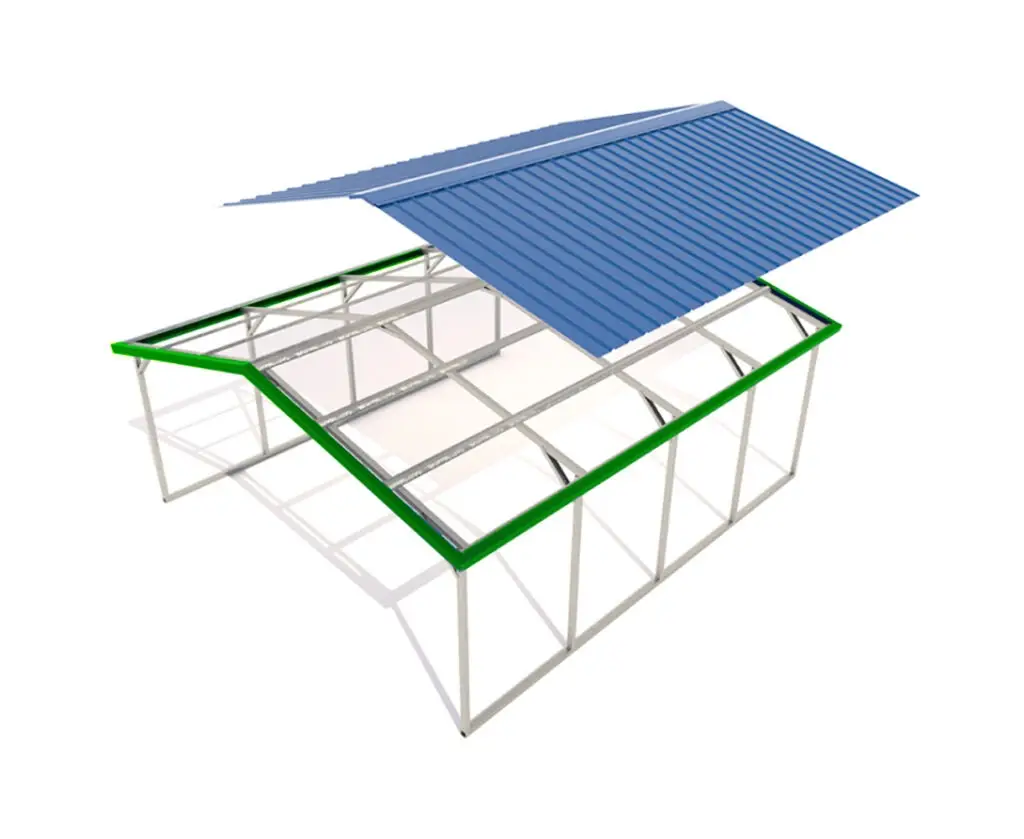
Metal carports have become the industry standard due to their superior durability, low maintenance requirements, and competitive pricing. Steel and aluminum structures typically cost between $10 and $30 per square foot for materials alone, with steel offering the best balance of strength and affordability.
The gauge of the steel significantly influences carport cost. Standard 14-gauge steel framing provides adequate strength for most residential applications, while 12-gauge steel offers enhanced durability for areas experiencing heavy snow loads or high winds. Upgrading to heavier gauge steel typically adds 15 to 25 percent to the base price.
Wood carports present an alternative aesthetic but come with higher maintenance costs and shorter lifespans. Material expenses for wooden structures range from $15 to $40 per square foot, with additional ongoing costs for staining, sealing, and rot prevention. Fixr’s comprehensive guide provides detailed breakdowns comparing various material choices and their long-term value propositions.
Metal Gauge Comparison
| Steel Gauge | Thickness | Best For | Price Impact |
|---|---|---|---|
| 14-gauge | 0.0747 inches | Standard residential | Baseline |
| 12-gauge | 0.1046 inches | Heavy snow/wind areas | +15-25% |
| 11-gauge | 0.1196 inches | Commercial applications | +30-40% |
Roof Style Variations and Pricing
The roof configuration represents a critical decision point that affects both carport cost and functionality. Regular roof styles, featuring rounded corners and horizontal panels, offer the most economical option, typically priced $200 to $500 less than other configurations for comparable sizes.
Boxed eave roofs provide improved water drainage and a more finished appearance, with horizontal panels running perpendicular to the structure's length. This design adds approximately $300 to $800 to the base carport cost, depending on size.
Vertical roof systems represent the premium option, featuring panels that run vertically from ridge to eave. This orientation allows rain, snow, and debris to slide off efficiently, making vertical roofs ideal for areas with significant precipitation. The vertical roof upgrade typically increases costs by $500 to $1,500 but delivers superior performance and longevity.
Roof Style Benefits
Regular Roof:
- Most economical choice
- Suitable for mild climates
- Simple installation process
- Limited snow load capacity
Boxed Eave Roof:
- Enhanced aesthetic appeal
- Better water runoff than regular style
- Moderate price point
- Good for light to moderate weather
Vertical Roof:
- Superior weather resistance
- Maximum snow and debris shedding
- Longest lifespan
- Best resale value
Installation and Labor Costs
Professional installation is essential for ensuring your carport meets local building codes and performs reliably for decades. Labor costs typically account for 30 to 50 percent of the total carport cost, varying significantly based on geographic location, site conditions, and structural complexity.
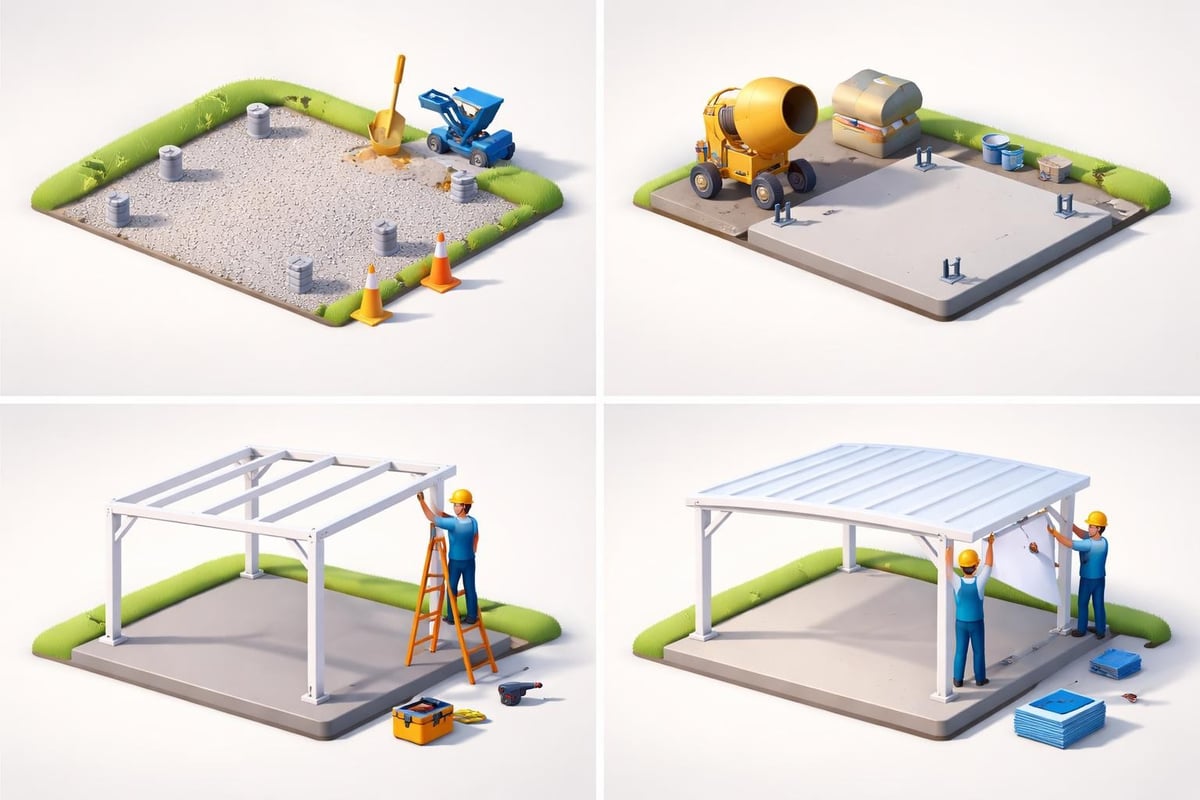
In most regions, installation labor ranges from $1,500 to $5,000 for standard residential carports. This expense covers foundation preparation, anchor installation, frame assembly, roof panel attachment, and final adjustments. Urban areas with higher labor rates may see installation costs reaching $6,000 or more for larger structures.
Site preparation represents an additional consideration that many property owners overlook when budgeting. Level ground with good drainage minimizes preparation costs, while sloped terrain or areas requiring grading can add $500 to $2,000 to the project total. CostHelper’s detailed breakdown illustrates how site conditions influence overall expenses across different project types.
When planning your metal carport project, understanding the range of available options helps ensure you select the right configuration. A Metal Carport from reputable manufacturers includes professional installation and delivery, simplifying the process and providing peace of mind that your structure will be properly assembled according to manufacturer specifications.
Certification and Engineering Requirements
Building codes in many states require certified carports that meet specific wind and snow load ratings. Certification adds $150 to $400 to the carport cost but ensures your structure complies with local regulations and performs safely under adverse weather conditions.
Standard certification levels:
- Wind certification: 130 mph, 140 mph, 150 mph, or 170 mph ratings
- Snow load certification: 20 psf, 35 psf, or higher for mountainous regions
- Seismic certification: Required in earthquake-prone areas
- Coastal certification: Enhanced corrosion resistance for salt air exposure
Engineering stamps provide documentation that your carport design meets structural requirements, typically costing $75 to $200 depending on complexity. This small investment protects against potential legal issues and ensures insurance coverage remains valid.
Foundation and Anchoring Systems
The foundation type significantly influences both initial carport cost and long-term stability. Mobile home anchors, the most economical option at $50 to $100 per anchor, work well in areas with stable soil and minimal wind exposure. These rebar anchors are driven 30 to 36 inches into the ground and provide adequate holding power for standard conditions.
Concrete footings offer superior stability and are often required by building codes in areas with high winds or unstable soil. Each concrete footing typically costs $100 to $200 including materials and labor, with standard carports requiring four to six footings. While this increases upfront expenses, concrete foundations provide unmatched durability and peace of mind.
Asphalt anchors serve as an intermediate option when installing carports over existing paved surfaces. These specialized anchors cost $75 to $150 each and provide reliable holding power without the need for concrete work. ProMatcher’s pricing analysis offers regional perspectives on foundation requirements and associated costs across different climate zones.
Foundation Cost Comparison
| Foundation Type | Cost Per Anchor | Installation Time | Best Application |
|---|---|---|---|
| Mobile Home Anchors | $50-100 | 30 minutes | Stable soil, moderate weather |
| Concrete Footings | $100-200 | 2-3 hours | High winds, permanent installation |
| Asphalt Anchors | $75-150 | 1 hour | Existing paved surfaces |
Customization Features and Add-Ons
Beyond basic structure costs, various customization options allow property owners to enhance functionality while impacting overall carport cost. Enclosed sides provide additional weather protection and security, with partial enclosures adding $500 to $1,500 and full enclosures increasing costs by $2,000 to $5,000 depending on size.
Additional height clearance accommodates taller vehicles like RVs, lifted trucks, or commercial vans. Standard leg height ranges from eight to nine feet, with extensions to 12, 14, or 16 feet available. Each additional foot of height typically adds $200 to $400 to the base carport cost.
Gable ends enhance both aesthetics and functionality by providing better weather protection at the structure's ends. These triangular panels cost $200 to $500 per end and significantly improve the finished appearance while preventing wind-driven rain from entering the carport.
Popular customization options:
- Walk-in doors: $300-600 each
- Windows: $150-400 per window
- Gutters and downspouts: $300-800 total
- Insulation packages: $1,000-3,000
- Upgraded trim and finishes: $200-800
Regional Price Variations
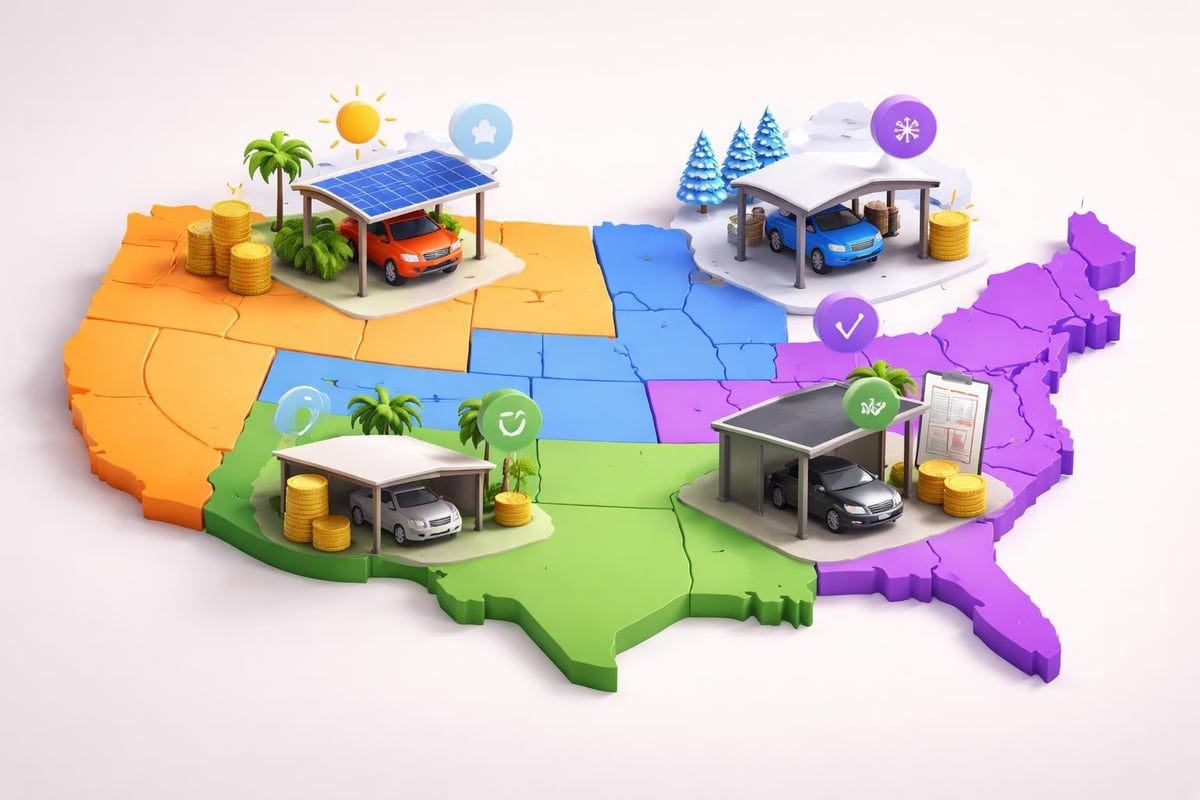
Geographic location plays a substantial role in determining carport cost due to differences in labor rates, material transportation expenses, and local building requirements. Coastal regions often see prices 10 to 20 percent higher than inland areas due to enhanced corrosion protection requirements and increased labor costs.
Northern states with heavy snow loads require stronger roof systems and additional structural support, potentially adding $500 to $2,000 to comparable structures in milder climates. The Engineered Metal Buildings cost guide explores how climate-specific design requirements influence pricing across different regions.
Building permit costs vary dramatically by jurisdiction, ranging from $50 in rural counties to $500 or more in metropolitan areas. Some municipalities include plan review fees, inspection charges, and impact fees that collectively add significant expenses to the project total.
DIY vs. Professional Installation
Homeowners with construction experience might consider DIY installation to reduce carport cost, potentially saving $1,500 to $5,000 in labor expenses. However, this approach requires specialized tools, multiple helpers, and comprehensive understanding of structural assembly techniques. Oregon Carports’ build versus buy guide provides valuable insights into the true costs and time commitments associated with self-installation projects.
Tools required for DIY installation:
- Concrete mixer or auger for footings
- Level and measuring tools
- Impact drivers and wrenches
- Ladder or scaffolding
- Safety equipment
Professional installation eliminates the risk of structural errors and typically includes warranties covering both materials and workmanship. Reputable manufacturers often bundle installation with their carport pricing, simplifying the purchasing process and ensuring proper assembly according to engineering specifications.
Permit and Regulatory Costs
Building permits represent a necessary expense that protects property owners and ensures structures meet safety standards. Permit costs for carports typically range from $50 to $500, with fees based on structure value, square footage, or flat rates depending on local regulations.
Homeowner association (HOA) approval may be required in planned communities, sometimes involving application fees of $50 to $200 and specific design restrictions that influence material choices and aesthetic elements. These requirements can impact carport cost by limiting color options, requiring specific roof styles, or mandating enclosed sides.
Setback requirements determine how close structures can be placed to property lines, potentially necessitating alternative placement that requires additional site preparation. Understanding these regulations during the planning phase prevents costly modifications later in the project timeline.
Financing and Payment Options
Many metal carport providers offer financing programs that make these structures more accessible to property owners managing budget constraints. Rent-to-own programs typically require no credit check and allow customers to pay monthly installments over 36 to 60 months, with total costs approximately 50 to 80 percent higher than direct purchase prices.
Traditional financing through personal loans or home equity lines of credit offers more favorable interest rates, typically ranging from 5 to 12 percent APR depending on creditworthiness. This approach reduces overall carport cost compared to rent-to-own while still providing monthly payment flexibility.
Cash purchases eliminate interest charges and sometimes qualify for discounts of 3 to 5 percent from manufacturers seeking to reduce transaction costs. For those with available capital, direct payment represents the most economical approach to acquiring a quality carport.
Long-Term Value and ROI Considerations
While initial carport cost represents an important factor, evaluating long-term value provides a more complete picture of this investment. Metal carports require minimal maintenance, typically needing only occasional washing and inspection for loose fasteners. This contrasts sharply with wooden structures that demand regular staining, sealing, and repair work costing hundreds of dollars annually.
Property value increases resulting from carport installation vary by market but typically range from 50 to 80 percent of the structure's cost. In areas where covered parking is scarce, well-designed carports can enhance curb appeal and marketability significantly. Resources from Metal Structure Sales LLC provide additional insights into maximizing the return on your carport investment.
Vehicle protection benefits extend beyond weather shielding to include reduced UV damage, lower interior temperatures, and decreased maintenance costs. These advantages collectively save hundreds of dollars annually in car care expenses, making the carport cost analysis more favorable when considering total lifecycle savings.
Quality Indicators and Material Standards
Understanding quality markers helps ensure your carport cost delivers appropriate value. Frame tubing dimensions significantly impact structural integrity, with 2.25-inch or 2.5-inch square tubing providing superior strength compared to smaller profiles. This dimensional difference might add 10 to 15 percent to costs but dramatically improves wind resistance and longevity.
Galvanized steel coating thickness determines corrosion resistance, with G90 coating (0.90 oz. zinc per square foot) representing the industry standard. Premium G115 coating offers enhanced protection in coastal or industrial environments, adding approximately 5 to 10 percent to material costs while extending structural lifespan by years.
Panel gauge thickness affects both durability and appearance, with 29-gauge panels serving as the economy option and 26-gauge or 24-gauge panels providing superior performance. The upgrade from 29-gauge to 26-gauge typically costs $300 to $800 for standard residential carports but delivers noticeably better hail resistance and reduced panel noise during rain.
Seasonal Pricing and Promotional Opportunities
Carport cost can fluctuate throughout the year based on seasonal demand patterns and manufacturer promotional cycles. Late fall and winter months often feature reduced pricing as manufacturers seek to maintain production during slower periods, with discounts sometimes reaching 10 to 15 percent off standard rates.
End-of-year clearance events provide opportunities to acquire quality structures at reduced prices as companies clear inventory before new model introductions. These promotions might include free upgrades, waived delivery fees, or bundled accessories that add value without increasing the base carport cost.
Planning your purchase to coincide with these promotional periods can yield significant savings, though availability of specific sizes or configurations may be limited. Balancing timing flexibility with immediate protection needs helps optimize both price and practicality.
Understanding carport cost involves evaluating multiple factors from size and materials to installation requirements and long-term value, ensuring your investment delivers reliable vehicle protection within your budget. Whether you need a basic single-car shelter or a custom structure with specialized features, Metal Structure Sales LLC provides high-quality metal carports with professional installation and delivery included, helping you protect your vehicles with confidence and convenience.