

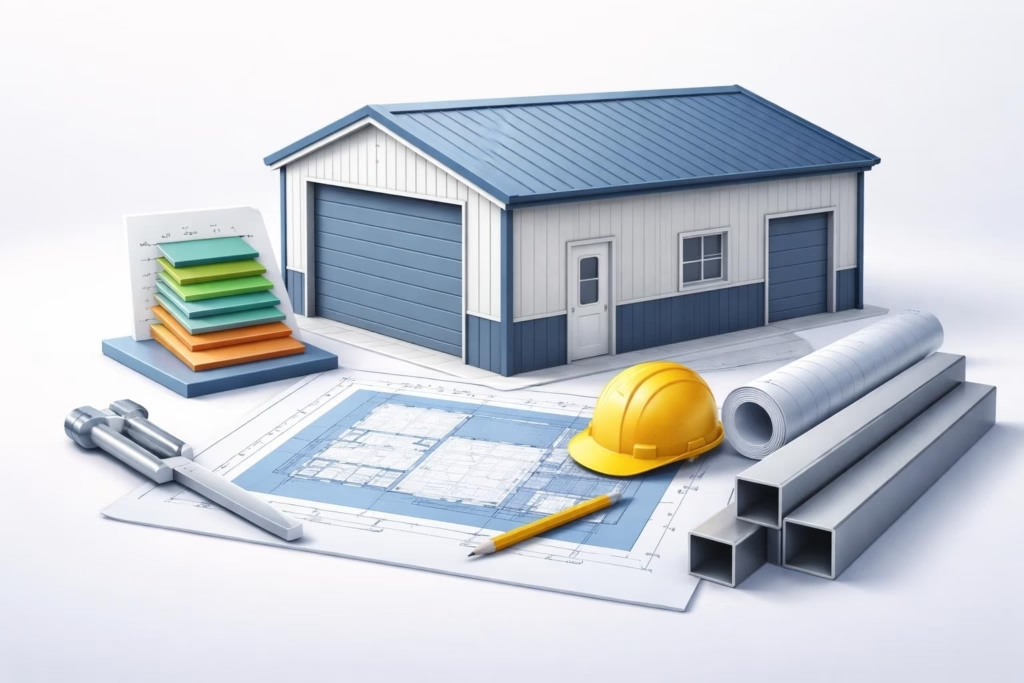
When it comes to protecting your vehicles, equipment, or creating additional workspace, selecting the right metal for garage construction makes all the difference. Metal garages have become increasingly popular across residential and commercial properties due to their exceptional durability, versatility, and cost-effectiveness. Understanding the various materials, design options, and structural considerations ensures you make an informed investment that serves your needs for decades to come. Whether you're planning a simple carport or a fully enclosed workshop, the type of metal and construction method you choose will directly impact performance, maintenance requirements, and overall satisfaction with your structure.
Understanding Metal Garage Materials and Gauges
The foundation of any quality metal garage begins with selecting appropriate materials. Most modern metal structures utilize galvanized steel or aluminum, each offering distinct advantages for different applications and climates.
Steel Gauge Options and Their Applications
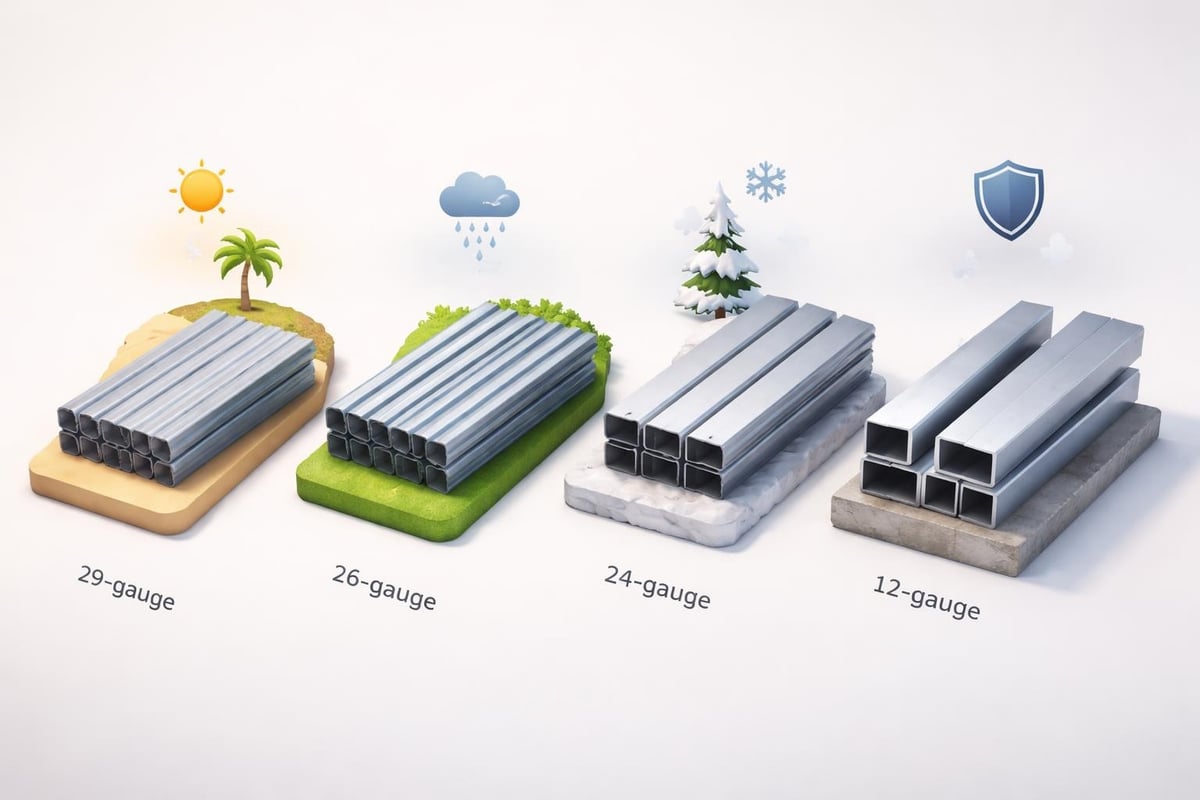
Steel gauge refers to the thickness of the metal sheets used in construction. Lower gauge numbers indicate thicker, more durable steel. The most common gauges for metal garage construction include:
- 29-gauge steel: Entry-level option suitable for light-duty applications in mild climates
- 26-gauge steel: Mid-range choice offering balanced durability and affordability
- 24-gauge steel: Heavy-duty option for areas with significant weather exposure
- 22-gauge steel: Premium choice for maximum structural integrity
- 12-gauge steel: Industrial-strength framing for exceptional load-bearing capacity
The selection between these gauges depends on your local climate conditions, intended use, and budget constraints. Regions experiencing heavy snowfall, high winds, or extreme weather conditions benefit from thicker gauge materials that provide superior resistance to environmental stresses.
Galvanized Steel vs. Aluminum Construction
Both galvanized steel and aluminum serve as excellent choices for metal garage construction, though each material presents unique characteristics worth considering.
| Feature | Galvanized Steel | Aluminum |
|---|---|---|
| Strength | Superior load-bearing capacity | Lighter weight, moderate strength |
| Corrosion Resistance | Excellent with zinc coating | Naturally corrosion-resistant |
| Cost | More affordable | Higher upfront investment |
| Maintenance | Minimal, periodic inspections | Virtually maintenance-free |
| Lifespan | 20-30+ years with proper care | 30-50+ years |
Galvanized steel remains the most popular choice for metal garage structures due to its exceptional strength-to-cost ratio. The zinc coating protects the underlying steel from rust and corrosion, making it particularly suitable for humid or coastal environments. Aluminum offers advantages in weight reduction and natural corrosion resistance but typically comes at a premium price point.
Design Considerations for Metal Garage Structures
Proper planning prevents common pitfalls that could compromise functionality or require expensive modifications later. Avoiding typical design mistakes ensures your metal garage meets both current and future needs.
Determining Appropriate Dimensions
The size of your metal garage directly impacts its utility and value. Consider these factors when establishing dimensions:
Width requirements depend on the number and type of vehicles or equipment you plan to store. A single-car garage typically measures 12-14 feet wide, while two-car configurations require 20-24 feet. For larger vehicles, RVs, or commercial equipment, widths exceeding 30 feet may be necessary.
Length specifications should account for vehicle size plus additional space for walking, storage, or workspace. Standard sedans require approximately 20 feet of depth, while trucks and SUVs benefit from 24-28 feet. Adding 4-6 feet for front or rear storage creates valuable organizational space.
Height considerations prove crucial for clearance and ventilation. Standard 8-foot sidewalls accommodate most passenger vehicles, but trucks, RVs, or equipment may require 10-16 feet of vertical clearance. Increased height also improves air circulation and provides overhead storage opportunities.
Roof Style Selection and Functionality
The roof style you choose for your metal garage affects both aesthetics and performance. Understanding roof design options helps align your choice with practical requirements.
Regular roof style features rounded horizontal panels running from front to back. This economical option suits areas with minimal snow or wind loads and works well for basic storage applications.
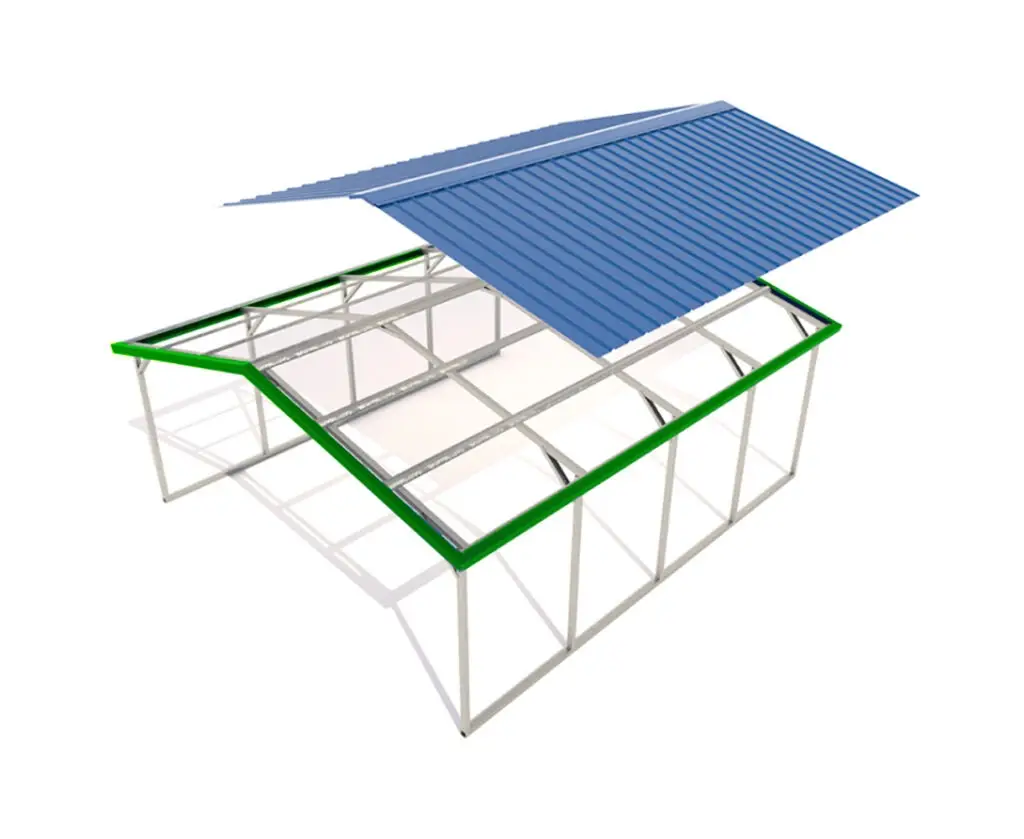
A-frame or vertical roof style positions panels vertically, allowing precipitation to slide off efficiently. This design excels in regions with heavy snowfall or rainfall and provides superior structural integrity against severe weather.
Gable roof variations offer enhanced aesthetics and additional interior space. Standard gables feature peaked ends, while extended gables provide covered areas beyond the main structure for additional protection.
Structural Components and Framing Systems
Quality metal for garage construction extends beyond just sheet metal panels. The underlying framework determines structural stability and longevity.
Frame Construction and Anchoring
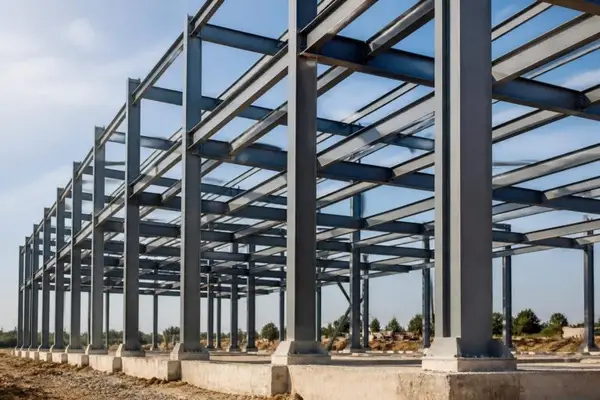
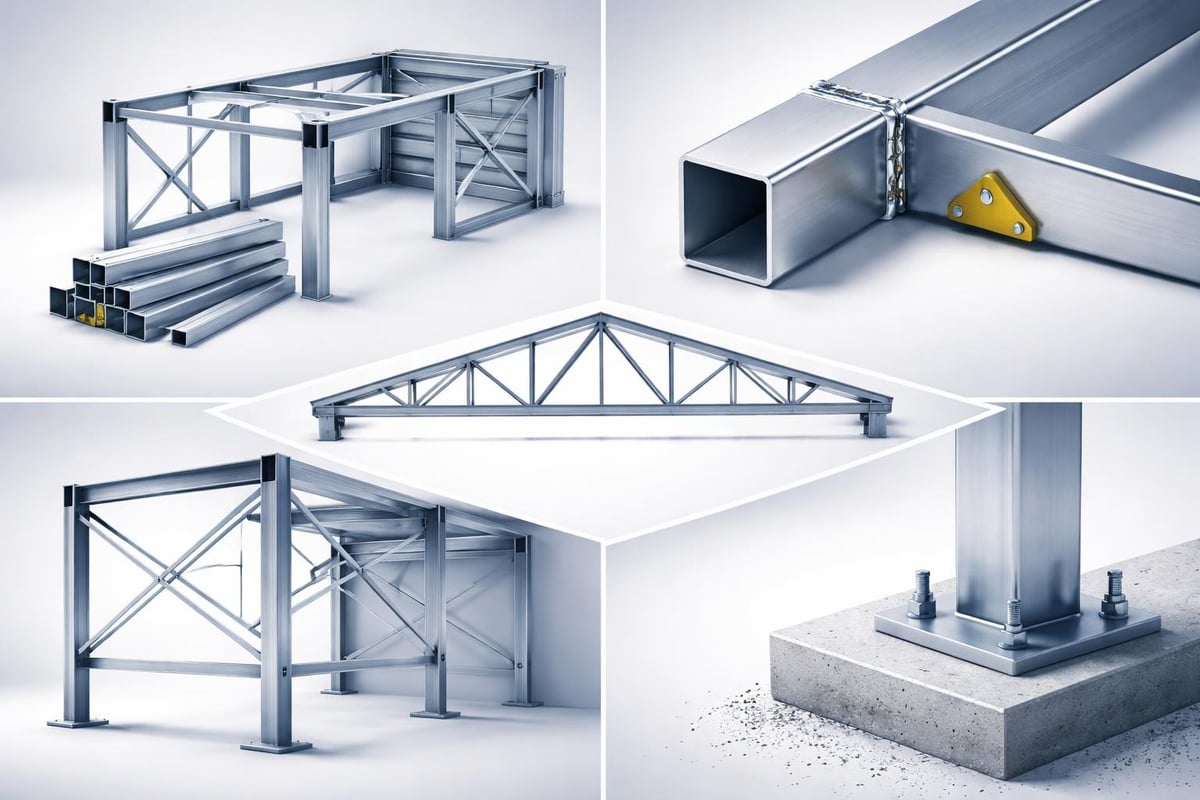
Metal garage frames typically utilize tube steel construction in various dimensions based on the structure's size and purpose. Residential applications commonly employ 2.25-inch or 2.5-inch tubing, while commercial or wide-span structures may require 3-inch or larger framing members.
Anchoring methods secure the structure to its foundation and resist uplift forces:
- Concrete slab anchors: Rebar stakes or mobile home anchors embedded in poured concrete slabs
- Asphalt installations: Ground anchors driven 30+ inches with steel cables
- Ground-level setups: Auger-style anchors or concrete footers at each leg position
- Foundation walls: Anchor bolts installed during concrete wall construction
Proper anchoring proves essential for structural safety, especially in areas prone to high winds or seismic activity. Building codes typically specify minimum anchoring requirements based on local environmental factors.
Certification and Engineering Standards
Understanding certification requirements ensures your metal garage meets regulatory standards and insurance requirements. Most reputable manufacturers provide:
- Certified engineer stamped drawings that verify structural calculations
- Wind load ratings appropriate for your geographic region
- Snow load specifications meeting local building codes
- Seismic zone compliance where applicable
These certifications prove particularly important when obtaining building permits or satisfying insurance policy requirements. Building code compliance varies by jurisdiction, making it essential to verify local regulations before construction begins.
Customization Options and Functional Upgrades
Modern metal for garage applications offers extensive customization possibilities that enhance functionality and appearance.
Entry Points and Door Configurations
Strategic placement of doors and openings maximizes accessibility and workflow efficiency. Consider these options:
Roll-up garage doors provide traditional functionality with various sizing options from 8×8 feet to 12×14 feet or larger. These doors suit vehicle access and equipment movement.
Walk-in doors offer convenient pedestrian access without operating large overhead doors. Standard 36-inch residential doors work for most applications, while commercial settings may benefit from wider configurations.
Windows introduce natural light and ventilation while reducing reliance on artificial lighting. Various sizes, styles, and placement options accommodate different aesthetic preferences and functional requirements.
For workshop applications or multi-purpose buildings, thoughtful design planning ensures doors and windows support your intended use patterns.
Insulation and Climate Control
While basic metal garages provide excellent protection from precipitation and sun exposure, insulation dramatically improves comfort and functionality for workspace applications.
| Insulation Type | R-Value | Best Application | Cost Factor |
|---|---|---|---|
| Fiberglass Batts | R-13 to R-19 | Enclosed buildings, moderate climates | Budget-friendly |
| Spray Foam | R-6 to R-7 per inch | Comprehensive coverage, extreme climates | Premium investment |
| Rigid Foam Boards | R-5 to R-6 per inch | DIY installations, ceiling applications | Moderate cost |
| Reflective Barriers | Radiant heat reduction | Hot climates, supplemental insulation | Economical |
Insulated structures maintain more consistent temperatures, reduce condensation issues, and create comfortable workspace environments. Pairing insulation with proper ventilation prevents moisture accumulation that could compromise stored items or promote rust development.
Color and Aesthetic Choices
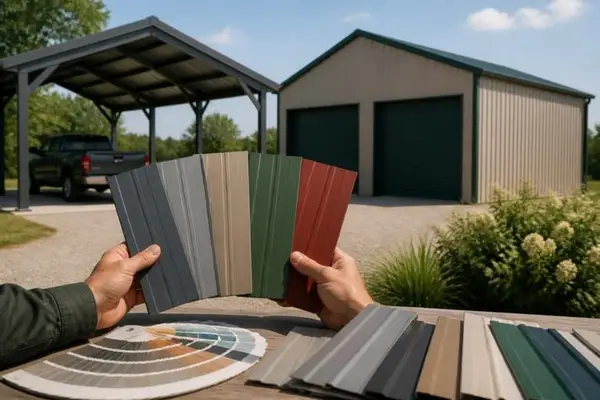
Metal garage structures no longer mean sacrificing curb appeal. Modern manufacturing techniques offer extensive color palettes and finish options that complement existing architecture.
Standard color options typically include:
- Classic neutrals: white, gray, tan, and brown tones
- Bold accents: red, blue, green, and custom colors
- Metallic finishes: galvanized silver or specialty coatings
Combining different colors for roof, trim, and walls creates visual interest while coordinating with surrounding buildings. Many manufacturers apply durable paint systems that resist fading, chalking, and weathering for years of attractive appearance.
Enclosed vs. Open Structure Configurations
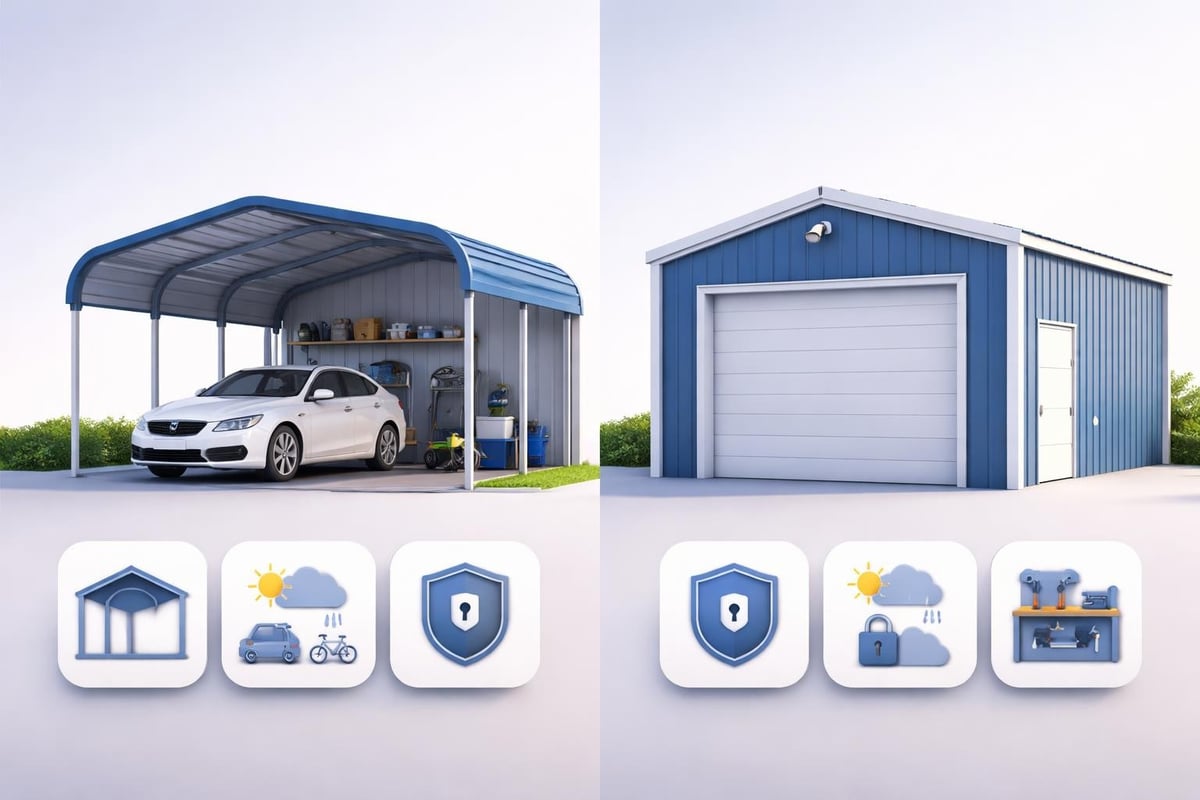
Choosing between fully enclosed metal buildings and open carport designs depends on your specific protection requirements and budget parameters.
Open Carport Benefits
Open-sided metal structures provide essential protection from sun and precipitation while offering maximum ventilation and accessibility. These configurations suit applications where:
- Quick vehicle access remains a priority
- Natural airflow prevents moisture accumulation
- Budget constraints limit investment capacity
- Local regulations restrict fully enclosed structures
- Partial protection meets storage needs adequately
Metal carports excel for boat storage, equipment protection, or secondary vehicle coverage where complete weather sealing isn't critical.
Fully Enclosed Garage Advantages
Complete enclosure transforms a simple carport into a versatile building suitable for workshops, storage facilities, or protected parking. The added investment delivers significant benefits:
Security enhancement protects valuable vehicles, tools, and equipment from theft or vandalism. Lockable doors and solid walls create barriers that deter unauthorized access.
Weather protection extends to dust, wind-driven rain, and temperature extremes. Enclosed buildings maintain cleaner interiors and reduce the environmental stress on stored items.
Versatility expansion allows the space to function as a workshop, hobby area, or climate-controlled storage facility. Many property owners start with an open carport and later add walls as needs evolve or budgets allow. Our fully enclosed metal buildings come in both regular and vertical roof styles, with customization options to meet specific storage and workspace requirements, including delivery and installation.
Wide-Span Applications and Commercial Uses
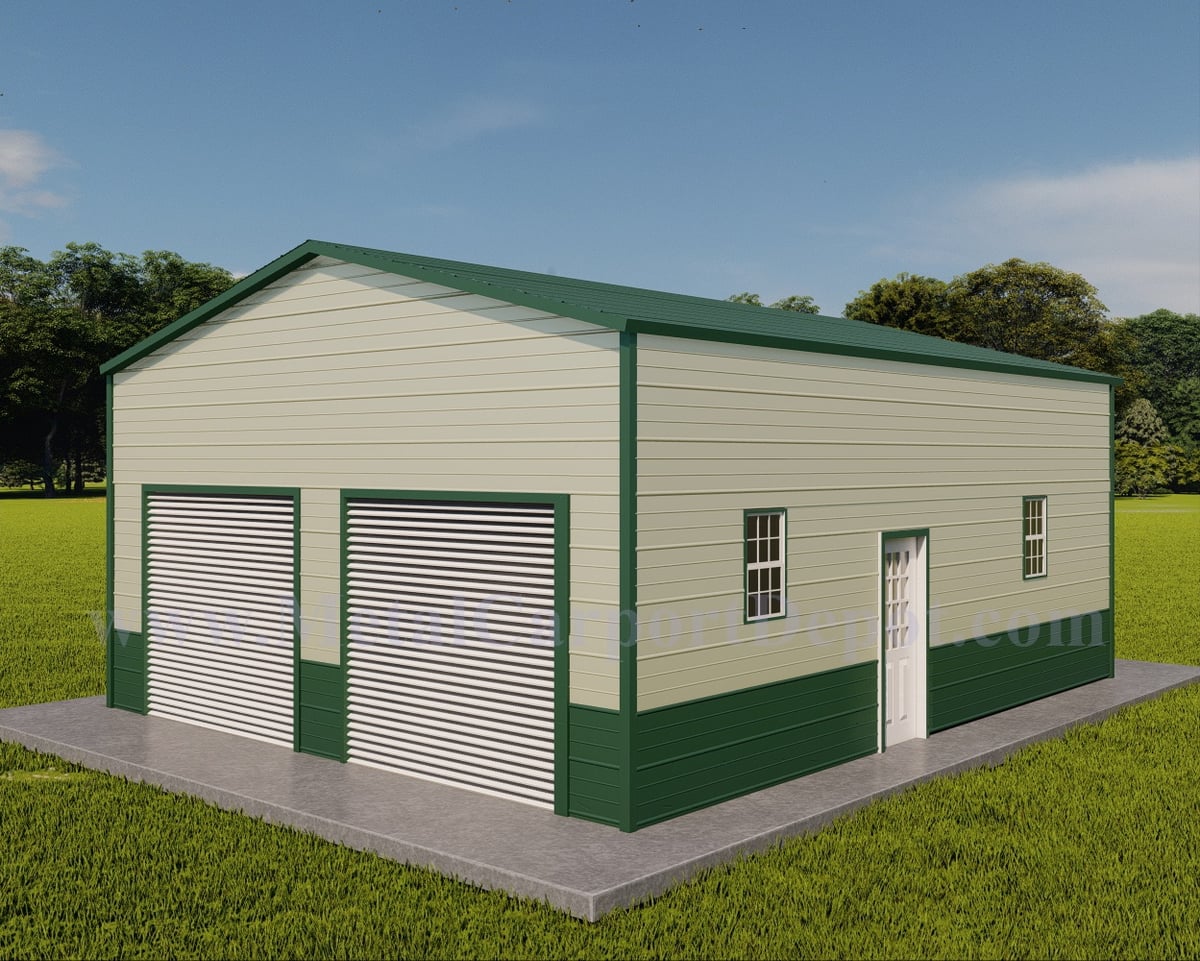
While residential garages typically fall within standard width parameters, certain applications demand significantly larger clear-span structures.
Sizing for Specialized Equipment
Commercial operations, agricultural applications, or recreational vehicle storage often require metal for garage construction that exceeds conventional dimensions. Wide-span metal buildings accommodate:
- Multiple vehicle rows: Side-by-side parking for fleet storage or dealership applications
- RV and boat storage: Clearance for vehicles measuring 12-14 feet tall and 35+ feet long
- Agricultural equipment: Protection for tractors, combines, and implements
- Commercial workshops: Space for multiple work bays and equipment positioning
Structures spanning 30-60 feet wide eliminate interior support posts that would obstruct movement or limit functionality. This clear-span capability proves invaluable for operations requiring unimpeded floor space.
Structural Engineering for Large Spans
Creating stable wide-span structures requires advanced engineering and robust framing systems. Expert design considerations address load distribution, frame reinforcement, and foundation requirements specific to larger buildings.
Engineering specifications for wide-span applications typically include:
- Upgraded frame tube dimensions (3-inch or larger)
- Additional cross-bracing and girt systems
- Reinforced roof truss configurations
- Enhanced anchoring with increased foundation points
- Certified engineering calculations for local codes
These structural enhancements ensure the building withstands environmental loads while maintaining the open interior space that makes wide-span construction valuable.
Comparing Metal Garage Costs and Value
Understanding the financial aspects of metal garage construction helps establish realistic budgets and evaluate long-term value propositions.
Initial Investment Considerations
Metal for garage construction generally costs less than traditional wood-frame or masonry alternatives while delivering comparable or superior durability. Several factors influence the total investment:
Size and dimensions represent the primary cost driver, with pricing typically calculated per square foot of covered area. Larger structures benefit from economies of scale, reducing the per-square-foot cost compared to smaller buildings.
Material specifications including gauge thickness, framing dimensions, and finish quality affect pricing. Upgraded materials increase upfront costs but often prove worthwhile through extended lifespan and reduced maintenance.
Customization features such as additional doors, windows, insulation, or aesthetic upgrades add to the base price. Balancing desired features against budget constraints ensures you maximize value without overspending on unnecessary elements.
Installation requirements vary based on site conditions, accessibility, and foundation preparation. Most reputable suppliers include delivery and professional installation, eliminating concerns about DIY assembly or contractor coordination.
Long-Term Value and ROI
Evaluating metal garage investments requires looking beyond initial costs to consider lifetime expenses and property value impacts.
| Cost Factor | Metal Garage | Wood Garage | Masonry Garage |
|---|---|---|---|
| Initial Cost | Moderate | Lower to Moderate | Highest |
| Maintenance | Minimal | Regular painting, repairs | Moderate |
| Lifespan | 20-30+ years | 15-25 years | 30-50+ years |
| Insurance | Standard rates | Standard to higher | Lower rates |
| Property Value | Positive impact | Positive impact | Highest impact |
Metal structures require virtually no maintenance beyond occasional cleaning and periodic inspections. Unlike wood construction that needs regular painting, rot prevention, and pest control, metal garages maintain their integrity with minimal intervention.
Navigating Permits and Installation Processes
Successfully completing your metal garage project requires understanding regulatory requirements and proper installation procedures.
Building Permit Requirements
Most jurisdictions require building permits for metal garage construction, though specific regulations vary by location. Typical permit considerations include:
- Setback requirements: Minimum distances from property lines, easements, or existing structures
- Height restrictions: Limitations on overall building height or peak elevation
- Foundation specifications: Requirements for concrete slabs, footers, or anchoring systems
- Electrical and plumbing: Additional permits if utilities will be installed
Working with experienced suppliers who understand local building codes streamlines the permitting process. Many manufacturers provide engineered drawings and documentation that satisfy permit application requirements.
Site Preparation and Foundation Options
Proper site preparation ensures stable installation and optimal drainage around your metal garage. Professional installation guidance recommends addressing these elements:
Ground leveling creates a flat installation surface that prevents structural stress and drainage issues. Sites with significant slope may require grading or foundation adjustments.
Drainage considerations direct water away from the structure to prevent pooling or erosion. Proper grading and drainage systems protect both the building and its contents from water damage.
Foundation choices range from concrete slabs to ground-level installations on gravel or compacted earth:
- Concrete slabs provide the most stable, permanent foundation suitable for enclosed buildings with concrete floors
- Asphalt surfaces accommodate metal garages while providing durable parking areas
- Gravel bases offer economical solutions for open carports or temporary installations
- Ground-level setups work in specific applications with appropriate anchoring systems
Each foundation type presents advantages depending on intended use, budget, and permanence requirements.
Maintenance and Longevity Best Practices
Maximizing the lifespan of your metal garage involves simple maintenance practices that preserve appearance and structural integrity.
Routine Inspection and Care
Metal structures resist many issues that plague alternative construction materials, but periodic attention prevents minor concerns from escalating. Recommended maintenance includes:
Visual inspections conducted seasonally identify potential issues like loose fasteners, damaged panels, or drainage problems. Catching small problems early prevents costly repairs later.
Cleaning procedures remove dirt, pollen, and debris that can accumulate on surfaces. Gentle washing with mild detergent and water maintains appearance without damaging protective coatings.
Fastener verification ensures all screws, bolts, and anchors remain tight. Wind stress and temperature cycling can gradually loosen connections over time.
Drainage monitoring confirms water flows away from the structure appropriately. Adjusting grades or adding drainage solutions prevents standing water that could undermine foundations.
Protecting Against Rust and Corrosion
Quality metal for garage construction incorporates protective coatings that resist corrosion, but certain conditions warrant additional attention:
- Coastal environments: Salt air accelerates corrosion, making regular washing and protective treatments beneficial
- Humid climates: Condensation management through ventilation prevents moisture accumulation
- Chemical exposure: Agricultural or industrial applications may require specialized coating systems
- Scratch repair: Addressing paint damage promptly prevents rust development at compromised areas
Modern galvanized steel and quality paint systems provide excellent protection under normal conditions. Following manufacturer recommendations ensures your metal garage delivers decades of reliable service.
Expanding Functionality with Add-Ons and Modifications
One advantage of metal garage construction involves the ease of adding features or expanding capabilities as needs evolve.
Common Upgrades and Expansions
Metal structures accommodate various enhancements without major reconstruction:
Lean-to additions extend covered space along one side of the existing structure, creating additional storage or workspace. These additions share the main building's roof line and integrate seamlessly.
Partial enclosures convert open bays into protected areas by adding walls or panels to specific sections. This phased approach allows budget-friendly progression toward full enclosure.
Equipment installations including electrical systems, lighting, HVAC units, or plumbing integrate readily into metal buildings. The steel framework provides secure mounting points for various accessories.
Shelving and organization systems maximize interior space through wall-mounted storage, overhead racks, or custom cabinetry. Metal walls accommodate various mounting hardware for flexible organization.
Future-Proofing Your Investment
Planning for potential future needs during initial design prevents limitations later. Comprehensive buying guidance emphasizes considering growth potential and evolving requirements.
Strategic future-proofing approaches include:
- Sizing slightly larger than immediate needs accommodate growth
- Installing electrical conduit even if not immediately wiring the space
- Choosing enclosed options that support workshop conversion
- Selecting roof styles that permit solar panel installation
- Positioning the structure to allow future expansion
These forward-thinking decisions add minimal cost during initial construction while preserving valuable options for future modifications.
Regional Considerations and Climate Adaptations
Optimizing metal for garage selection requires accounting for specific regional weather patterns and environmental conditions.
Snow Load and Wind Rating Requirements
Geographic location determines appropriate structural specifications for safe, durable performance. Weather-specific design elements ensure your metal garage withstands local environmental challenges.
Snow load capacity measures the weight of accumulated snow the roof structure can support safely. Northern regions require higher ratings (30-50 pounds per square foot) compared to southern areas with minimal snowfall.
Wind speed ratings indicate resistance to sustained winds and gusts. Coastal and plains regions prone to hurricanes or tornadoes need structures certified for 130+ mph winds, while sheltered areas may require lower specifications.
Properly rated structures provide peace of mind during severe weather events while satisfying building code requirements and insurance policy conditions.
Climate-Specific Material Choices
Different environments present unique challenges that influence optimal material selection:
- Desert climates: Reflective coatings reduce heat absorption, lighter colors minimize thermal stress
- Humid regions: Enhanced galvanization or corrosion-resistant treatments extend lifespan
- Coastal areas: Marine-grade materials resist salt air corrosion
- Cold climates: Insulation packages and vapor barriers prevent condensation issues
Specialized metal roofing and siding options address specific environmental conditions while maintaining aesthetic appeal and structural performance.
Multi-Purpose Applications Beyond Vehicle Storage
While protecting vehicles remains a primary function, metal garages serve diverse purposes that add value and functionality to properties.
Workshop and Hobby Space Configurations
Converting metal garage space into dedicated workshop areas supports various interests and income-generating activities. Customization for specific work needs transforms basic storage into productive environments.
Woodworking shops benefit from the clear floor space, electrical capacity for power tools, and ventilation options that metal buildings provide. Dust collection systems and adequate lighting create professional-grade work environments.
Automotive repair facilities utilize lift equipment, compressed air systems, and parts storage within metal garage structures. Smooth concrete floors and good lighting support detailed mechanical work.
Craft and hobby studios take advantage of natural light through strategically placed windows while maintaining climate control through insulation and HVAC systems.
Agricultural and Livestock Applications
Metal structures serve farming operations through equipment storage, feed protection, and animal housing. These applications particularly value the clear-span designs that accommodate large machinery and flexible space utilization.
Hay and feed storage requires dry, well-ventilated spaces that metal garages provide naturally. The durable construction resists rodent intrusion better than many traditional barn materials.
Equipment maintenance and repair facilities centralize agricultural operations while protecting valuable machinery from weather exposure between uses.
Selecting the right metal for garage construction involves balancing structural requirements, customization preferences, and budget considerations to create a durable solution tailored to your specific needs. The versatility of modern metal buildings supports everything from basic vehicle protection to sophisticated workshop environments. Metal Structure Sales LLC specializes in delivering high-quality, customizable metal structures including carports, RV covers, and enclosed buildings, with professional delivery and installation included in every project. Whether you need a compact single-car carport or a wide-span commercial facility, Metal Structure Sales LLC provides expert guidance and proven solutions that protect your investments for decades to come.