

Selecting the right car port metal determines how well your investment protects vehicles, equipment, and valuables for decades to come. The quality of steel, thickness of panels, and type of protective coating directly impact structural integrity, weather resistance, and maintenance requirements. Understanding these material specifications helps property owners make informed decisions when choosing between various metal carport options available in today's market.
Understanding Car Port Metal Specifications
The foundation of any quality metal carport begins with understanding steel gauge measurements and what they mean for structural performance. Steel gauge refers to the thickness of the metal, with lower numbers indicating thicker, stronger material.
Steel Gauge Thickness Standards
Most car port metal structures utilize steel ranging from 14-gauge to 29-gauge, with each thickness serving specific purposes and load requirements. The gauge system works inversely, where 14-gauge steel measures approximately 0.0747 inches thick while 29-gauge measures about 0.0135 inches.
Common gauge applications include:
- 14-gauge steel: Heavy-duty frames for areas with extreme weather conditions
- 12-gauge steel: Premium structural support for wide-span buildings
- 22-gauge steel: Standard roof and wall paneling
- 26-gauge steel: Economy-grade panels for moderate climates
- 29-gauge steel: Light-duty applications in protected environments
Thicker car port metal provides superior strength and longevity, particularly in regions experiencing heavy snow loads, high winds, or severe weather events. Understanding building specifications helps buyers evaluate structural requirements based on local climate conditions.
Frame Construction Materials
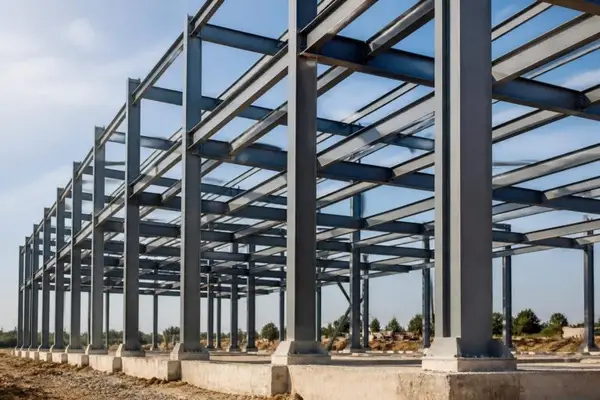
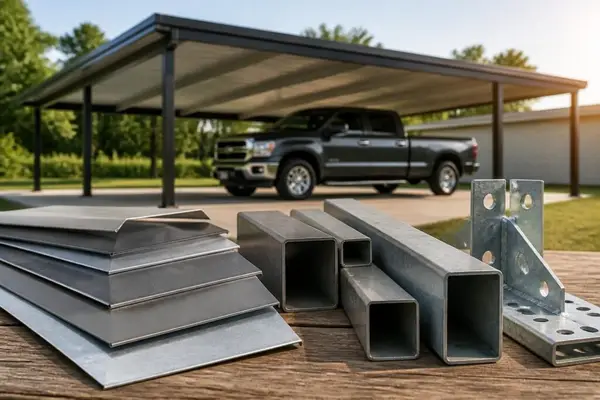
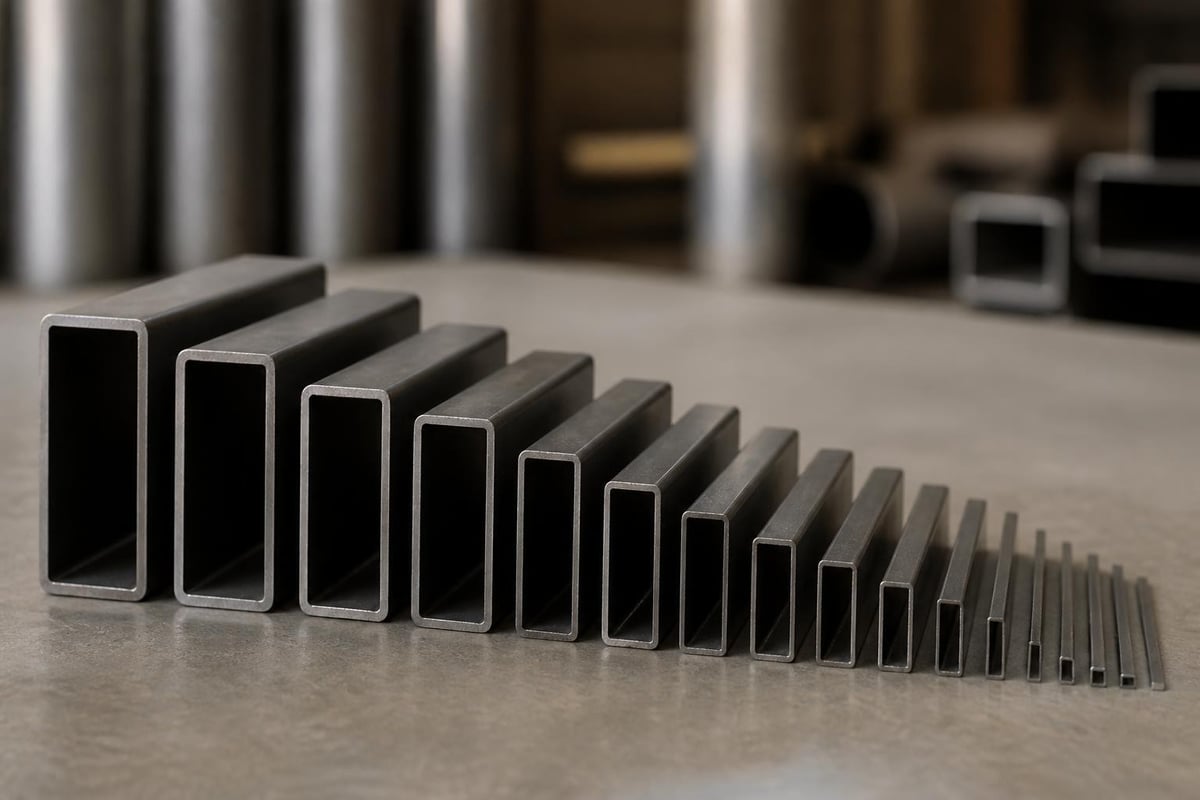
The skeletal framework supporting your carport requires robust car port metal that withstands decades of stress and environmental exposure. Most quality manufacturers use galvanized steel tubing for vertical posts, horizontal beams, and roof trusses.
Standard frame dimensions typically measure 2.25 inches to 2.5 inches in diameter for regular-duty structures, while heavy-duty applications may incorporate 3-inch or larger tubing. The wall thickness of these tubes significantly impacts load-bearing capacity and overall structural resilience.
| Frame Type | Tube Size | Wall Thickness | Best Application |
|---|---|---|---|
| Light-Duty | 2.25" | 18-gauge | Single vehicle, moderate climate |
| Standard | 2.5" | 14-gauge | Two vehicles, most climates |
| Heavy-Duty | 2.5" | 12-gauge | Multiple vehicles, severe weather |
| Commercial | 3.0" | 12-gauge | Wide-span, commercial applications |
Types of Metal Roofing Styles
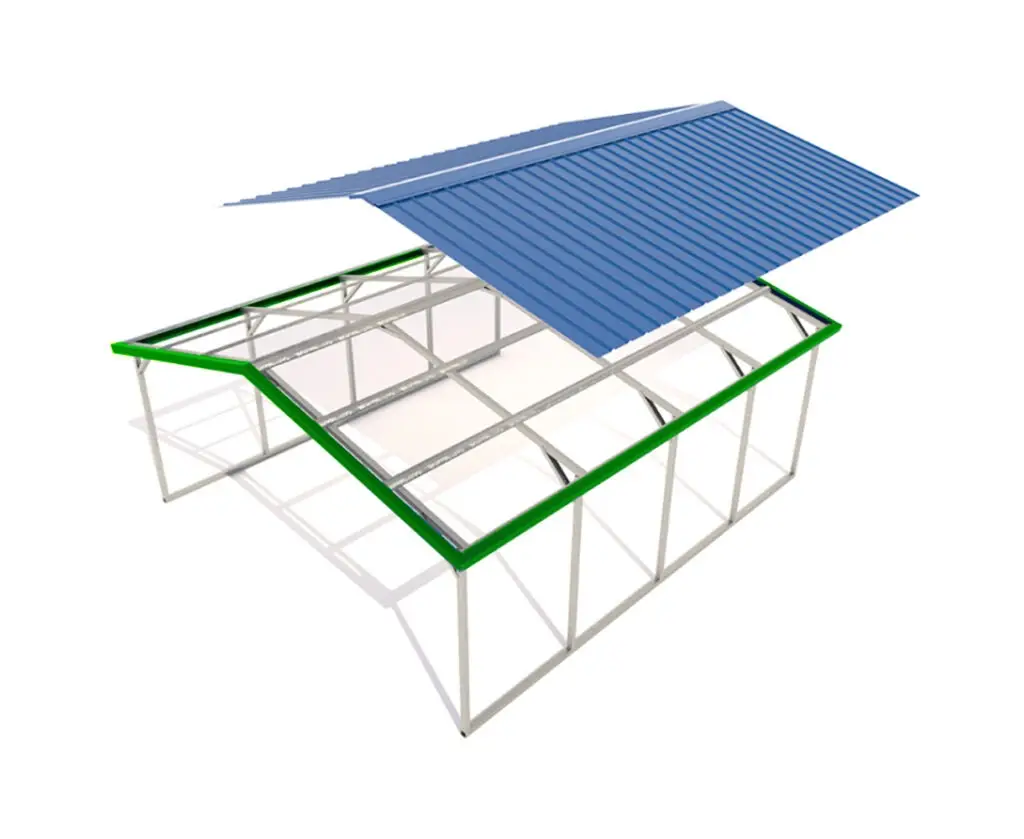
Car port metal roof configurations affect water drainage, snow shedding, and aesthetic appeal. Three primary roof styles dominate the market, each offering distinct advantages for different applications and architectural preferences.
Regular Roof Style
The regular or rounded roof features horizontal panels running perpendicular to the structure's length. This economical option provides adequate protection for most residential applications and represents the most budget-friendly choice among car port metal roofing systems.
Water drainage occurs through the roof's gradual slope, though this style performs less effectively in heavy snow regions. The rounded design deflects wind reasonably well and suits areas without extreme weather patterns.
Boxed Eave Roof Design
Boxed eave roofs incorporate an A-frame design where panels run horizontally from side to side. This configuration offers improved water runoff compared to regular roofs and provides a more finished appearance that complements residential architecture.
The boxed eave style works well in moderate climates and represents a middle-ground option between economy and premium car port metal roofing. It handles rain efficiently and offers better snow load distribution than regular roofs.
Vertical Roof Systems
Vertical roof carports feature panels installed vertically from ridge to eave, creating the most efficient water and snow shedding system available. This premium car port metal roofing option excels in regions experiencing heavy precipitation, significant snow accumulation, or high wind conditions.
Advantages of vertical roof systems:
- Superior water drainage preventing pooling and leaks
- Enhanced snow shedding reducing structural stress
- Improved wind resistance through aerodynamic design
- Extended longevity through reduced moisture retention
- Optimal performance in all climate zones
The vertical orientation allows debris, leaves, and precipitation to slide off naturally, minimizing maintenance requirements and extending the lifespan of your car port metal investment. Proper installation techniques ensure these benefits translate into real-world performance.
Protective Coatings and Finishes
The longevity of car port metal depends heavily on protective coatings that shield steel from corrosion, oxidation, and environmental degradation. Modern metal carports utilize several coating technologies to extend service life.
Galvanization Process
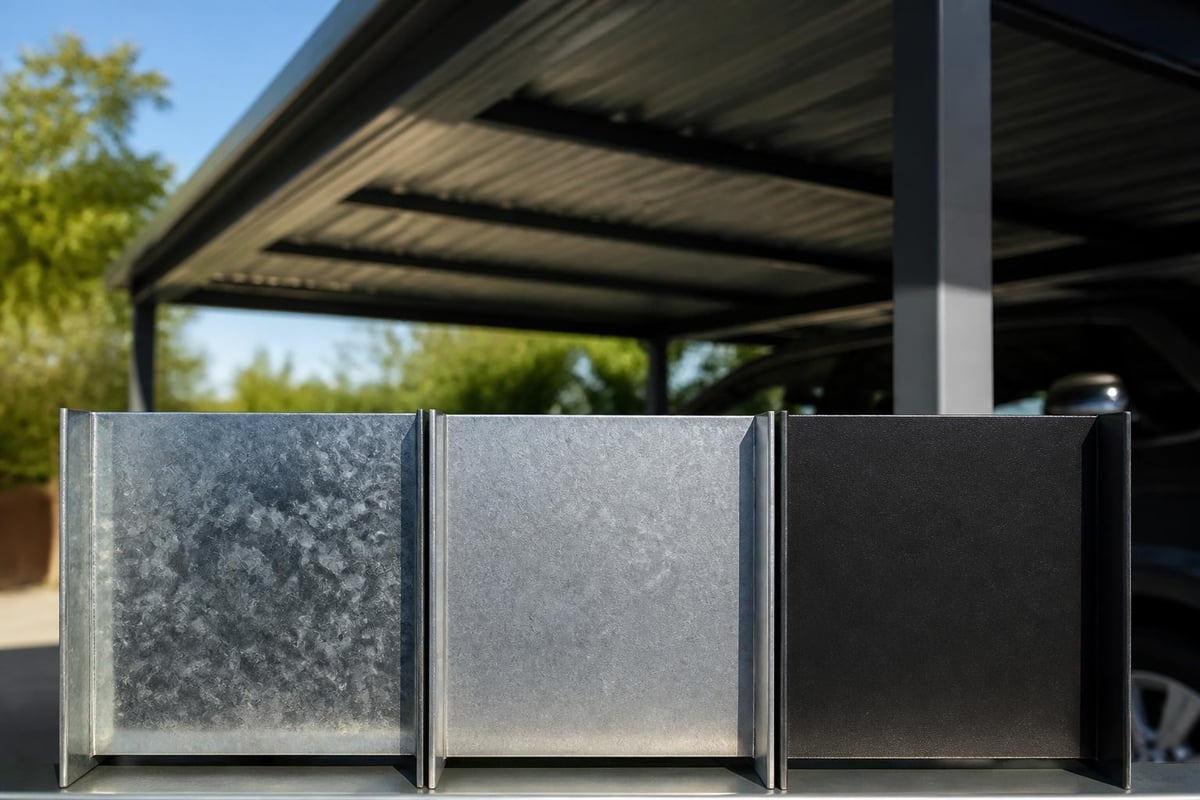
Hot-dip galvanization remains the industry standard for protecting car port metal from rust and corrosion. This process involves immersing steel in molten zinc, creating a metallurgical bond that provides sacrificial protection even when the coating sustains minor damage.
The zinc layer typically measures between 0.90 to 1.25 ounces per square foot for quality carport applications. This coating thickness directly correlates with corrosion resistance and expected service life in various environmental conditions.
Galvalume Technology
Galvalume coating combines aluminum and zinc in a 55-45 percent ratio, offering enhanced corrosion resistance compared to traditional galvanization. This car port metal finish excels in coastal environments and industrial areas where atmospheric pollutants accelerate steel degradation.
The aluminum content provides superior heat reflectivity, reducing thermal expansion and contraction cycles that stress structural connections over time. Many manufacturers now offer galvalume as a premium upgrade for harsh climate applications.
Color Coating Options
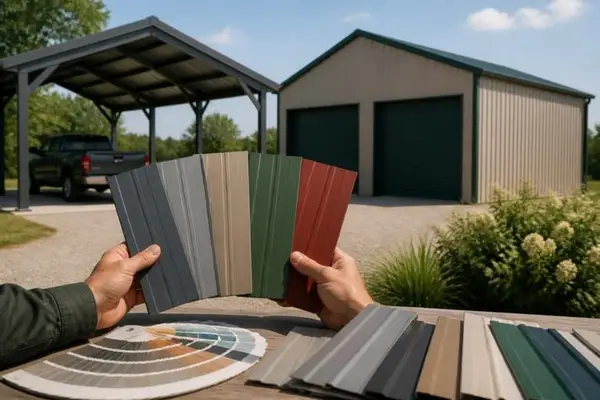
Powder-coated and painted finishes add aesthetic appeal while providing an additional protective barrier for car port metal surfaces. These finishes bond to galvanized or galvalume substrates, creating a multi-layer defense against environmental factors.
Quality color coatings incorporate UV inhibitors preventing fading and chalking from prolonged sun exposure. Premium formulations maintain appearance and protection for 20-30 years with minimal maintenance, though they typically add to initial investment costs.
Anchoring and Foundation Requirements
Securing car port metal structures requires appropriate anchoring systems matched to soil conditions, local building codes, and structural specifications. The foundation method significantly impacts long-term stability and safety.
Concrete Slab Foundations
Poured concrete slabs provide the most robust foundation for car port metal buildings, distributing loads evenly and creating a finished floor surface. Foundation requirements typically specify minimum slab thickness of four inches with proper reinforcement.
Anchor bolts embedded during concrete placement create permanent mounting points for structural posts. This method suits regions with expansive soils, high water tables, or strict building code requirements mandating permanent foundations.
Mobile Home Anchors
Ground anchors or auger-style anchors offer economical solutions for car port metal installation on compacted soil or gravel surfaces. These helical anchors screw deep into the ground, providing lateral and uplift resistance without concrete.
Installation considerations include:
- Soil composition and bearing capacity
- Anchor length appropriate for frost depth
- Number of anchors based on structure size
- Tensile strength ratings for wind zones
Mobile home anchors work effectively in most soil types and allow for future relocation if property needs change. However, they may not satisfy building codes in hurricane-prone regions or areas with severe weather requirements.
Asphalt and Gravel Bases
Existing asphalt driveways or compacted gravel pads can accommodate car port metal structures using specialized mounting brackets and anchoring systems. This approach preserves existing surfaces while providing adequate structural support for residential applications.
Engineers recommend minimum gravel depth of four to six inches over compacted subgrade for adequate load distribution. Proper drainage prevents water accumulation that could undermine anchor stability over time.
Customization Options for Metal Carports
Modern car port metal structures offer extensive customization possibilities allowing property owners to tailor designs matching specific needs, aesthetic preferences, and functional requirements. These options transform basic shelter into versatile, multi-purpose buildings.
Dimensions and Sizing
Car port metal buildings accommodate everything from compact single-vehicle coverage to expansive commercial applications spanning 60 feet or more. Standard residential widths include 12, 18, 20, 22, 24, and 30 feet, with lengths extending in two-foot increments to match specific coverage needs.
Height customization proves particularly valuable for owners of lifted trucks, RVs, boats, or commercial equipment requiring extra vertical clearance. Leg heights typically range from six feet to 16 feet, providing flexibility for various vehicle types and storage applications.
For those needing versatile solutions, Metal Carport Combo Units deliver exceptional value by combining open carport coverage with enclosed workshop or storage space. This innovative design maximizes functionality while maintaining cost efficiency compared to separate structures.
Enclosure Configurations
Open-sided car port metal structures provide basic weather protection at minimal cost, while partially or fully enclosed designs offer enhanced security and environmental control. Common enclosure patterns include:
- Gable end panels blocking front and rear exposures
- Single-side panels protecting against prevailing winds
- Two-side panels creating semi-enclosed work areas
- Full enclosure with doors creating secure storage buildings
Each additional panel increases material costs and installation complexity while providing progressive improvements in weather protection and security. Choosing the right configuration depends on intended use, budget constraints, and local climate factors.
Accessory Additions
Walk-in doors, roll-up garage doors, windows, and ventilation systems transform basic car port metal shelters into functional workshops, storage facilities, or recreational spaces. Premium options include:
| Accessory | Function | Typical Cost Impact |
|---|---|---|
| Walk Door | Personnel access | 5-8% increase |
| Roll-Up Door | Vehicle entry | 10-15% increase |
| Windows | Natural lighting | 3-5% per window |
| Gutters/Downspouts | Water management | 8-12% increase |
| Insulation | Climate control | 20-30% increase |
Strategic accessory selection enhances usability without unnecessarily inflating costs beyond budget parameters. Many property owners phase improvements over time as needs evolve and budgets allow.
Maintenance Best Practices
Preserving car port metal appearance and structural integrity requires minimal but consistent maintenance throughout the structure's lifespan. Regular maintenance routines prevent small issues from developing into costly repairs.
Cleaning and Debris Removal
Removing leaves, dirt, and organic debris prevents moisture retention that accelerates corrosion on car port metal surfaces. Quarterly cleaning using mild detergent and water maintains protective coatings while removing contaminants that promote rust formation.
Seasonal cleaning checklist:
- Spring: Remove winter debris, inspect for damage from snow loads
- Summer: Clear roof panels, check for insect nests in structural cavities
- Fall: Remove fallen leaves, clear drainage paths before winter
- Winter: Remove snow accumulation exceeding design loads
Pressure washing provides efficient cleaning for larger structures, though excessive pressure may damage protective coatings. Maintain distance and use appropriate pressure settings when cleaning car port metal panels.
Inspection and Minor Repairs
Annual inspections identify developing issues before they compromise structural integrity or require expensive remediation. Comprehensive maintenance guides outline specific inspection points and correction procedures.
Focus inspection efforts on connection points, fasteners, sealant integrity, and coating condition. Tighten loose bolts, replace missing screws, and address surface scratches with touch-up paint preventing rust from spreading across car port metal surfaces.
Rust Prevention Strategies
Even galvanized car port metal eventually shows signs of oxidation, particularly in coastal environments or industrial areas with corrosive atmospheric conditions. Early intervention prevents localized rust from spreading and requiring panel replacement.
Remove surface rust using wire brushes or sandpaper, then apply rust-inhibiting primer followed by color-matched topcoat. This simple maintenance extends panel life considerably and maintains aesthetic appeal throughout the structure's service life.
Regional Considerations and Climate Factors
Geographic location significantly influences car port metal specifications, with different regions requiring specific engineering to address local weather patterns and environmental stressors. Understanding these regional factors ensures adequate protection and compliance with building codes.
Snow Load Requirements
Northern states and mountainous regions experience substantial snow accumulation requiring heavier-gauge car port metal and engineering calculations for adequate load capacity. Building codes specify minimum snow load ratings based on historical weather data and elevation.
Vertical roof systems dramatically improve snow management in heavy accumulation zones, allowing precipitation to slide off before reaching critical weight thresholds. Frame reinforcement and reduced post spacing provide additional support in extreme snow regions.
Wind Speed Ratings
Coastal areas, plains states, and hurricane-prone regions demand car port metal engineering certified for specific wind speeds. These structures require enhanced anchoring, closer post spacing, and potentially thicker gauge materials to withstand sustained high winds and severe storm events.
Engineers calculate wind loads based on local building codes, structure height, roof pitch, and exposure category. Proper site selection combined with appropriate specifications ensures structural stability during extreme weather events.
Coastal Environment Considerations
Salt air accelerates corrosion on car port metal surfaces, requiring enhanced protective coatings and potentially upgraded materials for coastal applications. Galvalume coating systems outperform standard galvanization in marine environments where salt spray continuously attacks metal surfaces.
Regular washing removes salt deposits before they penetrate protective layers, while annual inspections catch developing corrosion early. Some coastal property owners opt for stainless steel fasteners and hardware eliminating rust-prone components entirely.
Economic Value and Return on Investment
Investing in quality car port metal delivers measurable financial returns through vehicle protection, increased property value, and versatile functionality extending beyond basic shelter. Understanding these economic factors helps justify initial investment costs.
Vehicle Protection Benefits
Protecting vehicles from sun, rain, hail, and environmental contaminants extends paint life, prevents interior degradation, and maintains resale value. Conservative estimates suggest covered storage adds 20-30 percent to vehicle longevity compared to constant outdoor exposure.
For commercial operations maintaining fleets, protecting work vehicles and equipment reduces maintenance costs while ensuring operational readiness. Companies managing commercial vehicles often find that proper vehicle maintenance becomes easier when equipment stays protected from weather extremes.
Property Value Enhancement
Quality car port metal structures add functional square footage increasing property appeal to potential buyers. Real estate professionals consistently note covered parking and storage space as desirable features commanding premium prices in competitive markets.
Unlike temporary fabric shelters or deteriorating wooden structures, professional-grade metal carports present well-maintained appearances enhancing curb appeal. Many municipalities classify permanent metal buildings as property improvements potentially increasing assessed values and tax bases.
Multi-Purpose Functionality
Beyond vehicle protection, car port metal buildings serve as workshops, outdoor entertaining spaces, equipment storage, and hobby areas. This versatility maximizes return on investment by serving multiple functions throughout changing seasons and evolving property needs.
Enclosed configurations create climate-controlled storage for sensitive equipment, seasonal decorations, or recreational gear. Understanding various applications helps buyers specify features supporting intended uses.
Installation Considerations and Timelines
Professional installation ensures car port metal structures meet engineering specifications, comply with local codes, and provide expected performance throughout their service life. Understanding installation processes helps property owners prepare sites and coordinate delivery schedules.
Site Preparation Requirements
Level ground free from underground utilities, adequate drainage, and proper clearances from property lines establish necessary conditions for successful installation. Most installers require access for delivery trucks and equipment within reasonable proximity to installation locations.
Clearing vegetation, removing obstacles, and ensuring firm, compacted soil prevents installation delays and additional charges. Selecting experienced dealers who provide comprehensive site evaluation services eliminates surprises during installation.
Typical Installation Timeframes
Standard car port metal installation typically completes within one to three days depending on structure size, complexity, and site conditions. Simple open-sided carports require minimal time, while fully enclosed buildings with multiple accessories extend installation schedules.
Installation timeline factors:
- Structure dimensions and roof style
- Enclosure panels and door installations
- Foundation type and preparation time
- Weather conditions during installation
- Crew size and experience level
Reputable manufacturers coordinate delivery and installation seamlessly, minimizing disruption to property operations while ensuring quality workmanship throughout the process.
Permit and Code Compliance
Local building departments regulate permanent structure installation through permit requirements ensuring safety and code compliance. Car port metal buildings typically require permits when exceeding specific size thresholds or incorporating electrical, plumbing, or HVAC systems.
Professional installation companies often handle permit applications, engineering certifications, and inspection coordination as part of comprehensive service packages. This expertise navigates regulatory requirements efficiently while ensuring structures meet all applicable codes and standards.
Quality car port metal construction combines appropriate gauge thickness, protective coatings, and engineered design creating durable structures that protect valuable assets for decades. Whether you need basic vehicle coverage or comprehensive storage solutions, selecting the right materials and specifications ensures your investment delivers lasting value. Metal Structure Sales LLC provides customizable metal carports with professional installation and delivery included, helping property owners across the country find perfect solutions matching their specific needs and budget requirements.