

A steel garage represents one of the smartest investments property owners can make in 2026. Unlike traditional wood-framed structures that deteriorate over time, metal buildings offer exceptional durability, minimal maintenance requirements, and remarkable versatility. Whether you need vehicle protection, additional storage space, or a workshop area, understanding the advantages and design considerations of a steel garage helps you make an informed decision that serves your needs for decades to come.
Why Choose a Steel Garage Over Traditional Construction
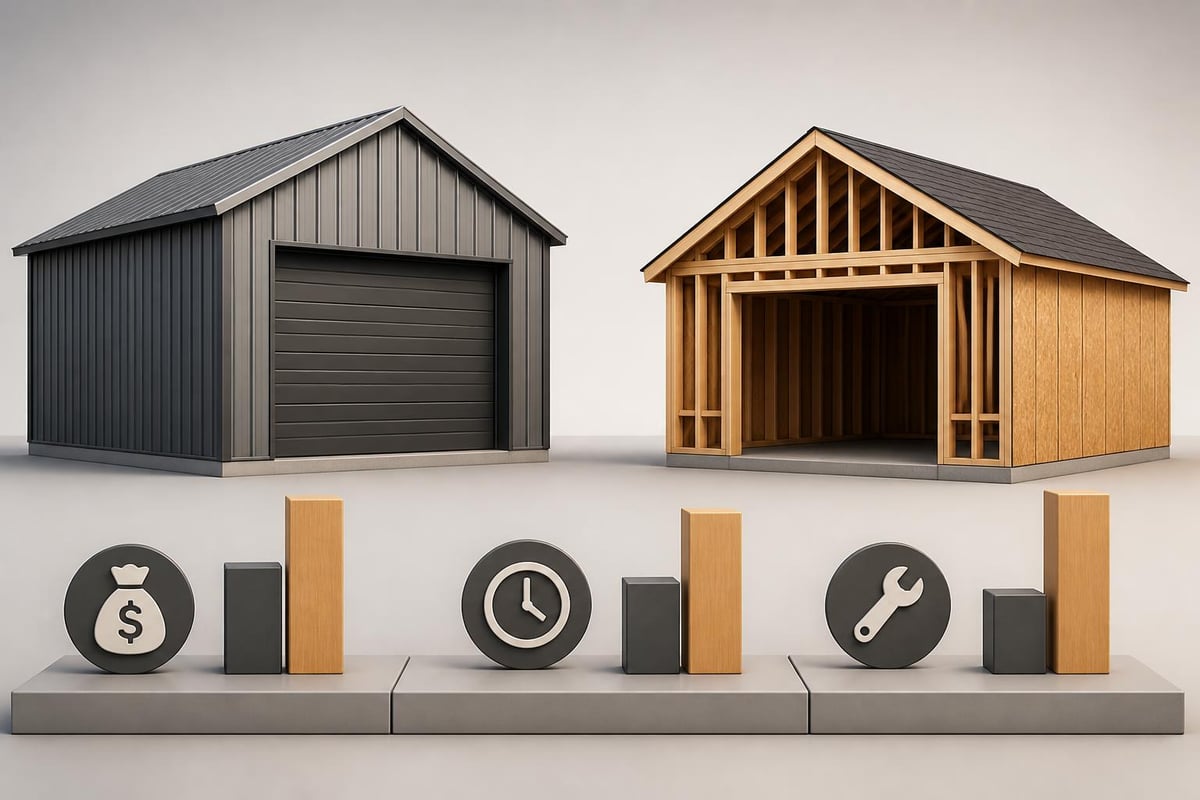
The decision between a steel garage and conventional building materials impacts your budget, maintenance schedule, and long-term satisfaction. Metal structures consistently outperform wood and other materials across multiple critical factors.
Durability stands as the primary advantage of steel construction. A properly maintained steel garage can last 30 to 50 years or more, significantly outlasting traditional garage structures. Steel resists warping, cracking, and settling that commonly affect wooden buildings. Termites, rodents, and other pests that destroy wood structures cannot damage steel framing and panels.
Cost Efficiency and Construction Speed
Steel garages offer substantial cost advantages over traditional construction methods. Material costs remain lower, and the prefabricated nature of metal buildings reduces labor expenses dramatically.
- Lower initial investment compared to brick or wood construction
- Reduced construction time from weeks to days
- Minimal site preparation requirements in most cases
- Fewer ongoing maintenance costs over the structure's lifespan
- Lower insurance premiums due to fire resistance
The streamlined construction process for metal garages means faster project completion. Prefabricated components arrive ready for assembly, eliminating delays associated with weather-dependent construction phases. This efficiency translates directly into cost savings and quicker access to your new storage or workspace.
Design Options and Customization Features
Modern steel garage construction offers remarkable flexibility in design and configuration. The range of available options ensures your structure meets specific functional requirements while complementing your property aesthetic.
Roof Styles and Their Applications
Selecting the appropriate roof style affects both functionality and appearance. Each design serves distinct purposes based on climate conditions and intended use.
| Roof Style | Best For | Key Advantages |
|---|---|---|
| Regular (Rounded) | Budget-conscious projects, moderate climates | Most economical option, efficient water runoff |
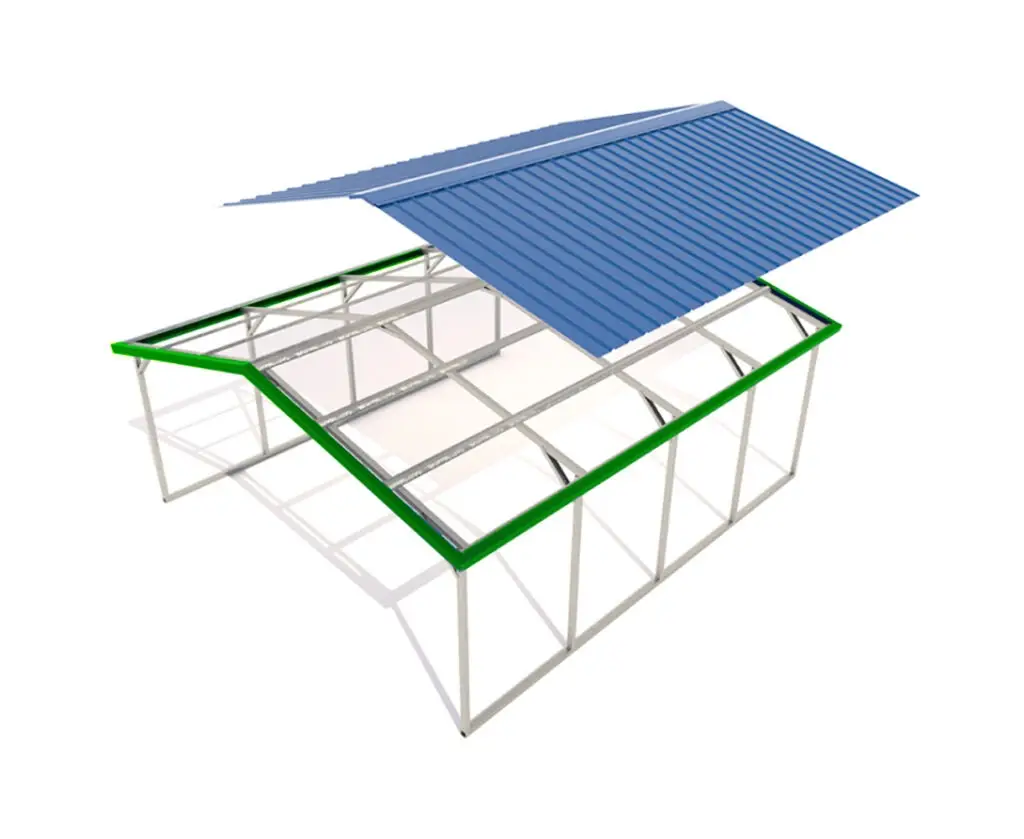
| A-Frame (Boxed Eave) | Areas with moderate weather | Enhanced appearance, good structural support |
| Vertical | Heavy snow/rain regions | Superior drainage, maximum strength, premium look |
Vertical roof designs provide optimal performance in areas experiencing significant precipitation or snow accumulation. The ridged panels channel water and snow off the structure efficiently, preventing accumulation that could stress the framework. This design also offers the most professional appearance and typically commands higher resale value.
Size and Layout Configurations
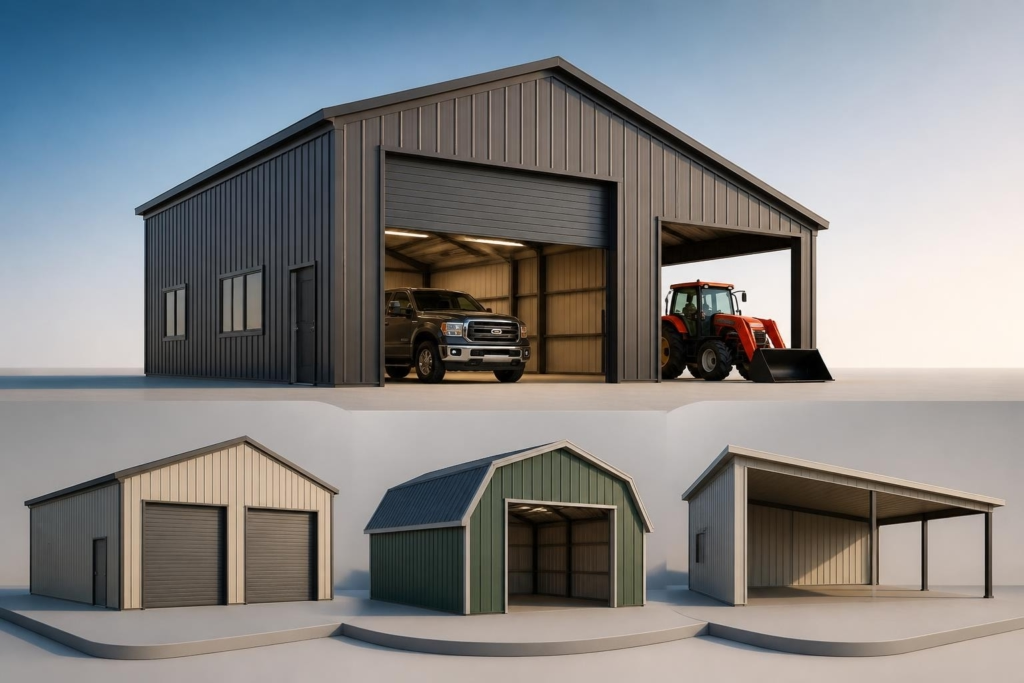
A steel garage accommodates virtually any dimension requirement. Standard single-car units start around 12 feet wide, while multi-vehicle structures can exceed 30 feet in width. Metal covering solutions provide protection for various vehicle types and equipment sizes.
Height customization allows for different vehicle types:
- Standard 6-foot legs for cars and trucks
- 8-foot legs for lifted vehicles or additional overhead storage
- 10-12 foot legs for RVs, boats, or workshop equipment
- 14-16 foot legs for commercial vehicles or tall equipment
Length options typically range from 20 to 40 feet for residential applications, with commercial structures extending much longer. Design planning for your steel garage should account for current needs plus 20-30% additional space for future requirements.
Essential Components and Material Quality
Understanding the components that comprise a steel garage helps you evaluate different offerings and make informed purchasing decisions. Quality variations significantly impact structure longevity and performance.
Framing and Gauge Specifications
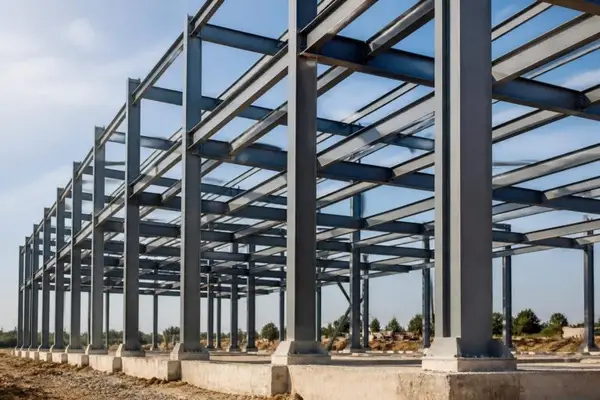
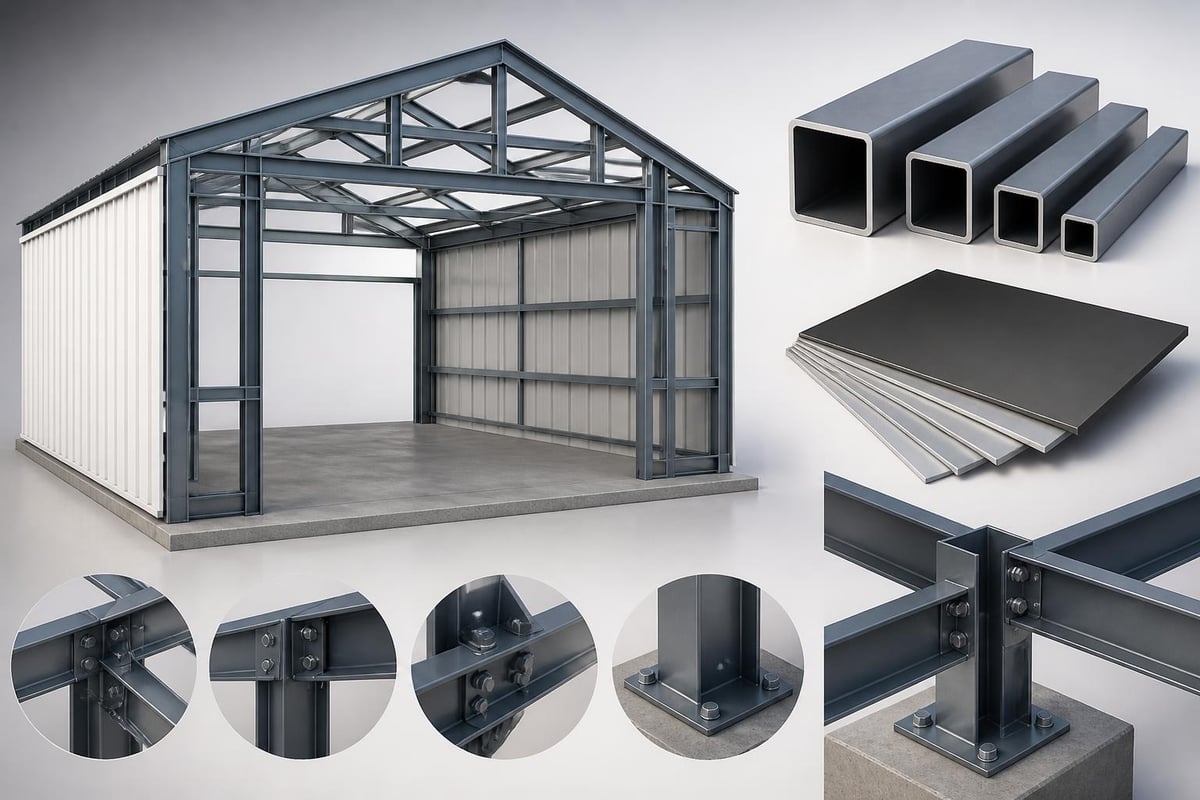
The steel frame forms the structural backbone of your garage. Frame quality determines load-bearing capacity and overall durability. Most residential steel garages utilize 14-gauge or 12-gauge steel tubing for primary framing members.
Gauge thickness directly correlates with strength:
- 14-gauge framing suits standard residential applications in moderate climates
- 12-gauge framing provides enhanced strength for heavy snow loads or wider spans
- Commercial applications often require 10-gauge or heavier framing
Steel framing construction must meet local building codes and wind/snow load requirements. Certified structures undergo engineering analysis to ensure they withstand environmental stresses specific to your region.
Panel Materials and Coating Systems
Exterior panels protect your vehicles and belongings from weather while defining the structure's appearance. Panel gauge and coating quality determine weather resistance and longevity.
- 29-gauge panels offer economical coverage for budget builds
- 26-gauge panels provide superior durability and dent resistance
- Galvalume coating delivers excellent corrosion protection
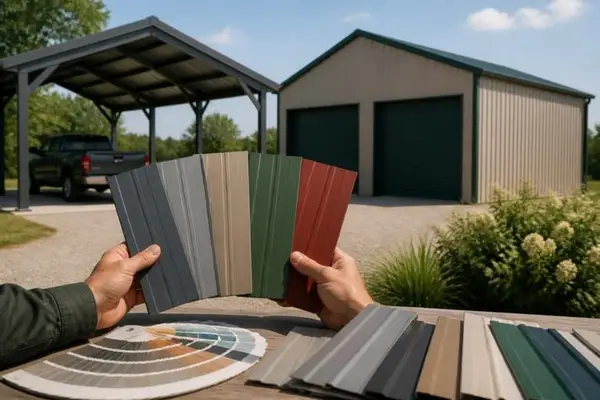
- Powder-coated finishes add color options and UV protection
Premium coating systems include multi-layer protection with rust inhibitors and UV-resistant topcoats. These advanced finishes maintain appearance and structural integrity through decades of sun exposure and weather cycles. Building with quality steel materials ensures your investment withstands the test of time.
Installation Considerations and Site Preparation
Proper installation ensures your steel garage performs as designed and complies with local regulations. Site preparation requirements vary based on soil conditions, local codes, and structure specifications.
Foundation and Anchoring Requirements
A solid foundation prevents settling, shifting, and structural stress. Foundation requirements depend on structure size, local codes, and soil characteristics.
Foundation options include:
- Concrete slab – Provides the most stable, permanent base
- Gravel or crushed stone – Economical option for non-enclosed structures
- Asphalt – Suitable for existing paved areas
- Ground anchors – Required in all installations for wind resistance
- Mobile home anchors – Alternative anchoring system for certain applications
Ground must be level within manufacturer specifications, typically requiring variation of less than three inches across the structure footprint. Professional site evaluation identifies drainage issues and soil stability concerns before installation begins.
Permitting and Code Compliance
Building permit requirements vary significantly by jurisdiction. Most municipalities require permits for permanent structures, especially enclosed garages. Research local regulations early in your planning process to avoid delays and ensure compliance.
Key regulatory considerations include:
- Setback requirements from property lines
- Height restrictions in residential zones
- Wind and snow load certifications
- Electrical and plumbing permits for utilities
- HOA approval in governed communities
Selecting the right garage configuration involves balancing your functional needs with local code requirements and property constraints. Working with experienced providers familiar with regional regulations streamlines the approval process.
Functional Enhancements and Add-On Features
A basic steel garage provides excellent vehicle protection, but strategic enhancements expand functionality and convenience. Consider which features align with your intended use and budget parameters.
Door and Access Options
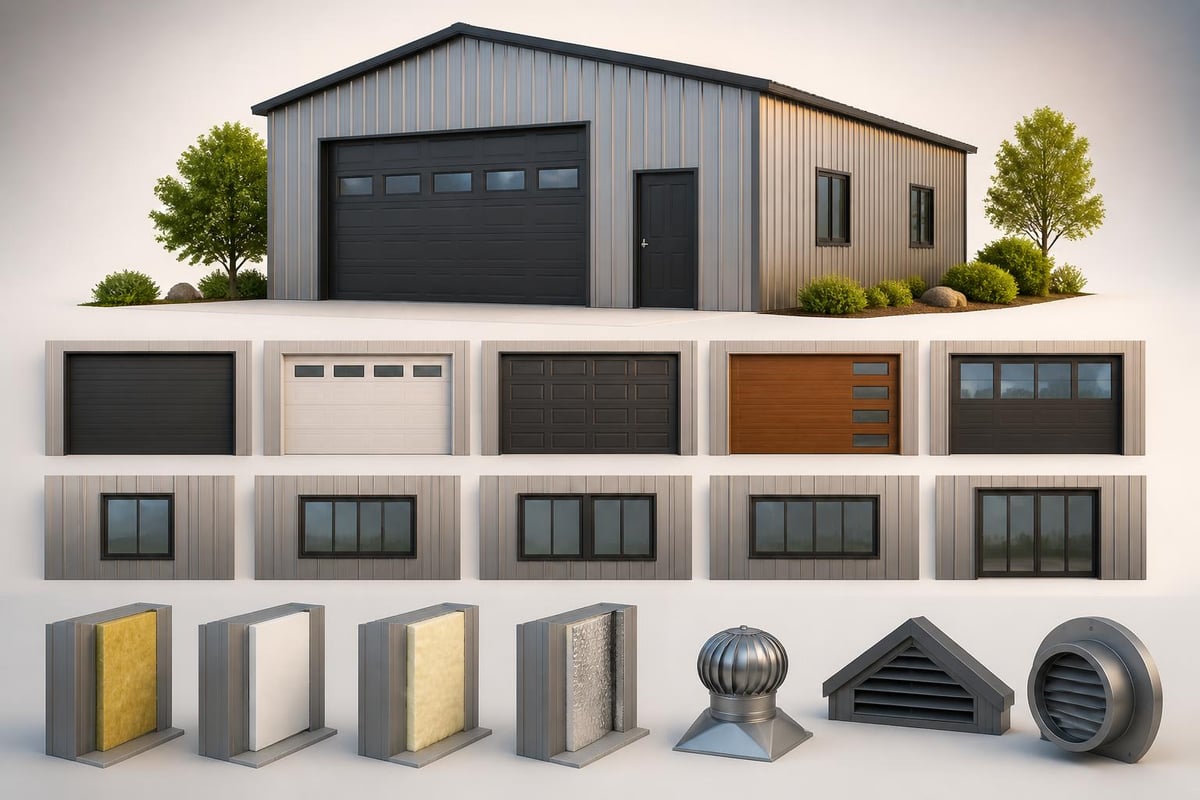
Entry points significantly impact usability. Garage door selection affects security, convenience, and climate control capabilities.
| Door Type | Advantages | Typical Applications |
|---|---|---|
| Roll-up doors | Space-efficient, secure | Enclosed garages, workshops |
| Overhead doors | Traditional appearance, easy operation | Residential garages |
| Walk-in doors | Personnel access without opening main door | All enclosed structures |
| Windows | Natural light, ventilation | Workshops, hobby spaces |
Multiple access points provide flexibility for different activities. A walk-in door eliminates the need to open the main garage door for quick access to stored items or tools. Windows improve workspace comfort but require consideration of security and privacy factors.
Climate Control and Insulation
Insulation transforms a steel garage from simple storage into comfortable workspace. Insulated structures maintain more stable interior temperatures, reducing heating and cooling costs while protecting temperature-sensitive items.
Insulation options include:
- Woven insulation for condensation control in unheated spaces
- Foam board insulation for superior R-value in climate-controlled areas
- Spray foam for maximum thermal performance and air sealing
- Radiant barriers to reflect heat in hot climates
Climate control capabilities make enclosed steel garages suitable for workshops, home gyms, or hobby spaces. When properly insulated and equipped with HVAC systems, these structures provide year-round comfortable environments. For those needing both covered and enclosed space, Metal Carport Combo Units offer an innovative solution that combines open carport space with a fully enclosed steel garage or workshop area in one integrated structure.
Maintenance Requirements for Long-Term Performance
Steel garages require minimal maintenance compared to traditional structures, but regular attention prevents minor issues from becoming major problems. A systematic maintenance approach protects your investment and extends structure lifespan.
Routine Inspection and Cleaning
Regular inspections identify potential issues before they cause damage. Maintaining your metal garage involves checking critical components on a consistent schedule.
Monthly inspection checklist:
- Examine panels for scratches, dents, or coating damage
- Check fasteners and connections for looseness
- Inspect gutters and drainage systems for blockages
- Look for signs of rust or corrosion at connection points
- Verify anchor integrity and foundation stability
Cleaning requirements remain modest for steel garages. Washing panels annually with mild detergent and water removes accumulated dirt and prevents corrosion. Avoid abrasive cleaners that damage protective coatings. Professional maintenance tips emphasize gentle cleaning methods that preserve finish integrity.
Addressing Minor Damage Promptly
Quick response to minor damage prevents deterioration. Small scratches in the protective coating allow moisture contact with underlying steel, potentially initiating corrosion. Touch-up paint specifically formulated for metal buildings provides effective protection for scratched or scuffed areas.
Loose fasteners require immediate attention. Vibration from wind and thermal expansion can gradually loosen bolts and screws. Periodic tightening of all accessible fasteners maintains structural integrity and prevents panel movement that could enlarge mounting holes.
Applications Beyond Vehicle Storage
The versatility of a steel garage extends far beyond parking cars and trucks. These adaptable structures serve numerous purposes that add value and functionality to residential and commercial properties.
Workshop and Hobby Spaces
Enclosed steel garages create ideal workshop environments. The open interior span eliminates support columns that interfere with equipment placement and workflow. Adequate ceiling height accommodates lifts, overhead storage, and ventilation systems.
Workshop applications include:
- Automotive repair and restoration
- Woodworking and metalworking shops
- Home-based business operations
- Arts and crafts studios
- Fitness and training facilities
Proper planning for workshop use involves electrical service adequate for tools and equipment, lighting for detailed work, and ventilation for dust and fume control. Understanding steel building construction helps you specify features that support your intended activities.
Equipment and Agricultural Storage
Agricultural operations benefit tremendously from steel garage structures. Farm equipment, hay storage, livestock shelter, and maintenance facilities all function effectively in metal buildings. The weather resistance and durability of steel make these structures particularly suitable for rural applications.
Equipment storage protects valuable machinery from weather exposure that accelerates wear and reduces reliability. Tractors, combines, implements, and other farm equipment maintain better condition and resold value when sheltered from sun, precipitation, and temperature extremes.
Regional Considerations and Climate Adaptability
Geographic location influences design specifications for optimal steel garage performance. Understanding regional climate challenges ensures your structure provides reliable protection year-round.
Snow Load Requirements
Areas experiencing significant snowfall require engineering for appropriate snow load capacity. Snow accumulation weight varies by region, with requirements ranging from 20 pounds per square foot in moderate climates to over 70 pounds per square foot in heavy snow regions.
Vertical roof designs excel in snow-prone areas by preventing accumulation. The steep pitch allows snow to slide off naturally rather than accumulating weight on the structure. Enhanced framing with heavier gauge steel and closer spacing provides additional load-bearing capacity where codes mandate higher ratings.
Wind Resistance and Hurricane Zones
Coastal regions and areas prone to high winds demand structures engineered for wind resistance. Certification requirements specify minimum wind speed ratings, typically ranging from 90 to 170 miles per hour depending on location. Protecting your metal building investment includes ensuring proper engineering for local environmental conditions.
Enhanced anchoring systems in high-wind zones use longer ground anchors, additional anchor points, and reinforced connection hardware. These specifications appear on engineering certifications that accompany code-compliant installations.
Value Comparison and Return on Investment
Evaluating the financial aspects of a steel garage involves examining both immediate costs and long-term value. Understanding total cost of ownership provides clearer perspective than initial purchase price alone.
Initial Investment Analysis
Steel garage pricing reflects multiple variables including size, roof style, gauge specifications, and customization features. Base models offer economical vehicle protection, while premium configurations with insulation, multiple doors, and enhanced finishes command higher prices.
Cost factors to evaluate:
- Base structure – Size, roof style, and framing gauge
- Site preparation – Foundation work and grading requirements
- Installation – Professional setup versus DIY assembly
- Permits and fees – Local government requirements
- Enhancements – Doors, windows, insulation, and utilities
Many providers include delivery and installation in quoted prices, simplifying budget planning. Exploring service areas helps identify coverage and pricing for your location.
Long-Term Value Proposition
The true value of a steel garage emerges over years of use. Minimal maintenance requirements, exceptional durability, and versatile functionality combine to deliver outstanding return on investment.
Financial benefits over time include:
- Reduced vehicle maintenance costs from weather protection
- Lower insurance premiums for protected assets
- Increased property value and marketability
- Avoided replacement costs versus deteriorating wood structures
- Energy savings from insulated workshop spaces
Property value increases typically range from 50% to 100% of the structure cost, depending on local market conditions and building quality. A well-designed steel garage appeals to buyers seeking storage, workshop space, or vehicle protection.
Choosing the Right Provider and Specifications
Success with your steel garage project depends heavily on selecting a reputable provider and specifying appropriate features for your needs. Research and careful planning prevent costly mistakes and disappointment.
Evaluating Manufacturer Quality
Not all steel garage manufacturers maintain equivalent quality standards. Investigating company reputation, warranty terms, and construction specifications helps identify providers offering superior value.
Key evaluation criteria:
- Years in business and customer reviews
- Warranty coverage for materials and workmanship
- Certification for local wind and snow loads
- Material specifications including gauge and coating details
- Installation quality and professional crew experience
Request references from recent customers in your area. Viewing completed installations provides insight into build quality and finish appearance. Companies confident in their work readily provide customer contacts and project examples.
Specification Considerations for Your Application
Matching structure specifications to intended use ensures satisfaction with your investment. Under-specifying creates limitations, while over-specifying wastes budget on unnecessary features.
Consider these factors when planning your steel garage:
- Current and anticipated future vehicle sizes
- Workshop or storage functionality beyond parking
- Local climate challenges and code requirements
- Available space and property constraints
- Budget allocation for base structure versus enhancements
A steel garage delivers exceptional value through durability, versatility, and minimal maintenance requirements that serve property owners for decades. Whether you need basic vehicle protection or a fully-equipped workshop, metal construction provides reliable performance in any climate. Metal Structure Sales LLC specializes in high-quality, customizable steel structures with delivery and installation included, helping you find the perfect solution tailored to your specific needs and budget.