

Protecting your recreational vehicle from the elements is one of the smartest investments you can make as an RV owner. An rv carport offers a cost-effective solution that shields your vehicle from sun damage, rain, snow, and debris while maintaining easy access for your next adventure. Unlike traditional garages that require significant construction costs and time, these specialized structures provide dedicated protection designed specifically for the unique dimensions and requirements of recreational vehicles. Whether you own a Class A motorhome, travel trailer, or fifth wheel, understanding the benefits and options available will help you make an informed decision about safeguarding your valuable asset.
Understanding RV Carport Dimensions and Sizing
The size of your rv carport depends entirely on your vehicle's specifications and your future plans. Recreational vehicles vary dramatically in size, from compact camper vans measuring 20 feet in length to massive Class A motorhomes exceeding 45 feet.
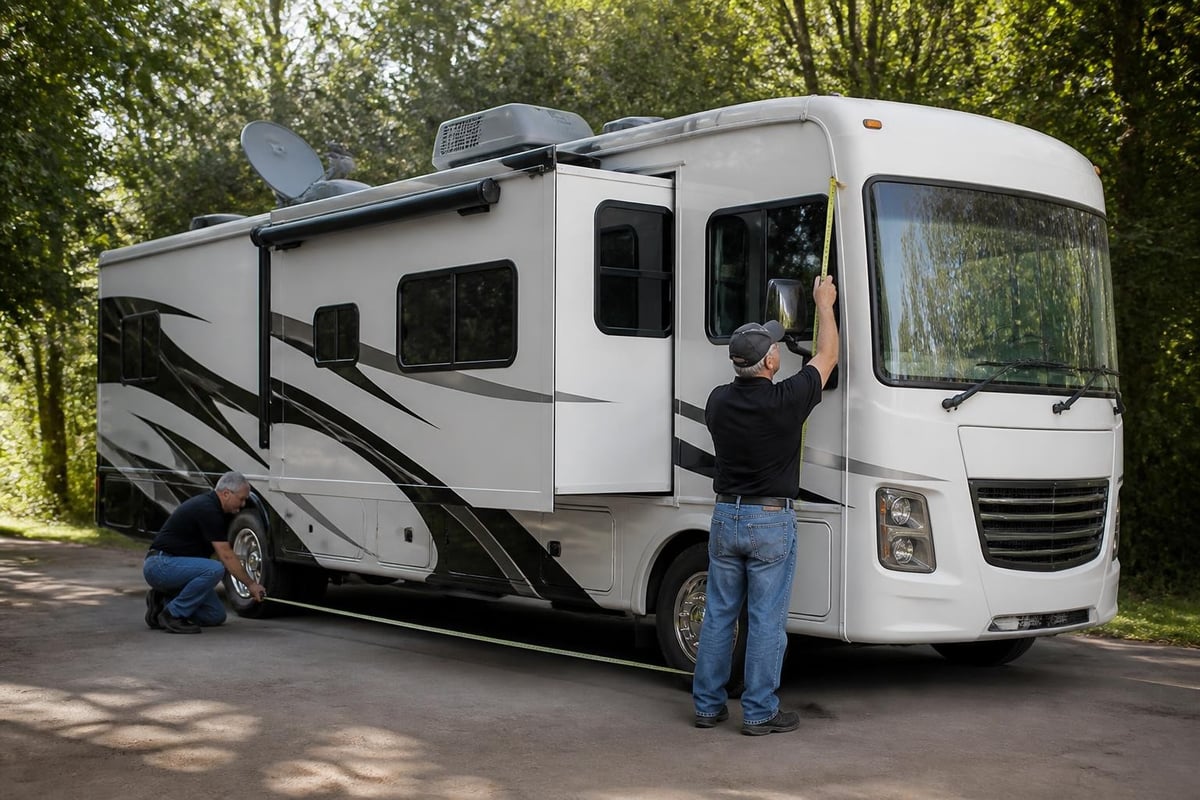
Measuring Your RV Correctly
Before selecting a structure, measure your RV's total length, width, and height with all accessories extended. Include roof-mounted air conditioning units, satellite dishes, and ladder racks in your height calculations. Many RV owners underestimate clearance requirements and end up with structures that barely accommodate their vehicles.
Critical measurements to record:
- Overall length including hitches and bumpers
- Width at the widest point, typically the mirrors
- Height from ground to highest point
- Any slide-outs in extended position
Add at least 2-3 feet to your length and width measurements to ensure comfortable maneuvering space. For height, experts recommend adding a minimum of 18 inches to your RV's tallest point to account for ventilation and ease of entry.
Standard Size Categories
Most manufacturers offer rv carport sizing options in standardized categories based on common RV types. These categories help streamline the selection process while ensuring adequate protection.
| RV Type | Typical Length | Recommended Width | Minimum Height |
|---|---|---|---|
| Class B (Van) | 18-24 feet | 12-14 feet | 10-12 feet |
| Class C (Motorhome) | 24-33 feet | 14-16 feet | 12-14 feet |
| Travel Trailer | 20-35 feet | 14-16 feet | 12-14 feet |
| Class A (Motorhome) | 30-45 feet | 16-18 feet | 14-16 feet |
| Fifth Wheel | 25-40 feet | 14-16 feet | 13-15 feet |
Roof Style Options for Maximum Protection
The roof design significantly impacts both the protective capabilities and longevity of your rv carport. Three primary styles dominate the market, each offering distinct advantages depending on your climate and budget.
Regular Roof Style
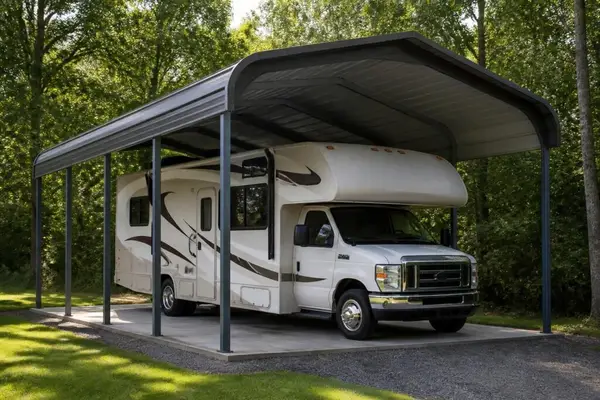
Regular roof carports feature rounded edges with horizontal roof panels that run from front to back. This economical option works well in areas with minimal snow and moderate weather conditions. The simple design keeps costs lower while still providing basic protection from sun and rain.
Boxed Eave Roof Style
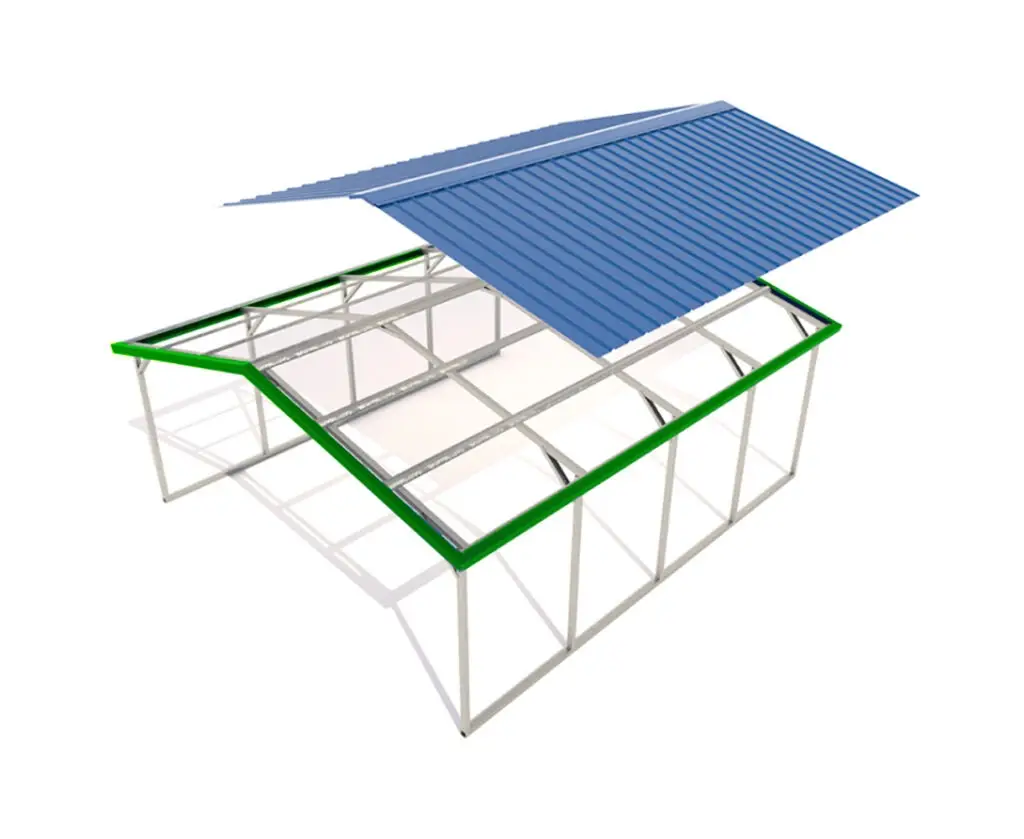
Boxed eave roofs incorporate horizontal panels with an A-frame style appearance. The panels run horizontally across the structure, offering improved water drainage compared to regular roofs. This mid-tier option provides better protection in areas experiencing moderate rainfall and occasional snow.
Vertical Roof Style
Vertical roof carports represent the premium choice, featuring panels installed vertically from peak to sides. This design allows rain, snow, and debris to slide off efficiently rather than accumulating on the surface. According to professional RV storage guidelines, vertical roofs perform best in regions with heavy precipitation or significant snowfall. Metal Structure Sales LLC offers their Metal TV Covers with vertical roof options, providing superior protection that extends the life of your recreational vehicle by preventing moisture buildup and reducing maintenance requirements.
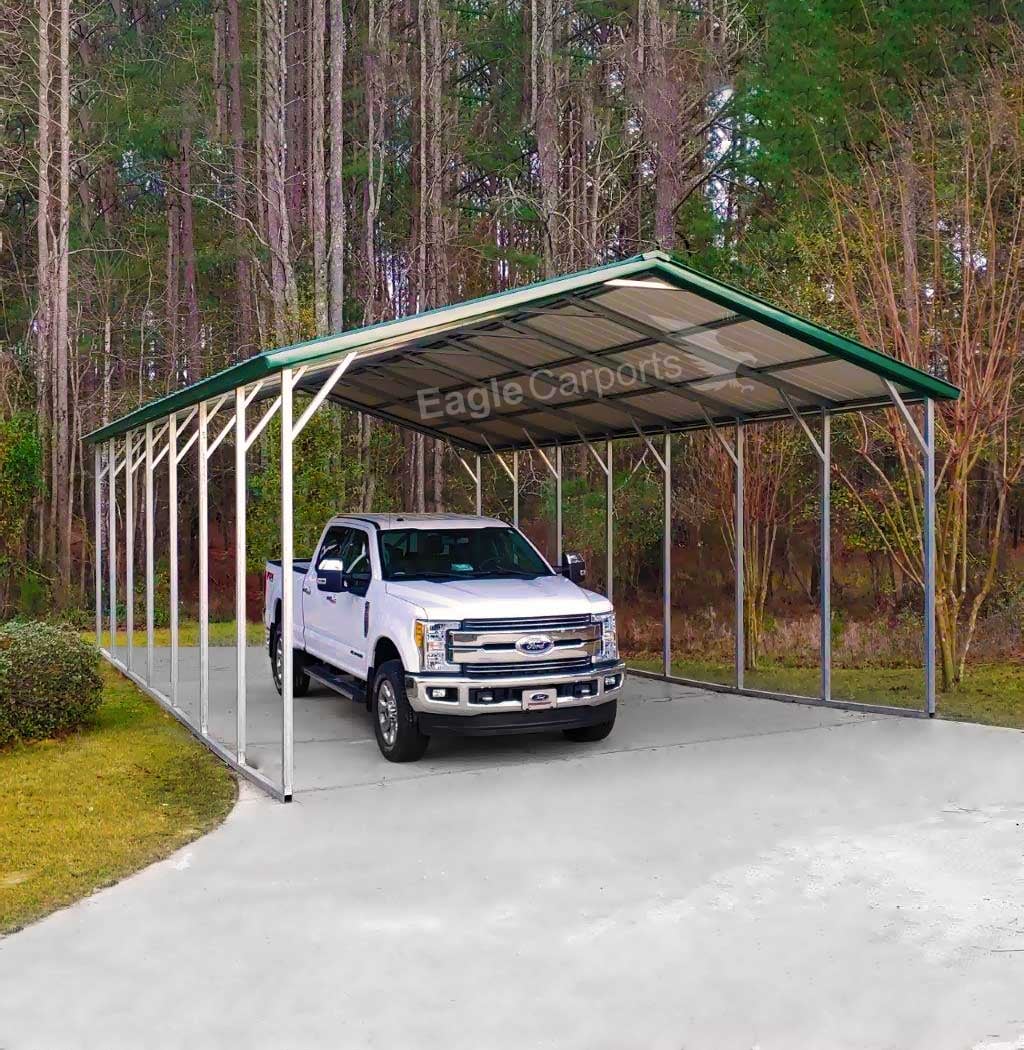
The vertical orientation also minimizes the accumulation of leaves, branches, and other debris that can trap moisture and cause deterioration over time. While vertical roofs cost approximately 15-20% more than regular styles, the investment pays dividends in areas prone to harsh weather conditions.
Material Choices and Structural Considerations
Modern rv carport construction relies primarily on steel framing and metal roofing panels, though material quality varies significantly between manufacturers and price points.
Steel Gauge and Frame Strength
The steel gauge determines the thickness and strength of your carport's structural components. Lower gauge numbers indicate thicker, stronger steel. Most quality structures use 12-gauge or 14-gauge steel tubing for vertical legs and horizontal framing members.
Frame component specifications:
- 12-gauge steel: 0.105 inches thick, premium strength
- 14-gauge steel: 0.075 inches thick, standard residential use
- Certified structures: Engineered to meet local building codes
Frame spacing also affects structural integrity. Commercial-grade carports typically feature vertical legs spaced 5-6 feet apart, while economy models may space legs 8-10 feet apart, reducing overall strength.
Panel Quality and Coating
Metal roofing and wall panels come in various gauges and coating options. The standard 29-gauge steel panels work well for most applications, while 26-gauge panels offer enhanced durability for areas with severe weather. Galvanized coating protects against rust and corrosion, extending the structure's lifespan well beyond 20 years with proper maintenance.
Customization Features and Add-Ons
An rv carport becomes significantly more functional with strategic customization options that enhance both protection and usability. These features transform a basic shelter into a comprehensive storage solution.
Enclosed Walls and Gable Ends
Adding enclosed walls converts an open carport into a partially or fully enclosed structure. Many RV owners start with gable ends to block wind-driven rain and snow from entering through the front and back. Side walls can be added later as budget allows.
- Assess prevailing wind direction in your area
- Prioritize walls on weather-facing sides
- Include walk-through doors for easy access
- Consider partially enclosed designs for ventilation
Gable ends come in standard or extended configurations, with extended versions adding 2-3 feet of covered length beyond the main structure. This extra coverage protects extended hitches and rear-mounted cargo carriers.
Additional Height and Clearance
Standard carports offer 12-14 feet of leg height, but customizing additional clearance provides numerous benefits. Extra height improves air circulation around your RV, reducing moisture accumulation that leads to mold and mildew. It also accommodates roof-mounted equipment and allows comfortable standing room for cleaning and maintenance tasks.
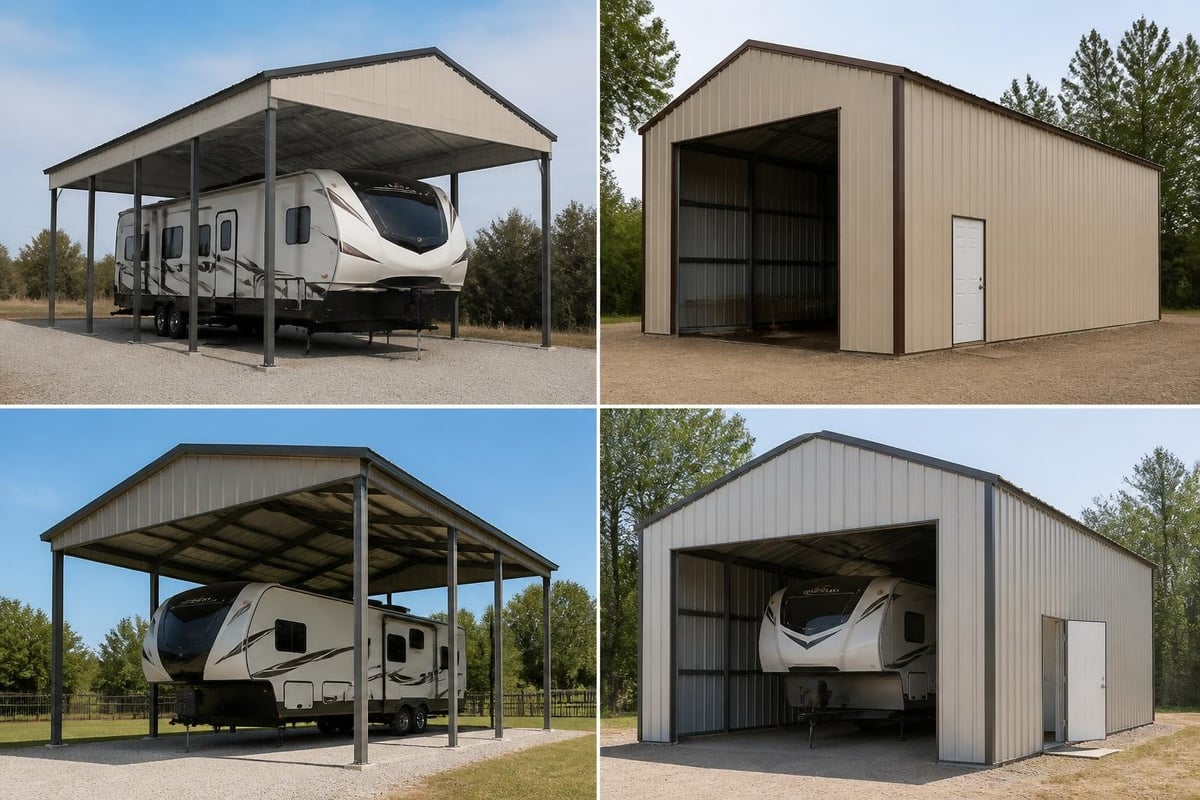
Available height options typically range from 8 feet (minimum for some trailers) up to 16 feet for large Class A motorhomes with extensive roof equipment. According to detailed buying guides, calculating the proper height requires measuring your RV with all accessories in place and adding 18-24 inches.
Installation Process and Site Preparation
Proper installation ensures your rv carport performs optimally for decades. While professional installation is included with most purchases from Metal Structure Sales LLC, understanding the process helps you prepare your site appropriately.
Site Selection and Ground Preparation
Choose a level area with adequate drainage to prevent water pooling under your structure. The installation site should be compacted and stable, whether you're using gravel, concrete, or asphalt as a base material.
Site preparation checklist:
- Clear vegetation and debris from installation area
- Grade for proper water runoff
- Compact soil to prevent settling
- Check local setback requirements from property lines
- Verify underground utility locations
Concrete slabs provide the most stable foundation but represent the highest initial cost. Gravel bases offer excellent drainage at moderate cost, while dirt installations work for budget-conscious buyers in well-drained areas. Many building guides recommend concrete for permanent installations in areas experiencing freeze-thaw cycles.
Anchor Systems and Wind Resistance
Professional installers use various anchoring methods depending on your foundation type. Concrete anchors provide maximum stability, while ground anchors work effectively in dirt or gravel installations. Mobile home anchors offer solutions for areas with specific soil conditions.
Wind certification becomes crucial in hurricane-prone regions or areas with frequent severe weather. Certified structures undergo engineering analysis to ensure they withstand specific wind speeds, typically ranging from 90 mph to 170 mph depending on local requirements. States like North Carolina and South Carolina often require certified structures due to coastal weather patterns.
Climate-Specific Considerations
Your geographic location directly influences the rv carport specifications you need. Different climates present unique challenges that affect material selection, roof style, and structural requirements.
Snow Load Requirements
Northern states and mountain regions require structures engineered for significant snow loads. Snow load ratings indicate how much weight per square foot the roof can support without collapsing or sustaining damage.
| Snow Load Rating | Coverage Area | Typical States |
|---|---|---|
| 20 PSF | Light snow regions | Southern states, coastal areas |
| 35 PSF | Moderate snow zones | Mid-Atlantic, some Midwest |
| 40+ PSF | Heavy snow areas | Northern tier, mountains |
Vertical roof styles excel in snow-prone regions because accumulated snow slides off rather than building up dangerous weight. States like Ohio and Indiana frequently specify higher snow load ratings for permitted structures.
Sun and Heat Considerations
Southern and southwestern states face intense sun exposure that degrades RV exteriors through UV radiation and extreme heat. An rv carport in Arizona or Nevada provides critical shade that prevents rubber seal deterioration, tire damage, and interior fading.
Metal roofs reflect solar radiation effectively, keeping the area beneath significantly cooler than ambient temperatures. This cooling effect protects your RV's roof membrane, extends tire life, and reduces interior heat buildup that damages upholstery and electronics.
Coastal and High-Humidity Environments
Coastal regions require enhanced corrosion protection due to salt air exposure. Galvanized steel with protective paint coatings resists rust formation better than untreated metal. Areas like Louisiana and Maryland benefit from additional coating protection.
High humidity also promotes mold and mildew growth on RV exteriors and interiors. Open-sided carports allow air circulation that reduces moisture accumulation compared to fully enclosed storage. For maximum protection, consider partially enclosed designs that block rain while maintaining airflow.
Cost Analysis and Budget Planning
Understanding the complete cost structure helps you budget appropriately for your rv carport investment. Prices vary based on size, roof style, customization features, and regional factors.
Base Pricing Structure
Entry-level carports for smaller RVs start around $2,000-$3,500 for basic 12×20 structures with regular roofs. Mid-sized units for typical travel trailers and Class C motorhomes range from $4,000-$7,500 for 14×30 configurations. Large Class A motorhome covers can exceed $10,000-$15,000 for 18×40 vertical roof structures.
According to cost analysis from industry experts, material quality significantly impacts pricing. Premium 12-gauge steel frames cost 25-30% more than standard 14-gauge options but provide substantially better wind resistance and longevity.
Price-influencing factors:
- Structure dimensions and total square footage
- Roof style selection (regular, boxed eave, vertical)
- Steel gauge and frame spacing
- Number of enclosed sides
- Additional height beyond standard
- Certification requirements for wind or snow loads
- Installation site accessibility
Long-Term Value Comparison
While an rv carport represents a significant upfront investment, it costs substantially less than enclosed garages or storage unit rentals. Monthly RV storage facilities charge $75-$300+ depending on location and amenities, accumulating to $900-$3,600 annually.
A quality carport pays for itself within 3-5 years compared to ongoing rental costs. Additionally, protecting your RV from weather damage saves thousands in prevented repairs. Professional maintenance recommendations emphasize that covered storage dramatically reduces exterior maintenance requirements and extends component lifespan.
Maintenance and Longevity
Proper maintenance ensures your rv carport continues protecting your vehicle for 20-30 years or longer. Metal structures require minimal upkeep compared to wood alternatives, but regular inspections prevent small issues from becoming major problems.
Regular Inspection Schedule
Conduct visual inspections quarterly to identify potential concerns early. Check all structural connections, looking for loose bolts or fasteners that may have vibrated free over time. Examine the roof panels for any lifted edges or damaged areas where water might penetrate.
- Inspect after severe weather events
- Check anchor points and foundation stability
- Look for rust spots or coating damage
- Verify gutter and drainage function
- Clear debris from roof valleys and corners
Cleaning and Care Procedures
Washing your carport annually removes accumulated dirt, pollen, and corrosive materials that can damage protective coatings. Use mild soap and water with a soft brush, avoiding pressure washers that might damage panel seams. Similar to RV awning maintenance tips, gentle cleaning preserves material integrity better than aggressive methods.
Touch up any scratched or damaged areas with matching metal paint to prevent rust formation. Pay special attention to cut edges and bolt holes where raw metal may be exposed. Small maintenance efforts now prevent costly repairs later.
Permits and Regulations
Local building codes and zoning regulations often govern rv carport installation. Understanding these requirements before purchase prevents costly modifications or removal orders.
Building Permit Requirements
Many jurisdictions require building permits for permanent structures over certain sizes. Permit requirements vary significantly by location. Rural counties may have minimal restrictions, while suburban municipalities often maintain strict guidelines about structure placement, size, and appearance.
Contact your local building department early in the planning process to determine specific requirements. Many areas exempt structures under 200 square feet from permit requirements, though permanent anchoring or foundation work might still trigger review.
HOA and Deed Restrictions
Homeowner associations frequently restrict carport installation through covenants, conditions, and restrictions. Review your HOA bylaws carefully before purchasing. Some associations prohibit all accessory structures, while others allow them with specific design standards or placement requirements.
Properties with deed restrictions may face similar limitations even without an active HOA. Title companies can research deed restrictions during property transactions, but existing owners should review their property documents or consult with a real estate attorney.
Multi-Vehicle and Combination Structures
Some property owners need protection for multiple recreational vehicles or want to combine RV storage with additional workspace. Several structural configurations address these requirements efficiently.
Double-Wide Carports
Double-wide designs accommodate two RVs side by side or provide space for an RV plus additional vehicles, boats, or equipment. These structures typically measure 20-24 feet wide and utilize reinforced center columns to support the extended span.
Wide-span options from providers like Metal Structure Sales LLC can exceed 30 feet in width, allowing flexible use patterns. You might store your RV on one side while dedicating the other section to workshop space or seasonal vehicle storage.
Combination Units with Storage
Combination structures integrate covered RV parking with enclosed storage areas in a single unified building. This design provides weather protection for your recreational vehicle while offering locked storage for maintenance supplies, outdoor equipment, or seasonal items.
The enclosed portion might measure 12×20 feet attached to a 14×30 open carport area, creating a versatile 26×30 overall footprint. This configuration proves especially valuable for property owners in Texas or Oklahoma who need both vehicle protection and secure storage in a single investment.
Seasonal Use and Winter Storage
Many RV owners only use their vehicles seasonally, requiring long-term storage solutions during off-months. An rv carport provides ideal conditions for winter storage when combined with proper vehicle preparation.
Preparing Your RV for Covered Storage
Even with carport protection, winterization procedures remain essential for RVs stored in freezing climates. Drain all water systems, add antifreeze to traps, and disconnect batteries to prevent discharge. Cover tires to protect from UV exposure even in shaded conditions.
Ventilation under a carport reduces moisture buildup that causes mold and mildew in enclosed RV interiors. Slightly opening roof vents allows air circulation while the covered structure prevents rain entry. This approach works better than fully enclosed storage where humidity accumulates without airflow.
Off-Season Maintenance Access
One significant advantage of carport storage versus enclosed garages or rental facilities is easy access for periodic maintenance checks. You can quickly inspect tire pressure, check for pest intrusion, or run the generator monthly without unlocking buildings or coordinating facility access hours.
This convenience encourages regular maintenance that keeps your RV in better condition. Quick visual inspections identify problems like developing leaks or pest activity before they cause extensive damage.
Investing in an rv carport protects your recreational vehicle investment while providing convenient access and reducing long-term maintenance costs. By selecting appropriate dimensions, roof styles, and features for your climate and needs, you create a durable shelter that extends your RV's lifespan significantly. Metal Structure Sales LLC specializes in customizable metal structures including RV covers designed for your specific requirements, with professional delivery and installation included to ensure your investment provides decades of reliable protection.