

Aluminum carports have emerged as the premium choice for vehicle protection in 2026, combining cutting-edge engineering with practical functionality. Property owners increasingly recognize that a carport in aluminium delivers unmatched durability, minimal maintenance requirements, and exceptional design versatility. Unlike traditional materials that deteriorate over time, aluminum structures maintain their integrity and appearance for decades, making them a sound investment for residential and commercial applications. This comprehensive guide explores everything you need to know about aluminum carports, from material advantages to installation considerations, helping you make an informed decision for your property.
Why Choose a Carport in Aluminium Over Traditional Materials
The selection of construction materials fundamentally determines how well your carport performs over its lifetime. Aluminum stands apart from steel, wood, and other conventional options through several compelling characteristics.
Superior Corrosion Resistance
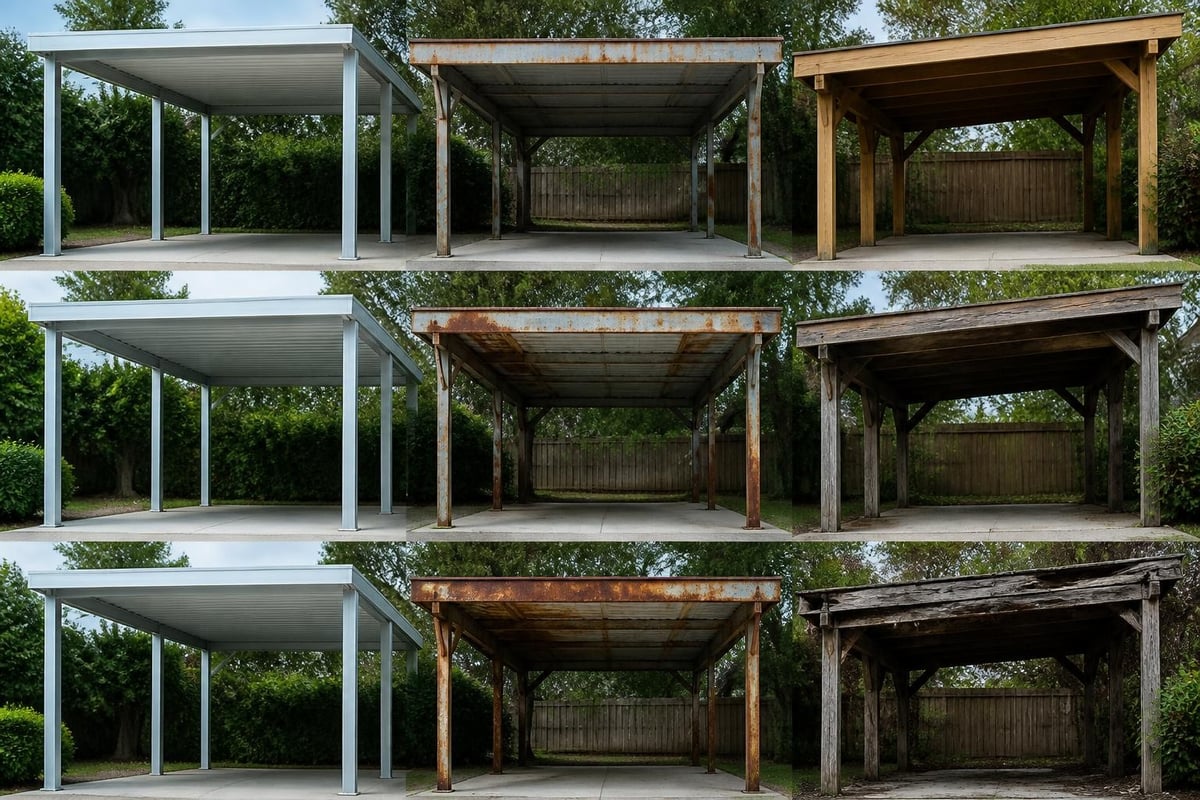
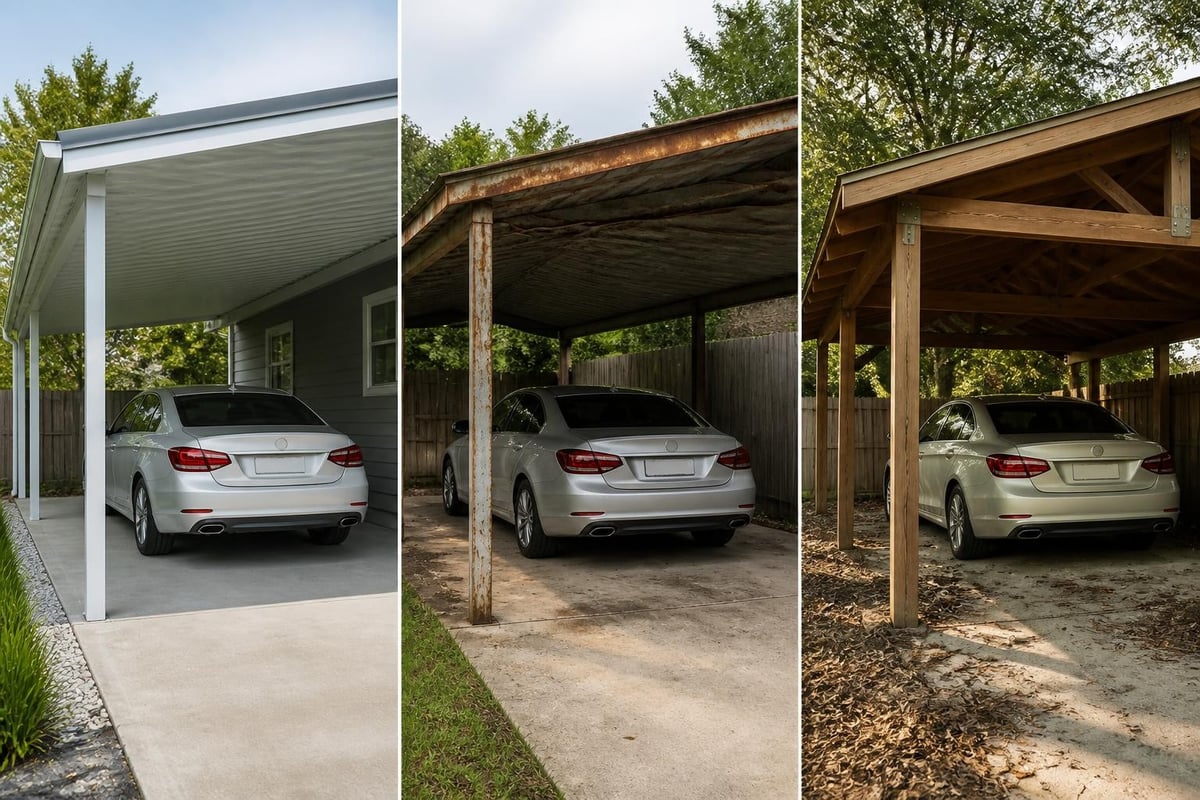
Aluminum naturally forms a protective oxide layer when exposed to air, creating a barrier against rust and corrosion. This inherent property makes aluminum carports ideal for coastal regions, humid climates, and areas with frequent precipitation. Choosing an aluminum carport means eliminating concerns about rust spots, structural weakening, and the constant maintenance cycle that steel structures demand.
Wood carports require regular treatments, staining, and sealing to prevent rot, insect damage, and weather-related deterioration. A carport in aluminium requires none of these interventions, saving both time and money over the structure's lifetime.
Lightweight Yet Exceptionally Strong
The strength-to-weight ratio of aluminum exceeds most alternative materials, delivering structural integrity without excessive weight. This characteristic simplifies installation, reduces foundation requirements, and makes modifications more manageable.
Key strength advantages include:
- High tensile strength supporting heavy snow loads and wind pressure
- Reduced structural weight minimizing foundation costs
- Easier transportation and handling during installation
- Lower seismic load in earthquake-prone regions
Despite weighing approximately one-third as much as steel, properly engineered aluminum frameworks support substantial loads. Modern alloy formulations enhance these properties further, with 6061-T6 aluminum offering yield strengths exceeding 35,000 PSI.
Design Flexibility and Modern Aesthetics
Contemporary architectural trends favor clean lines, minimalist profiles, and materials that complement modern home designs. A carport in aluminium seamlessly integrates with current aesthetic preferences while offering extensive customization options.
| Design Feature | Aluminum Capability | Traditional Material Limitation |
|---|---|---|
| Powder Coating Colors | Unlimited custom colors | Limited paint options |
| Profile Styles | Sleek, contemporary lines | Bulkier structural requirements |
| Panel Integration | Polycarbonate, acrylic, metal | Primarily solid materials |
| Curve Capability | Complex shapes possible | Difficult or impossible |
Aluminum extrusions accommodate polycarbonate panels, creating light-filled spaces that protect vehicles while maintaining visibility. These hybrid designs prove particularly popular for properties where maintaining sight lines matters.
Installation Considerations for Aluminum Carports
Proper installation determines whether your carport in aluminium performs as intended for decades or develops problems within years. Understanding the installation process helps you prepare adequately and avoid common pitfalls.
Foundation Preparation Requirements
Aluminum's lightweight nature allows for simpler foundations compared to heavier materials, yet proper preparation remains essential. The foundation type depends on soil conditions, local building codes, and carport dimensions.
Common foundation options:
- Concrete footings – Poured concrete pads at each post location provide maximum stability
- Gravel base with anchors – Cost-effective for stable soil conditions
- Asphalt anchoring – Suitable for carports installed over existing driveways
- Ground screws – Modern alternative offering quick installation and minimal ground disturbance
Before beginning any foundation work, verify local building codes and obtain necessary permits. Many jurisdictions require engineering certifications for structures exceeding certain dimensions. Detailed installation guidance outlines region-specific requirements and best practices.
Assembly Process and Timeline
Professional installation of a carport in aluminium typically takes one to three days, depending on size and complexity. DIY installation extends this timeline but offers significant cost savings for those with appropriate skills and tools.
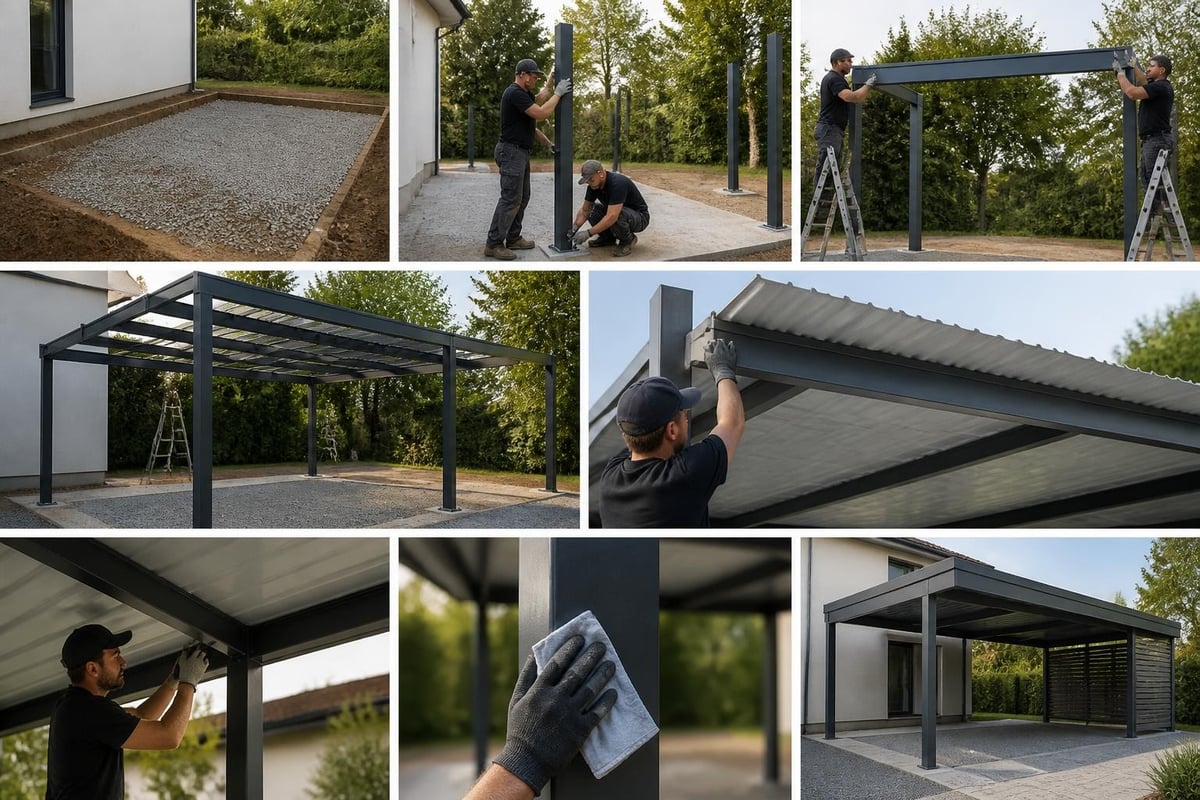
The assembly sequence generally follows this pattern:
- Foundation preparation and curing (if using concrete)
- Post installation and alignment verification
- Horizontal beam attachment
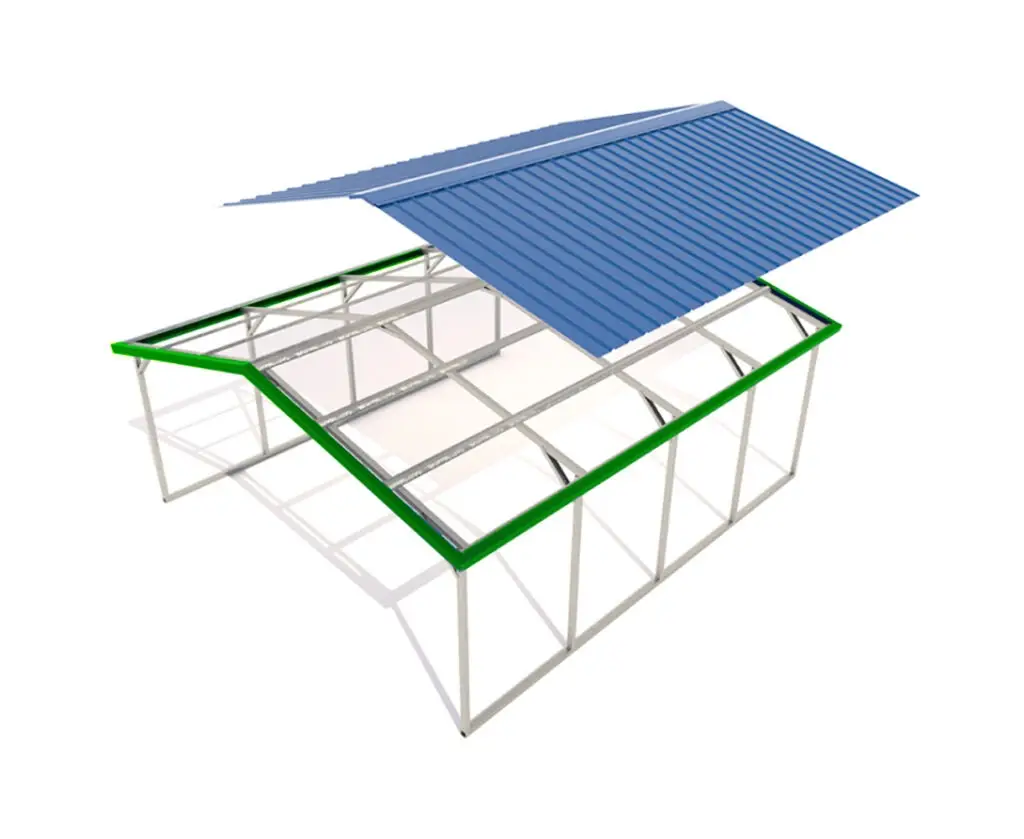
- Roof framework assembly
- Panel or roofing material installation
- Trim work and finishing details
- Final inspection and adjustments
Precision during initial post placement proves critical. Even small alignment errors compound as the structure rises, potentially causing gaps, stress points, or improper roof drainage. Professional installers use laser levels and surveying equipment to ensure accuracy.
Tools and Equipment Needed
DIY installation of a carport in aluminium requires specific tools beyond basic household equipment. Investing in quality tools or renting specialized equipment ensures proper assembly and prevents damage to aluminum components.
Essential tool list:
- Cordless drill with multiple battery packs
- Impact driver for faster fastener installation
- Laser level or transit for accurate alignment
- Rubber mallet for gentle component adjustments
- Torque wrench for proper fastener tension
- Ladder or scaffolding appropriate for roof height
- Safety equipment including gloves and eye protection
Aluminum scratches more easily than steel, requiring careful handling during assembly. Protective gloves prevent fingerprints and smudges on finished surfaces, while rubber mallets avoid the dents that metal hammers cause.
Maintenance and Longevity of Aluminum Carports
One compelling reason to invest in a carport in aluminium involves the minimal maintenance these structures require throughout their service life. Unlike materials demanding regular interventions, aluminum maintains its appearance and structural integrity with basic care.
Routine Cleaning Procedures
Annual or semi-annual cleaning keeps aluminum carports looking new while preventing buildup that could trap moisture or cause staining. The cleaning process takes minimal time and requires only common household supplies.
Simple cleaning protocol:
- Rinse entire structure with garden hose to remove loose dirt
- Mix mild detergent with warm water in bucket
- Apply solution with soft brush or sponge
- Scrub gently to remove stubborn spots or stains
- Rinse thoroughly with clean water
- Allow to air dry or wipe with soft cloth
Avoid abrasive cleaners, steel wool, or harsh chemicals that damage aluminum's protective finish. Powder-coated surfaces prove particularly durable but still benefit from gentle treatment. For coastal installations where salt spray occurs, increase cleaning frequency to prevent salt accumulation.
Long-Term Durability Expectations
Properly installed and maintained aluminum carports routinely provide 25 to 30 years of reliable service, with some installations lasting significantly longer. This longevity stems from aluminum's inherent corrosion resistance and the quality of modern manufacturing processes.
| Lifespan Factor | Aluminum Performance | Expected Duration |
|---|---|---|
| Structural Framework | No rust or rot | 30+ years |
| Powder Coat Finish | Fade and chip resistant | 15-20 years |
| Fasteners (stainless) | Corrosion resistant | 25+ years |
| Polycarbonate Panels | UV-stabilized formulations | 10-15 years |
The advantages of aluminum construction extend beyond the framework itself. Even in harsh environments, aluminum maintains dimensional stability, doesn't warp like wood, and resists the expansion-contraction cycles that crack concrete or damage other materials.
Addressing Minor Damage
Scratches, dents, or finish damage occasionally occur despite aluminum's durability. Most issues prove easily repairable without professional assistance, maintaining your carport's appearance and protection.
For scratched powder coating, touch-up paint matched to the original color conceals damage effectively. Small dents in non-structural components sometimes pop out with careful pressure from behind. More significant damage to structural elements may require component replacement, though aluminum's modular construction simplifies this process.
Cost Analysis and Value Proposition
Understanding the complete financial picture helps justify the initial investment in a carport in aluminium. While upfront costs may exceed some alternatives, total lifecycle expenses often favor aluminum significantly.
Initial Investment Breakdown
Aluminum carport pricing varies based on dimensions, design complexity, finish options, and regional installation costs. A basic single-car aluminum carport typically ranges from $3,000 to $6,000 installed, while larger or more elaborate designs reach $15,000 or higher.
Cost factors include:
- Base structure size and height
- Roof style (flat, gable, curved)
- Finish type and color options
- Panel materials and glazing choices
- Foundation requirements
- Local labor rates
- Permit and engineering fees
Comparing these figures to traditional metal carport options reveals that aluminum commands a premium over standard steel construction. However, the differential narrows when factoring in long-term maintenance savings and extended service life.
Lifetime Cost Comparison
Total cost of ownership provides more accurate financial comparison than purchase price alone. A carport in aluminium incurs minimal maintenance expenses across decades of use, while alternatives require ongoing investments.
20-year ownership costs:
| Material Type | Initial Cost | Maintenance | Total |
|---|---|---|---|
| Aluminum | $5,000 | $500 | $5,500 |
| Painted Steel | $3,500 | $2,800 | $6,300 |
| Wood | $4,000 | $4,200 | $8,200 |
These figures assume periodic repainting for steel, regular sealing and treatment for wood, and basic cleaning for aluminum. Actual costs vary by climate, maintenance diligence, and quality of initial construction.
Return on Investment Factors
Beyond direct costs, aluminum carports contribute to property value and provide intangible benefits worth considering. Covered parking ranks among the most desired features for home buyers in many markets, potentially increasing sale prices or reducing time on market.
Insurance benefits represent another financial consideration. Some carriers offer premium reductions for properties with covered parking, recognizing the reduced risk of weather-related vehicle damage. Additionally, the protection a carport in aluminium provides prevents expensive repairs to vehicles, outdoor equipment, or stored items.
Customization Options and Design Variations
Modern aluminum carport systems offer remarkable flexibility, allowing property owners to create structures perfectly suited to specific needs and aesthetic preferences. This customization capability represents a significant advantage over prefabricated alternatives with limited options.
Roof Styles and Configurations
The roof design fundamentally affects both appearance and functionality. A carport in aluminium accommodates various roof styles, each offering distinct advantages for different applications and climates.
Popular roof configurations:
- Flat roof – Minimalist aesthetic, simple drainage, lowest profile
- Gable roof – Traditional appearance, excellent water shedding, increased headroom
- Curved roof – Contemporary styling, superior strength, efficient water runoff
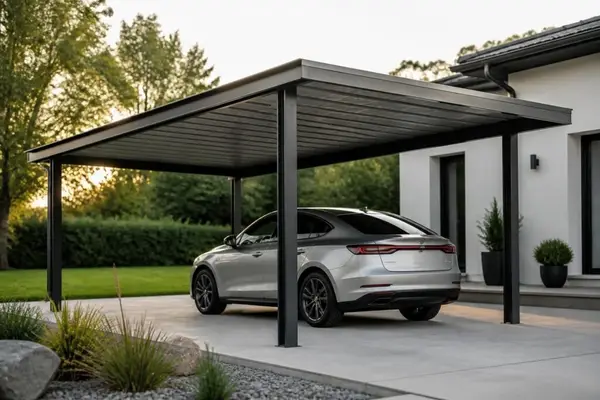
- Cantilever design – Post-free on one side, modern look, requires stronger framework
Roof pitch selection impacts snow load capacity, water drainage efficiency, and visual proportions. Steeper pitches shed snow and rain more effectively but increase material costs and overall height. Local building codes often mandate minimum pitches based on regional weather patterns.
Color and Finish Selection
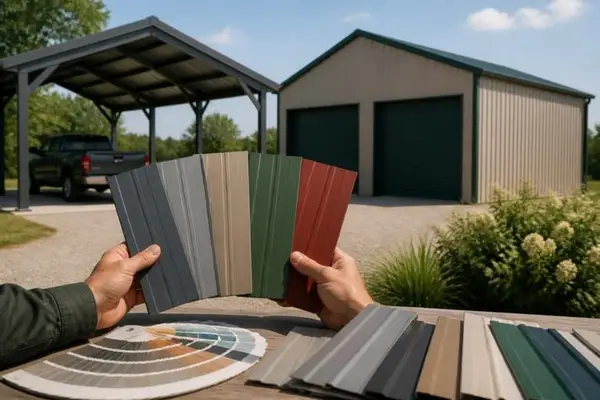
Powder coating technology provides virtually unlimited color options for aluminum structures, allowing perfect coordination with existing architecture. This electrostatic process creates durable, even coatings that resist fading, chipping, and environmental damage far better than traditional paint.
Standard color palettes typically include neutral tones matching common architectural schemes: whites, grays, tans, and blacks. Custom color matching accommodates specific requirements, though it may increase costs and lead times. Metallic and textured finishes add visual interest while maintaining the protective benefits of powder coating.
Some manufacturers offer two-tone designs, combining different colors for posts, beams, and trim elements. This approach creates visual depth and allows the carport to either blend seamlessly with surroundings or serve as an architectural accent piece.
Panel and Glazing Choices
Roof and side panel materials dramatically affect the carport's functionality, appearance, and cost. A carport in aluminium framework supports diverse panel types, each suited to different priorities and preferences.
Common panel options:
- Polycarbonate sheets – Translucent, UV-resistant, impact-resistant, lightweight
- Metal roofing – Opaque, maximum weather protection, traditional appearance
- Acrylic panels – Crystal-clear, premium appearance, moderate durability
- Fabric membranes – Flexible, economical, limited lifespan
Polycarbonate proves particularly popular for residential applications, allowing natural light penetration while blocking harmful UV radiation. Multi-wall polycarbonate offers superior insulation compared to single-layer sheets, reducing heat transfer and improving comfort in extreme temperatures. Understanding comprehensive design options helps match panel selection to specific climate conditions and usage patterns.
Environmental Impact and Sustainability
Sustainability considerations increasingly influence material selection for construction projects. A carport in aluminium offers several environmental advantages compared to alternatives, making it attractive for eco-conscious property owners.
Recyclability and Circular Economy
Aluminum ranks among the most recyclable materials in construction, with recycling rates exceeding 90% in many regions. The metal retains its properties through infinite recycling cycles, unlike plastics that degrade with each reprocessing.
Recycled aluminum production requires only 5% of the energy needed to produce primary aluminum from ore. This efficiency translates to significant carbon footprint reductions. When an aluminum carport eventually reaches end of life, the material maintains substantial residual value, incentivizing proper recycling rather than landfill disposal.
Manufacturing Energy Considerations
While primary aluminum production demands considerable energy, modern facilities increasingly utilize renewable power sources. Hydroelectric power drives much of the industry, particularly in regions with abundant water resources. Solar and wind energy adoption continues expanding in aluminum manufacturing, further reducing environmental impact.
The longevity of aluminum structures also factors into sustainability calculations. A carport in aluminium lasting 30 years avoids the resource consumption and waste generation associated with replacing shorter-lived alternatives multiple times.
Local Climate Adaptation
Aluminum's thermal properties allow carport designs optimized for specific climate challenges. In hot regions, reflective coatings minimize heat absorption, keeping covered areas cooler. Ventilated designs facilitate air circulation, preventing heat buildup while maintaining rain protection.
Cold climate installations benefit from aluminum's resistance to frost damage and ice formation problems that plague other materials. The metal doesn't crack from freeze-thaw cycles, and snow slides easily from smooth aluminum surfaces, reducing structural load.
Integration with Smart Home Systems
Modern property owners increasingly expect their structures to integrate with automated systems and smart home technologies. A carport in aluminium readily accommodates these features, enhancing convenience and functionality.
Lighting Integration
Integrated LED lighting transforms carports from simple shelters into fully functional spaces usable after dark. Aluminum framework provides convenient mounting points and concealment pathways for electrical wiring. Motion-activated systems illuminate automatically when vehicles approach, improving safety and security.
Solar-powered lighting options eliminate electrical wiring requirements entirely, mounting directly to aluminum posts or beams. These systems prove particularly valuable for installations distant from existing electrical service or properties prioritizing energy independence.
Security System Compatibility
Covered parking areas benefit from security enhancements including cameras, motion sensors, and access controls. The aluminum structure of modern carports provides stable mounting surfaces for security equipment while maintaining clean aesthetics.
Some property owners integrate carport lighting and security systems with whole-home automation platforms, enabling smartphone control, scheduling, and integration with other smart devices. These capabilities transform a simple carport in aluminium into an active component of comprehensive property management systems.
Electric Vehicle Charging Stations
The rapid adoption of electric vehicles creates new requirements for residential charging infrastructure. Aluminum carports provide ideal locations for EV charger installation, offering weather protection for charging equipment while creating dedicated charging spaces.
For those considering future-proofing their properties, Metal Structure Sales LLC delivers customizable solutions that accommodate evolving needs. Their expertise in structural design and installation ensures your aluminum carport can adapt as your requirements change, whether that involves adding charging capabilities, storage solutions, or enhanced weather protection.
Weather Monitoring Integration
Advanced weather stations mounted to carport structures provide real-time environmental data, alerting property owners to conditions requiring action. Temperature sensors, rain gauges, and wind speed monitors integrate seamlessly with aluminum frameworks, providing valuable information for agricultural operations, outdoor event planning, or simple weather awareness.
Building Code Compliance and Permitting
Legal requirements govern carport construction in most jurisdictions, with regulations varying significantly between locations. Understanding these requirements before beginning a carport in aluminium project prevents costly mistakes and legal complications.
Local Zoning Restrictions
Zoning ordinances often dictate where carports may be located on properties, how close they can sit to property lines, and maximum dimensions allowed. Setback requirements typically mandate minimum distances from roads, neighboring properties, and existing structures.
Height restrictions prevent structures from blocking sight lines, creating shadows on neighboring properties, or dominating neighborhood aesthetics. Some communities maintain architectural review boards requiring design approval before construction begins.
Structural Engineering Requirements
Many jurisdictions require professional engineering certifications for carports exceeding specific sizes or in regions with extreme weather conditions. Engineers calculate load-bearing requirements, verify designs meet wind and snow load specifications, and certify that installations comply with building codes.
Engineering considerations include:
- Wind load calculations based on regional weather data
- Snow load requirements for winter weather regions
- Seismic design criteria in earthquake zones
- Soil bearing capacity and foundation adequacy
- Connection strength and fastener specifications
Professional engineering adds costs but provides assurance that your carport in aluminium meets safety standards and will perform as intended throughout its service life.
Permit Application Process
Construction permits typically require submitting site plans, structural drawings, engineering certifications, and proof of property ownership. Processing times vary from days to months depending on jurisdiction workload and project complexity.
Working with experienced contractors familiar with local requirements streamlines this process considerably. Many professional installers handle permitting as part of their service, leveraging established relationships with building departments to expedite approvals.
Specialized Applications Beyond Vehicle Protection
While vehicle coverage remains the primary function, a carport in aluminium serves numerous additional purposes, maximizing return on investment through versatile use.
Outdoor Entertainment Spaces
Aluminum carports create comfortable outdoor living areas protected from sun and rain. Adding lighting, ceiling fans, and outdoor furniture transforms the space into an entertainment venue suitable for gatherings regardless of weather conditions.
Retractable screens or panel systems enclose sides when needed, providing insect protection or wind blocking while maintaining the open, airy feel that makes outdoor spaces appealing. These modifications prove particularly valuable in regions with pleasant temperatures but challenging insects or unpredictable weather.
Equipment and Tool Storage
Commercial and agricultural operations utilize aluminum carports for equipment protection, storing tractors, construction machinery, or specialized tools under cover. The open design allows easy access while protecting valuable equipment from weather damage that accelerates depreciation and increases maintenance costs.
Workshop and Hobby Spaces
Enclosed or partially enclosed aluminum carports function as workshops for woodworking, metalworking, vehicle restoration, or other hobbies requiring dedicated space. Proper ventilation proves easier to achieve than in fully enclosed buildings, making these structures ideal for activities involving dust, fumes, or noise.
Adding windows or transparent panels maintains natural lighting, reducing energy costs while creating pleasant working environments. Some property owners integrate windows designed for steel buildings into their aluminum carport designs, further enhancing functionality and comfort.
Agricultural Applications
Farmers and ranchers employ aluminum carports for hay storage, livestock shelter, and equipment protection. The corrosion resistance proves particularly valuable in agricultural settings where chemicals, fertilizers, and animal waste create harsh environments that rapidly deteriorate other materials.
Open-sided designs allow natural ventilation critical for stored hay and livestock comfort, while roof coverage prevents weather damage and provides shade during hot summer months. The strength-to-weight ratio of aluminum allows spanning wider areas with fewer support posts, maximizing usable space and equipment maneuverability.
A carport in aluminium represents a sophisticated investment combining practical vehicle protection with long-term value, minimal maintenance requirements, and exceptional design flexibility. The material's inherent advantages-corrosion resistance, lightweight strength, and sustainability-position aluminum as the premier choice for discerning property owners seeking structures that perform reliably for decades while maintaining their appearance and functionality. Whether you need straightforward vehicle coverage or a customized solution incorporating specialized features, Metal Structure Sales LLC delivers expertly engineered aluminum and metal structures with comprehensive installation services, ensuring your investment provides lasting satisfaction and protection.