

Selecting the right dimensions for a metal structure represents one of the most critical decisions in your building project. Whether you're planning to protect vehicles, store equipment, or house livestock, understanding metal building sizes ensures you invest in a structure that meets both current needs and future expansion plans. The size you choose impacts everything from the initial cost and installation requirements to long-term functionality and property value. This comprehensive guide explores standard dimensions, common applications, and strategic considerations to help you make an informed decision.
Understanding Standard Metal Building Dimensions
Metal buildings are manufactured in specific width increments that align with structural engineering requirements and material efficiency. The most common width categories start at 12 feet and increase in precise intervals, typically by two or three feet depending on the manufacturer and style.
Width Categories Explained
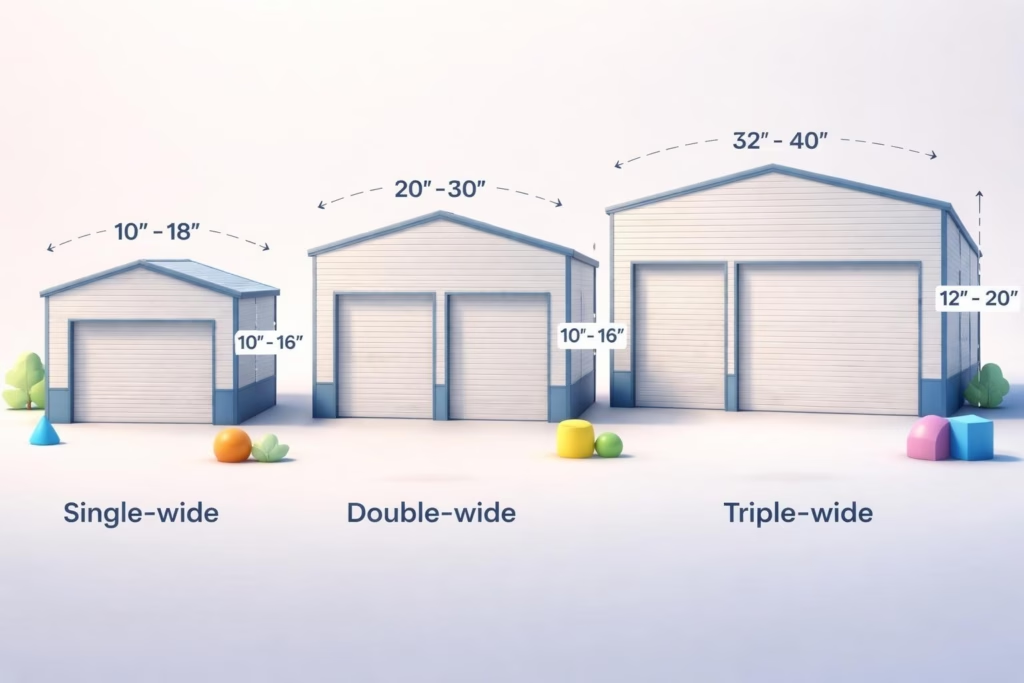
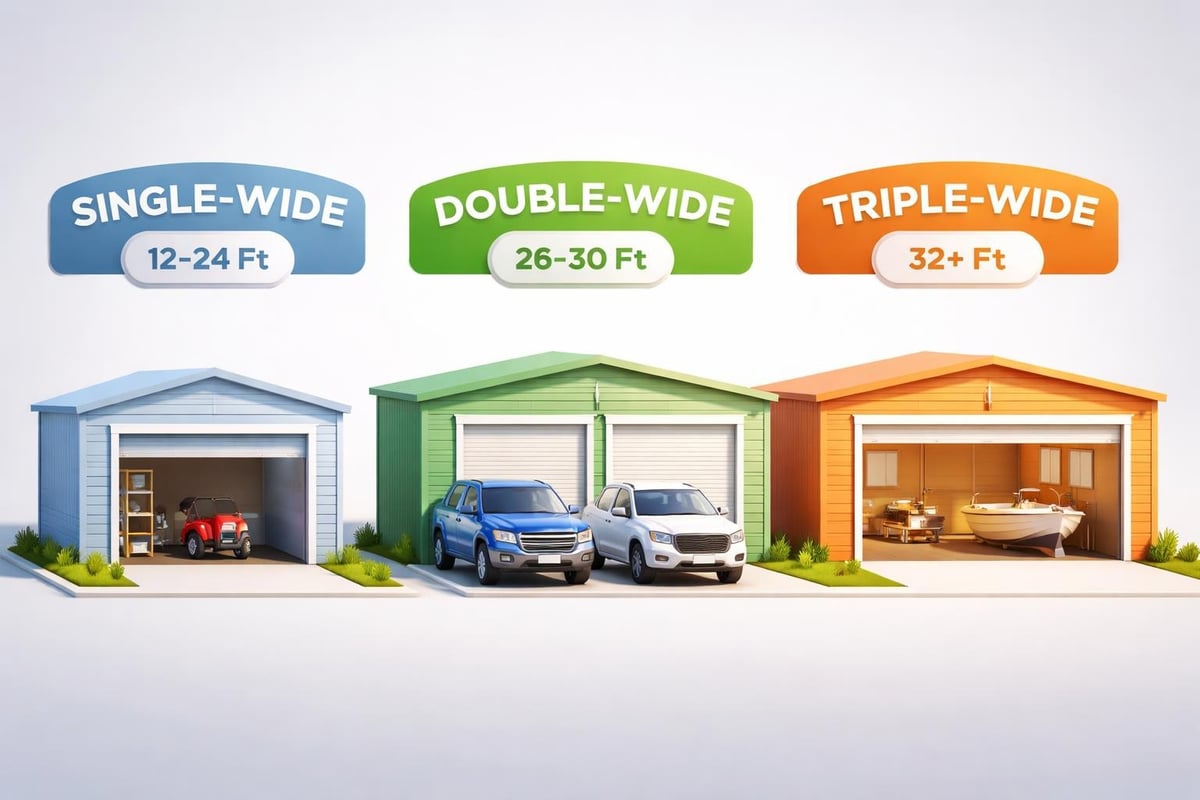
Single-wide structures range from 12 to 24 feet and serve as the foundation for basic coverage needs. These narrower options work exceptionally well for single-vehicle protection, small equipment storage, or compact workspaces. The 12-foot width accommodates most standard vehicles with minimal clearance, while 18-foot and 20-foot widths provide comfortable space for larger trucks or SUVs.
Double-wide configurations span from 26 to 30 feet, offering substantially more versatility. According to common standard sizes for metal buildings, these dimensions typically accommodate two vehicles side by side with adequate clearance for door opening and movement. The 26-foot width has become particularly popular for homeowners seeking to protect multiple vehicles while maintaining a reasonable footprint on their property.
Triple-wide and larger structures begin at 32 feet and extend up to 60 feet or more in width. These expansive metal building sizes suit commercial applications, agricultural operations, or residential properties requiring extensive covered space. Widths beyond 30 feet often incorporate additional engineering considerations and may require certified installation to ensure structural integrity.
Length Considerations for Metal Structures
While width determines the basic footprint, length provides the flexibility to customize your total square footage. Metal building manufacturers typically offer lengths starting at 21 feet and extending in five-foot increments up to 100 feet or beyond.
The beauty of length customization lies in its scalability. A 20×21 structure provides approximately 420 square feet, suitable for two compact cars or a modest workshop. Extending that same 20-foot width to 31 feet increases coverage to 620 square feet, potentially accommodating an additional vehicle or creating dedicated storage zones.
Popular Length Configurations
| Width | Common Lengths | Typical Applications |
|---|---|---|
| 12-18 ft | 21-31 ft | Single vehicle, motorcycle storage, small tool shed |
| 20-24 ft | 26-41 ft | Two vehicles, hobby workshop, garden equipment |
| 26-30 ft | 31-51 ft | Multiple vehicles, commercial storage, small business |
| 32+ ft | 41-100+ ft | Agricultural equipment, commercial operations, warehousing |
For those exploring various configuration options, our Metal Carport University resource center offers detailed comparisons of different size combinations and their practical applications.
Height Specifications and Vertical Space
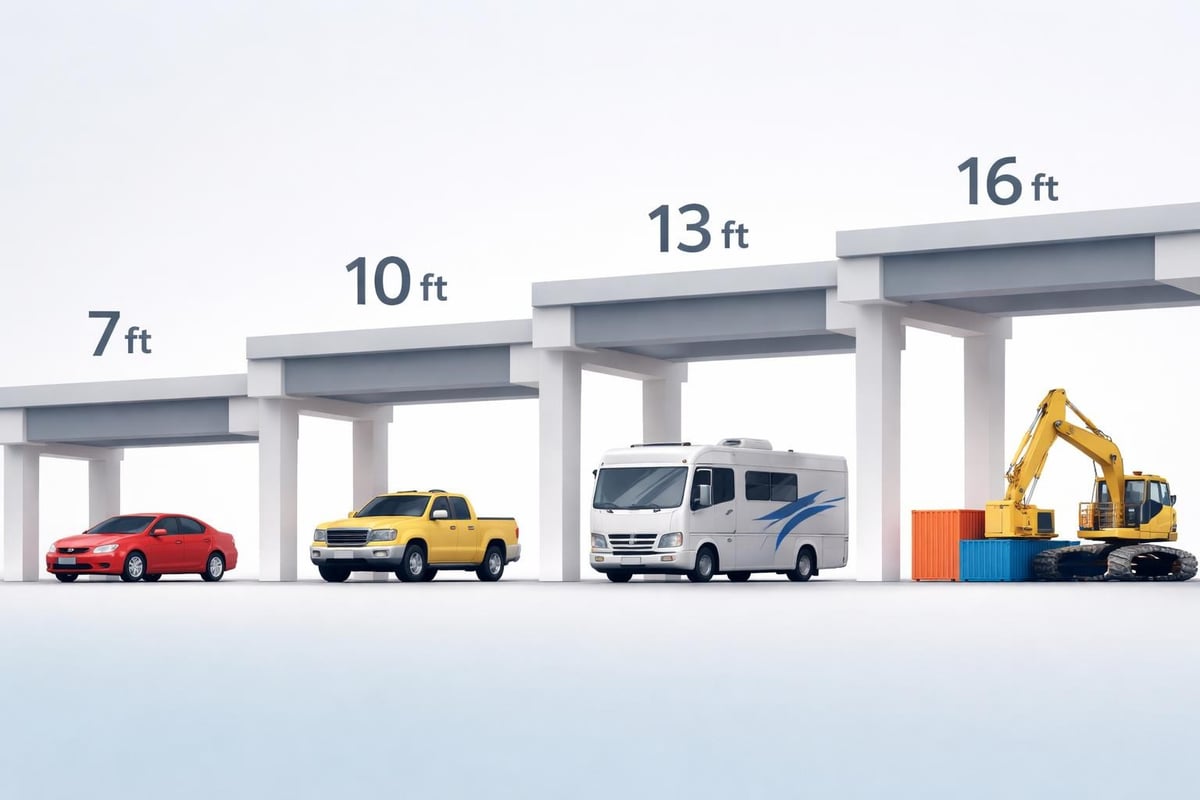
Metal building sizes extend beyond horizontal dimensions. Vertical clearance plays an essential role in determining what you can store or park beneath your structure. Standard leg heights typically begin at seven or eight feet and increase in one-foot increments up to 16 feet or higher for specialized applications.
Standard height options include:
- 7-8 feet: Minimal clearance for standard passenger vehicles
- 9-10 feet: Comfortable clearance for trucks and SUVs
- 11-12 feet: Accommodates lifted vehicles, boats on trailers, small RVs
- 13-14 feet: Suitable for larger RVs, equipment with raised profiles
- 15-16 feet: Agricultural machinery, commercial vehicles, tall recreational vehicles
The expert recommendations on selecting appropriate metal building dimensions emphasize measuring your tallest equipment or vehicle and adding at least 12-18 inches of clearance for comfortable access and ventilation.
Roof Pitch and Effective Height
Beyond leg height, roof pitch contributes to the total vertical space. Regular roof styles feature a slight slope for water drainage, while vertical roof designs incorporate a steeper pitch that increases center height significantly. A 26-foot wide building with 12-foot legs and a vertical roof might provide 14-15 feet of clearance at the center ridgeline.
This additional height proves valuable for several reasons beyond simple clearance. Enhanced vertical space improves air circulation, reduces heat buildup during summer months, and provides mounting options for overhead storage, lighting fixtures, or ventilation systems.
Calculating the Right Size for Your Needs
Determining appropriate metal building sizes requires evaluating both current requirements and anticipated future needs. A systematic approach to size selection prevents the common mistake of purchasing a structure that becomes inadequate within a few years.
Assessment Process
- Inventory current items: Measure all vehicles, equipment, or materials requiring coverage
- Add clearance margins: Include 2-3 feet on all sides for door opening and movement
- Consider future acquisitions: Account for potential vehicle upgrades or additional equipment
- Evaluate access requirements: Ensure sufficient space for maneuvering and maintenance activities
- Review property constraints: Verify zoning regulations, setback requirements, and available land area
A practical example illustrates this process. A homeowner with two standard vehicles (each approximately 6 feet wide and 16 feet long) might initially consider a 12×30 structure. However, applying proper clearance margins suggests a minimum 20-foot width (12 feet for two vehicles plus 4 feet for side clearance and door operation). Adding future-proofing for a potential truck or third vehicle points toward a 24×35 configuration.
Common Size Applications Across Different Uses
Different applications demand specific metal building sizes optimized for their intended purpose. Understanding these common pairings helps streamline the selection process.
Residential Applications
Single car protection: 12×21 to 14×26 feet provides basic coverage for one vehicle with minimal storage space. This represents the entry-level size for homeowners seeking weather protection without significant property impact.
Two-car carports: 20×21 to 24×31 feet accommodates two standard vehicles comfortably. The guidelines for sizing a new metal building recommend this range for typical suburban households. When you're ready to customize your exact specifications, you can design and price your structure through our Metal Carport configuration tool, which includes delivery and installation in your quote.
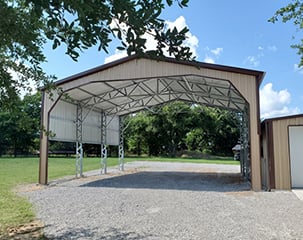
Multi-purpose structures: 26×31 to 30×41 feet creates space for vehicles plus dedicated workshop areas, storage zones, or hobby spaces. These larger residential metal building sizes increasingly serve as backyard amenities that extend living and working areas.
Commercial and Agricultural Sizes
Commercial operations typically require substantially larger dimensions. Retail equipment storage might start at 30×40 feet, while agricultural applications protecting tractors, harvesters, or hay storage often specify 40×60 feet or larger. The 2021 rankings of top metal builders by square footage demonstrate that commercial structures frequently exceed 5,000 square feet.
Small business workshops commonly select 30×50 to 40×60 dimensions, providing adequate space for multiple work zones, equipment placement, and material storage while maintaining operational efficiency.
Width Limitations and Engineering Considerations
Understanding the engineering principles behind metal building sizes helps explain why certain dimensions require enhanced structural support. As width increases, the clear-span distance between supporting legs grows, demanding stronger framing members and more robust anchoring systems.
Standard vs. Heavy-Duty Framing
Most manufacturers transition from standard 12-gauge tubing to 11-gauge or 10-gauge framing as widths exceed 30 feet. This heavier-gauge material provides the necessary strength to support the roof load across greater distances without intermediate support columns.
| Building Width | Typical Frame Gauge | Snow/Wind Rating |
|---|---|---|
| 12-24 ft | 14-gauge | Standard |
| 26-30 ft | 12-gauge | Enhanced |
| 32-40 ft | 11-gauge | Heavy-duty |
| 42+ ft | 10-gauge or engineered | Maximum |
According to information about metal building sizes and specifications, structures exceeding 40 feet wide often require certified engineering stamps and may need additional permit documentation beyond what standard sizes require.
Customization Within Standard Size Parameters
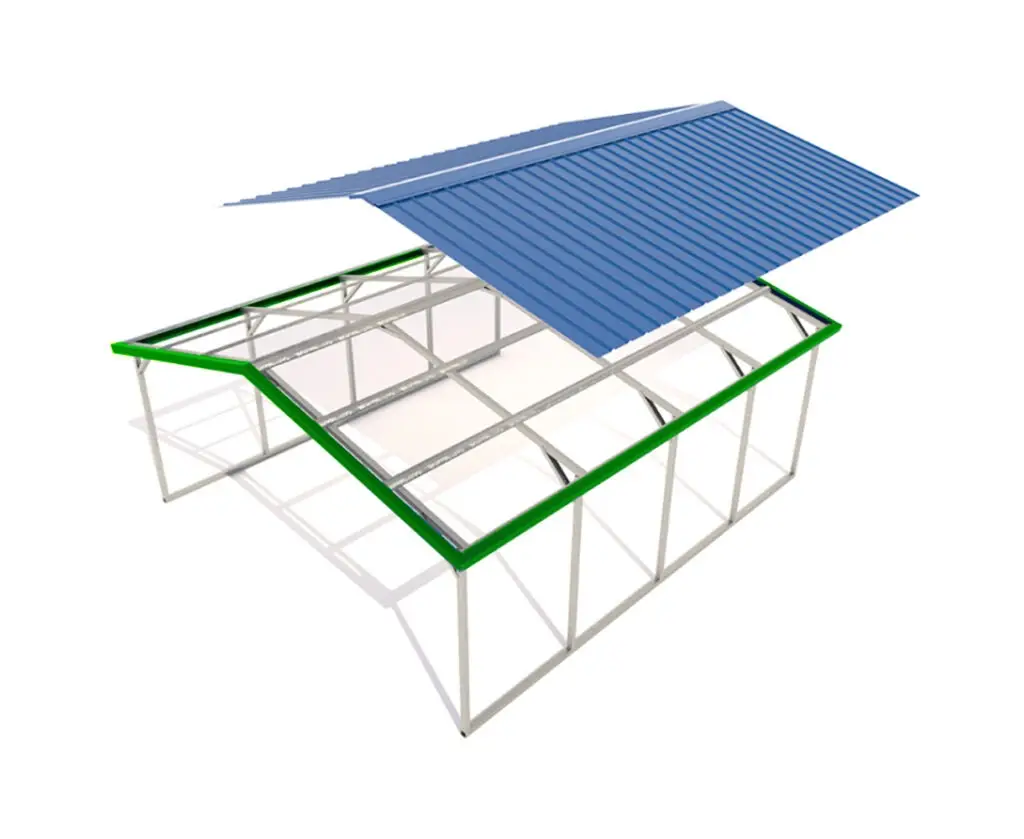
While metal building sizes follow standard increments, extensive customization options exist within these frameworks. Manufacturers accommodate various modifications that enhance functionality without requiring completely custom engineering.
Common customization options include:
- Partial enclosures within open structures
- Additional entry points or roll-up doors
- Extended gable ends for extra protection
- Lean-to additions along sidewalls
- Interior partition walls creating defined spaces
These modifications allow you to optimize a standard size for specific applications. A 24×35 structure might incorporate one fully enclosed bay for secure storage while leaving the remaining space open for vehicle parking. This hybrid approach maximizes versatility while controlling costs.
For those interested in various covering options and enhancements, exploring cover for carport alternatives provides insight into material choices and protective features available across different metal building sizes.
Regional Considerations Affecting Size Selection
Geographic location influences size selection through multiple factors including snow load requirements, wind ratings, and local building codes. Metal building sizes that work perfectly in moderate climates may require structural upgrades or dimension adjustments in regions experiencing severe weather.
Climate-Driven Modifications
Areas with heavy snowfall often benefit from narrower widths or steeper roof pitches. A 24-foot wide building with a vertical roof sheds snow more effectively than a 32-foot wide structure with a standard roof, potentially avoiding the need for heavier framing and additional support. The narrower profile reduces the surface area accumulating snow load while the steeper pitch encourages natural shedding.
Coastal regions subject to high winds may favor lower profile structures or require additional anchoring regardless of size. A 20×30 building with 8-foot legs presents less wind resistance than the same footprint with 12-foot legs, potentially reducing foundation requirements and overall cost.
Planning for Electrical, Plumbing, and HVAC
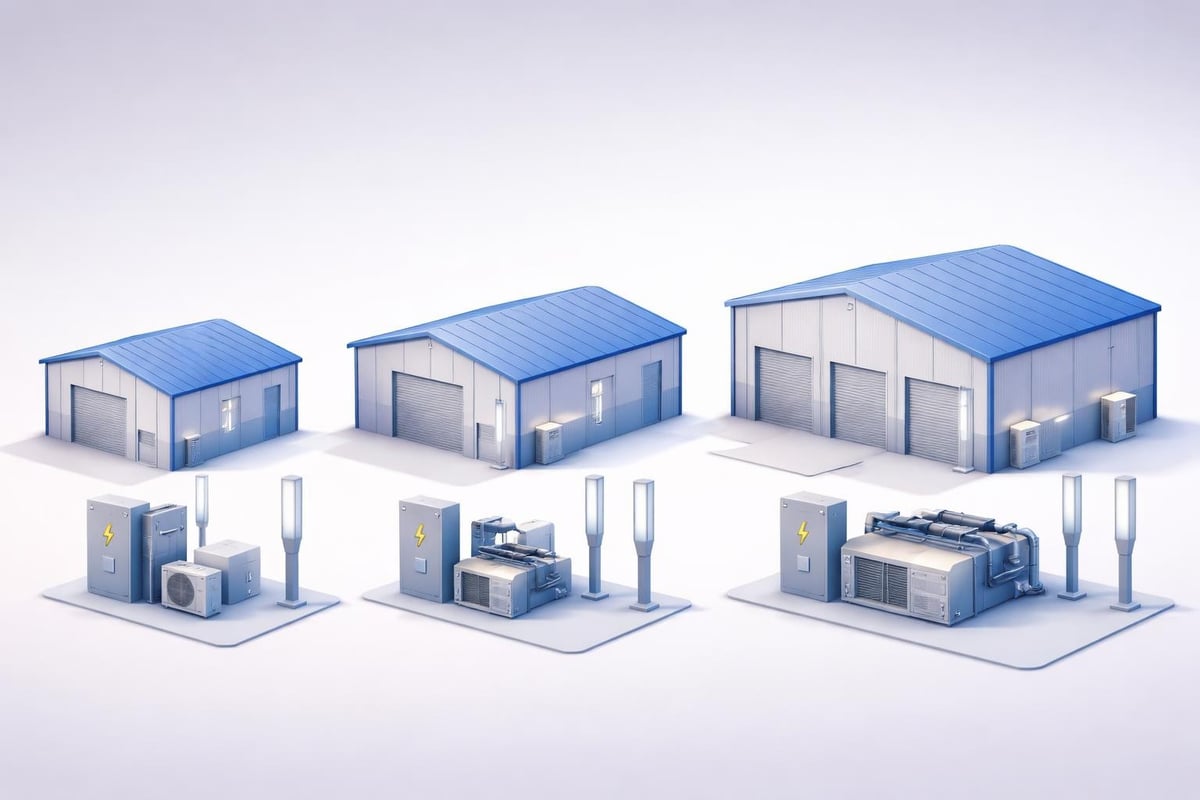
Metal building sizes directly impact the feasibility and cost of adding utilities. Larger structures require more extensive electrical wiring, additional lighting fixtures, and potentially upgraded service panels. Climate control systems must be sized appropriately for the cubic footage they're conditioning.
A 12×21 workshop might operate effectively with a basic 100-amp electrical service and portable heating. Expanding to a 30×40 space likely necessitates 200-amp service, multiple circuits, and a permanent HVAC solution. These infrastructure considerations should factor into your size selection, especially for enclosed structures serving as functional work or storage spaces.
Cost Implications of Different Sizes
Metal building sizes correlate directly with cost, though not always in linear fashion. Understanding pricing structures helps establish realistic budgets and identify the most cost-effective dimensions for your needs.
Price Per Square Foot Dynamics
Smaller structures typically carry higher per-square-foot costs due to fixed expenses like engineering, permits, and installation labor being distributed across less total area. As sizes increase, these fixed costs spread across more square footage, reducing the per-unit price.
However, this efficiency reverses once dimensions require upgraded framing, certified engineering, or specialized installation equipment. A 32-foot wide building might cost less per square foot than a 24-foot option, but a 48-foot width requiring heavy-duty framing and crane installation could see per-square-foot costs rise again.
Strategic size selection considers:
- Breaking points where framing upgrades occur
- Local installation rates for different size categories
- Permit fees that may jump at specific square footage thresholds
- Foundation costs that increase with building footprint
For detailed information about structure options and pricing across various dimensions, the metal shop buildings section provides comprehensive comparisons.
Maximizing Usable Space Within Your Size
Once you've selected appropriate metal building sizes, optimizing the internal layout ensures you fully utilize the available area. Strategic planning transforms raw square footage into functional space that serves multiple purposes efficiently.
Layout Optimization Strategies
Vertical storage utilization: Installing overhead racks, wall-mounted systems, or loft platforms leverages height while preserving floor space for vehicles and equipment. A 12-foot leg height provides adequate clearance for 4-6 feet of overhead storage above a standard vehicle.
Zoned functionality: Dividing larger structures into dedicated areas improves organization and workflow. A 30×40 building might allocate 20×30 for vehicle parking while designating the remaining 10×40 as an enclosed workshop with established tool stations and work benches.
Flexible design elements: Choosing removable partitions, portable storage units, and modular shelving systems allows layout adjustments as needs evolve without requiring structural modifications.
Multi-Building Approaches vs. Single Large Structures
Sometimes multiple smaller structures serve better than one large building. This distributed approach offers advantages for properties with challenging topography, staged budget implementation, or distinctly different storage requirements.
Comparative Analysis
| Approach | Advantages | Considerations |
|---|---|---|
| Multiple smaller buildings | Flexible placement, staged investment, separated uses | Higher total cost, more maintenance points |
| Single large structure | Lower per-square-foot cost, unified appearance, simplified maintenance | Limited placement options, higher upfront investment |
A property might benefit from a 20×30 carport near the house for daily vehicles plus a separate 24×35 structure positioned for workshop activities and equipment storage. This configuration provides specialized spaces optimized for specific uses rather than compromising with a single multi-purpose structure.
The 64 common standard metal building dimensions resource illustrates how different size combinations can work together on a single property.
Future Expansion Considerations
Smart planning incorporates expansion possibilities when selecting initial metal building sizes. Some configurations allow seamless extension while others create complications that significantly increase modification costs.
Expansion-Friendly Design
Length extensions: Adding to building length represents the most straightforward expansion method. Most metal structures can extend in their original length increments (typically 5 feet) with moderate effort, requiring new panels and some structural connections but no fundamental redesign.
Width modifications: Increasing width proves substantially more complex, often requiring complete disassembly and reconstruction with wider framing. Initial size selection should account for maximum width needs to avoid this expensive modification.
Height additions: Raising existing leg heights generally isn't feasible. Structures requiring greater vertical clearance should specify adequate height initially rather than planning future increases.
For businesses or property owners anticipating growth, selecting slightly larger metal building sizes initially often proves more economical than attempting expansions within a few years. The marginal cost difference between a 24×30 and 26×35 structure pales compared to expansion project expenses.
Size Selection for Specialty Applications
Certain applications demand specific metal building sizes based on the equipment or materials they'll house. Understanding these specialized requirements ensures your structure functions effectively for its intended purpose.
RV and Boat Storage
Recreational vehicles and boats require precise dimension planning due to their substantial height and length. Standard RV sizes range from 25 to 45 feet in length, with heights between 10 and 13 feet depending on type. Metal building sizes for RV protection typically start at 14 feet wide by 35 feet long with 12-foot leg heights as a minimum configuration.
Boat and trailer combinations demand similar consideration. A 24-foot boat on a trailer might measure 30 feet total length and require 10-11 feet of height clearance. Adding adequate maneuvering room suggests a 14×35 structure with 12-foot legs as an appropriate starting point.
Equipment and Machinery
Agricultural and construction equipment introduces unique sizing challenges. Tractors with front-end loaders, combines, and similar machinery feature irregular profiles with extended reach components that require both width and height accommodation. Understanding the self-framing metal buildings structural approach helps identify how clear-span designs provide the unobstructed space these applications demand.
Commercial lawn care businesses storing multiple mowers, trailers, and maintenance equipment benefit from longer, narrower configurations like 20×50 or 24×60 that allow organized equipment parking along one wall while maintaining open floor space for movement and service work.
Permitting and Code Compliance by Size
Local building codes often establish thresholds where permit requirements change based on structure size. Understanding these regulatory breaking points influences metal building sizes selection, especially when choosing between similar options that fall on either side of a code requirement.
Common Regulatory Thresholds
Many jurisdictions exempt structures under 120 or 200 square feet from standard building permits, requiring only simple registration. A 10×12 (120 sq ft) structure might avoid permitting while a 12×12 (144 sq ft) building triggers the full process. Similarly, commercial classifications often begin at specific square footage levels, typically 600-1,000 square feet depending on locality.
Setback requirements may also vary by size. Smaller accessory structures might require only five-foot property line setbacks while buildings exceeding certain dimensions need 10-15 feet. These regulations directly impact where you can position different metal building sizes on your property.
Before finalizing dimensions, consulting local building departments provides clarity on applicable codes and helps identify the most regulation-friendly sizes for your specific location. For comprehensive information about metal building considerations and requirements, visit our FAQs section.
Making Your Final Size Decision
Selecting appropriate metal building sizes synthesizes all the factors discussed throughout this guide. A structured decision-making process ensures you account for every relevant consideration before committing to specific dimensions.
Final Checklist
- Measure all items requiring coverage with accuracy
- Add recommended clearance margins (minimum 2-3 feet)
- Verify property constraints and code requirements
- Calculate budget including structure, foundation, and installation
- Consider 3-5 year future needs and potential changes
- Review utility requirements if planning an enclosed building
- Confirm size compatibility with intended anchoring location
- Compare options at key transition points (width upgrades, height changes)
This systematic approach identifies the optimal balance between current needs, future flexibility, regulatory compliance, and budget realities. The resulting size selection provides years of functional service while maximizing your investment value.
Whether you need basic vehicle protection, expansive commercial storage, or specialized agricultural coverage, understanding metal building sizes empowers informed decisions that align perfectly with your specific requirements and long-term objectives.
Choosing the right dimensions for your metal structure sets the foundation for years of reliable protection and functional space. By carefully evaluating your needs, understanding standard size options, and considering future requirements, you can select metal building sizes that deliver maximum value and versatility. Metal Structure Sales LLC specializes in helping customers navigate these decisions with expert guidance, customizable options, and complete installation services. Explore our range of metal structures today to find the perfect size solution for your property.