

Property owners face ongoing challenges when it comes to protecting vehicles and managing storage needs efficiently. The intersection of carport and storage solutions has evolved significantly in recent years, offering homeowners and businesses innovative ways to maximize space while protecting valuable assets. Whether you're looking to shelter multiple vehicles, store seasonal equipment, or create a dedicated workspace, understanding how to effectively combine these two functions can transform your property's utility and value. Modern metal structures provide customizable options that address both vehicle protection and storage requirements in a single, cost-effective solution.
Understanding Carport and Storage Requirements
Before investing in any structure, assessing your specific needs determines the success of your project. Vehicle dimensions, storage volume, and intended use patterns all influence design decisions. A proper carport and storage facility accommodates current requirements while allowing for future expansion.
Evaluating Vehicle and Storage Needs
Start by cataloging everything you need to protect and store. Measure your vehicles accurately, including height clearances for trucks, vans, or recreational vehicles. Consider additional space requirements for:
- Opening doors and walking around vehicles comfortably
- Seasonal storage items like lawn equipment and holiday decorations
- Workshop tools and equipment
- Recreational gear including bicycles, kayaks, and camping supplies
- Garden supplies and outdoor furniture during off-seasons
Most homeowners underestimate their storage needs by approximately 30 percent. Planning for growth prevents costly modifications later. Standard carport dimensions vary widely, with single-car structures starting at 12×20 feet and expanding to accommodate multiple vehicles or combined storage functions.
Site Assessment and Preparation
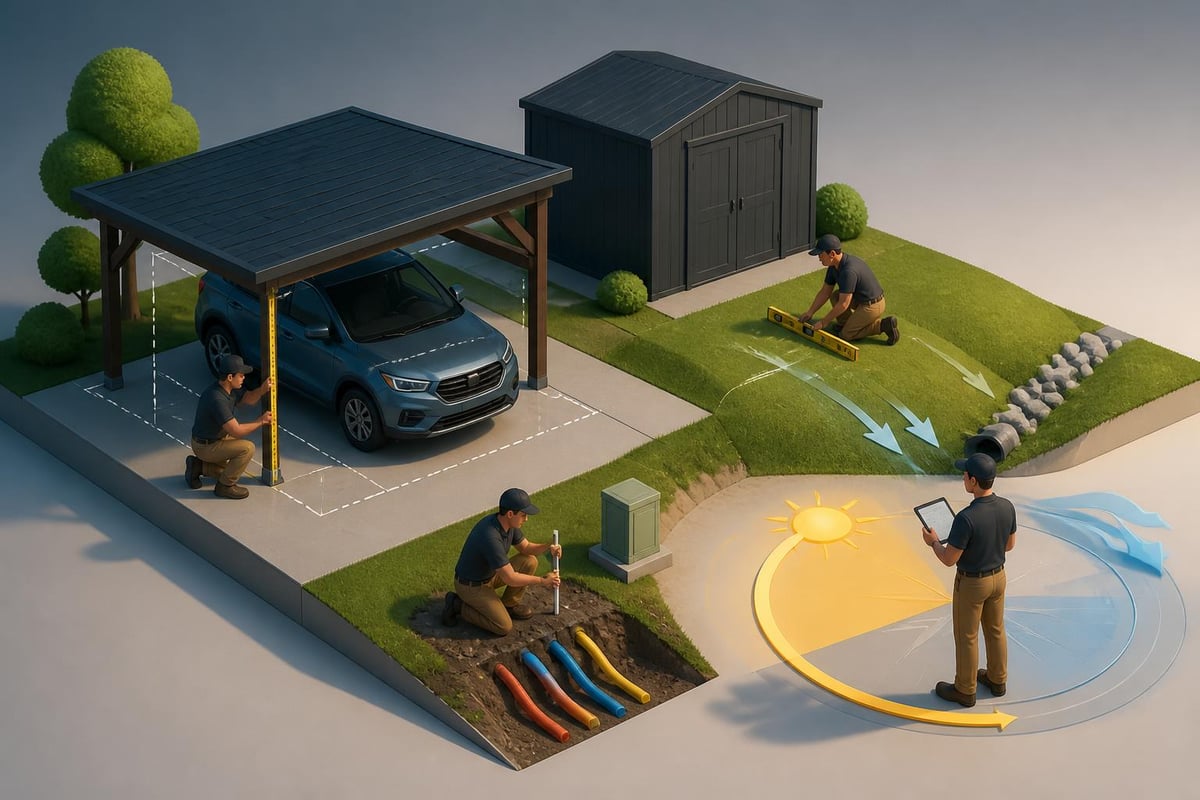
Your property's characteristics significantly impact carport and storage placement. Evaluate terrain slope, drainage patterns, and proximity to existing structures. Local building codes often mandate setback requirements from property lines and easements. Underground utilities must be located before any construction begins.
Consider sun exposure throughout the day and prevailing wind directions. These factors affect comfort levels when using the space and influence roofing material performance. Proper site preparation includes leveling the ground, establishing adequate drainage, and creating a stable foundation. Some jurisdictions require concrete pads, while others permit gravel or compacted earth bases depending on structure type and local regulations.
Design Configurations for Combined Functionality
The beauty of modern carport and storage systems lies in their flexibility. Strategic design integrates vehicle protection with organized storage in ways that complement your property's aesthetic while maximizing functionality.
Open Carport with Storage Zones
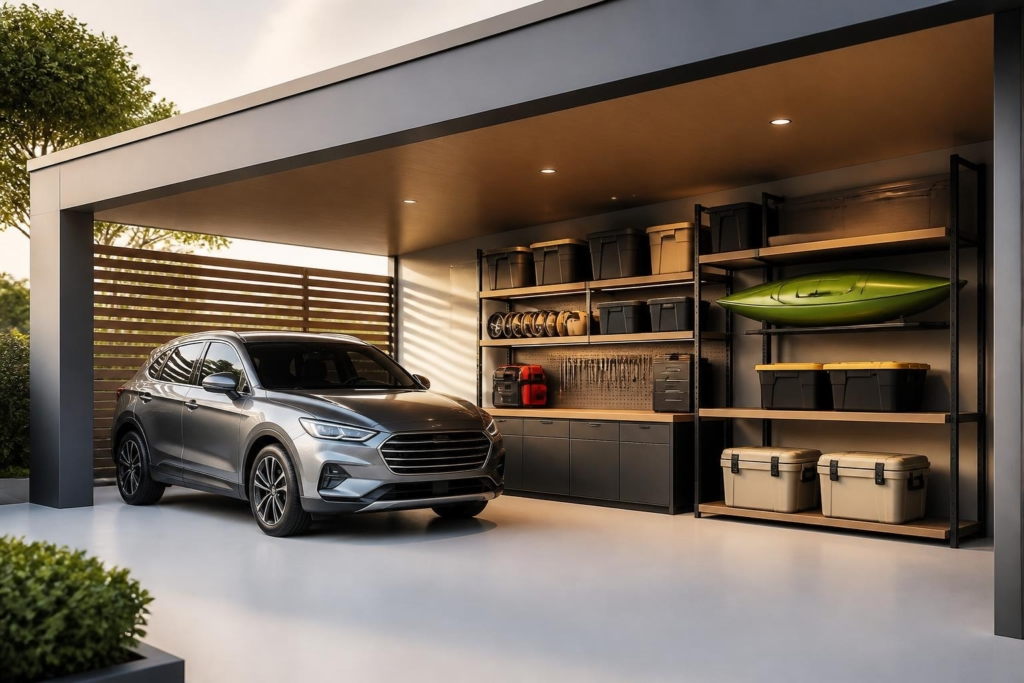
Traditional open carports can incorporate storage through thoughtful zoning. Designate specific areas along perimeter walls for shelving units, pegboard systems, and overhead racks. This approach maintains vehicle access while creating dedicated storage areas that keep items organized and protected from weather.
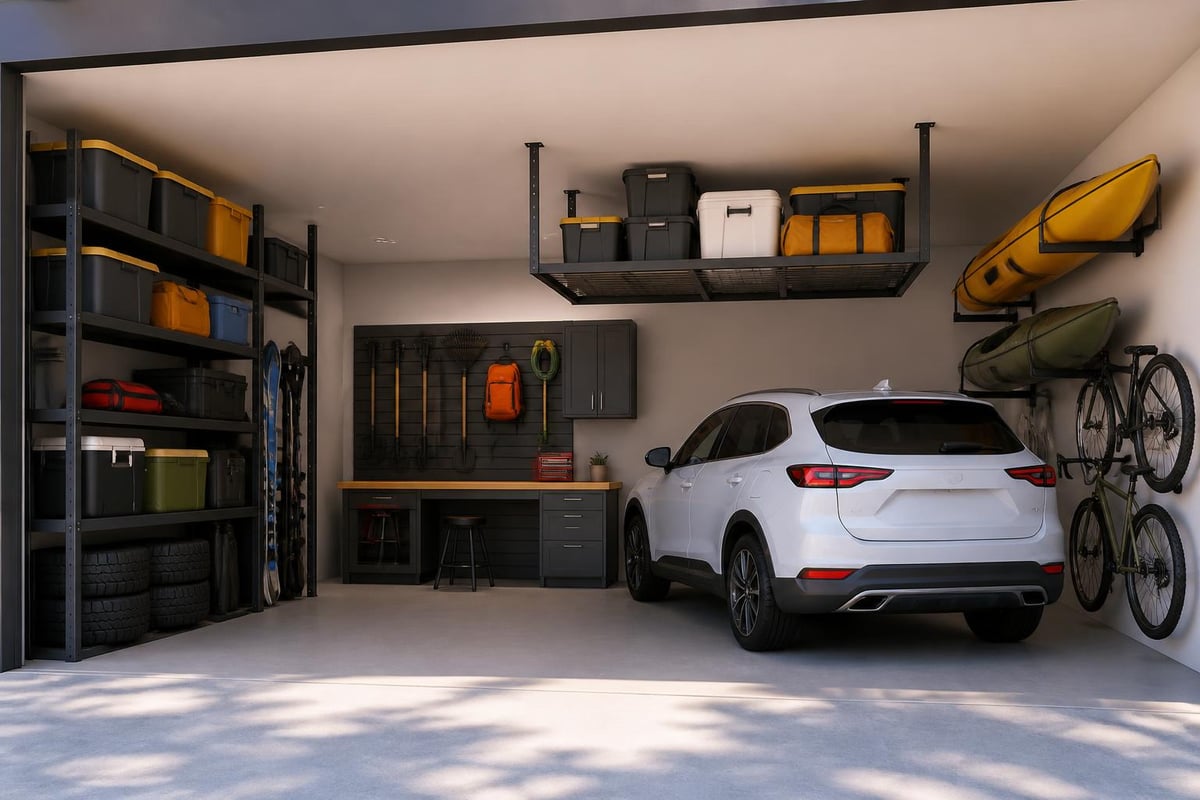
Wall-mounted storage solutions utilize vertical space efficiently. Heavy-duty shelving systems handle seasonal items, while pegboards organize tools and smaller equipment. Carport storage ideas range from simple hooks to sophisticated overhead systems that don't interfere with vehicle parking.
Partially Enclosed Structures
Adding walls to one or more sides transforms a basic carport into a more versatile space. Partial enclosure provides enhanced weather protection while maintaining easy vehicle access. This configuration works exceptionally well for creating a dedicated storage wall or workshop area adjacent to vehicle parking.
Back and side walls offer mounting surfaces for extensive storage systems without compromising the open-front accessibility that makes carports convenient. This middle-ground approach costs less than full enclosure while delivering significant functional benefits.
Fully Enclosed Combo Units
For maximum versatility and security, fully enclosed metal carports combine covered parking with completely secured storage rooms. These structures feature separate enclosed sections with doors, creating weatherproof storage that protects sensitive items from temperature fluctuations and moisture.
| Configuration Type | Vehicle Protection | Storage Security | Cost Range | Best For |
|---|---|---|---|---|
| Open with Zones | Good | Basic | $ | Budget-conscious, mild climates |
| Partially Enclosed | Very Good | Moderate | $$ | Mixed use, moderate climates |
| Fully Enclosed | Excellent | High | $$$ | Valuable storage, harsh weather |
| Combo Units | Excellent | Maximum | $$$$ | Complete solution, security priority |
Maximizing Storage Capacity Within Carport Spaces
Smart organization transforms a simple carport and storage area into a highly functional space that accommodates far more than initially expected. Strategic placement and the right storage systems make every square foot count.
Vertical Space Utilization
Most carport owners overlook the tremendous potential of vertical storage. Ceiling height in metal structures often ranges from 8 to 12 feet or higher, creating opportunities for overhead storage racks that hold seasonal items, camping gear, or infrequently used equipment.
Overhead systems should be rated for appropriate weight loads and installed according to manufacturer specifications. When maximizing storage in your carport, ensure structural components can support additional loads. Metal building frames typically accommodate storage additions, but proper attachment methods prevent damage and safety hazards.
Wall-mounted systems extend from floor to ceiling, utilizing space that would otherwise remain empty. Adjustable shelving adapts to changing storage needs over time. Heavy items belong on lower shelves, while lighter seasonal items occupy upper levels.
Modular Storage Systems
Flexibility matters when storage needs evolve. Modular systems reconfigure easily as requirements change. Freestanding metal shelving units move without wall damage, and stackable storage bins organize small items while remaining accessible.
Consider these modular components for carport and storage efficiency:
- Adjustable metal shelving units with 4-6 shelf levels
- Clear plastic storage bins for visibility and protection
- Mobile tool chests that relocate as needed
- Pegboard panels with movable hooks and holders
- Magnetic strips for metal tools and equipment
- Overhead ceiling racks with pulley systems for seasonal items
Creating Work Zones
Dedicated zones for specific activities improve organization and workflow. A workbench area handles maintenance tasks, while a separate zone stores lawn and garden equipment. Vehicle maintenance supplies deserve their own space near where you'll use them.
Proper lighting in each zone enhances functionality. LED fixtures provide bright, energy-efficient illumination for detail work. Motion-activated lights add convenience while reducing energy consumption. Electrical planning should occur during initial design phases to ensure adequate power distribution throughout your carport and storage facility.
Material Selection and Structural Considerations
The materials you choose directly impact longevity, maintenance requirements, and overall performance of your carport and storage solution. Metal structures offer distinct advantages for combined-use applications.
Metal vs. Traditional Materials
Metal construction delivers superior durability compared to wood or fabric alternatives. Steel frames resist rot, termites, and weather damage that plague wooden structures. Galvanized steel and powder-coated finishes provide decades of service with minimal maintenance requirements.
Metal Structure Advantages:
- Longevity: 20-30+ year lifespan with proper maintenance
- Weather Resistance: Withstands high winds, heavy snow loads, and intense sun
- Fire Resistance: Non-combustible materials reduce fire hazards
- Pest Immunity: No risk of termite or rodent damage to structural components
- Low Maintenance: No painting, staining, or sealing required
- Expandability: Easy to modify or expand as needs grow
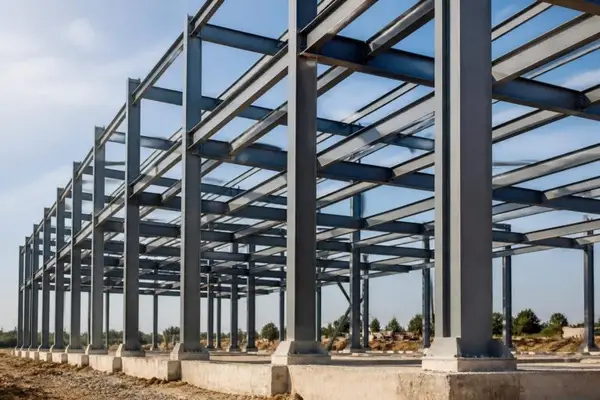
When exploring building with steel frame options, consider gauge thickness and frame spacing. Heavier gauge steel and closer frame spacing provide greater strength for regions with severe weather conditions or when planning extensive storage additions.
Roof Styles and Their Impact
Roof configuration affects both aesthetics and functionality. Three primary roof styles serve carport and storage applications, each with distinct characteristics:
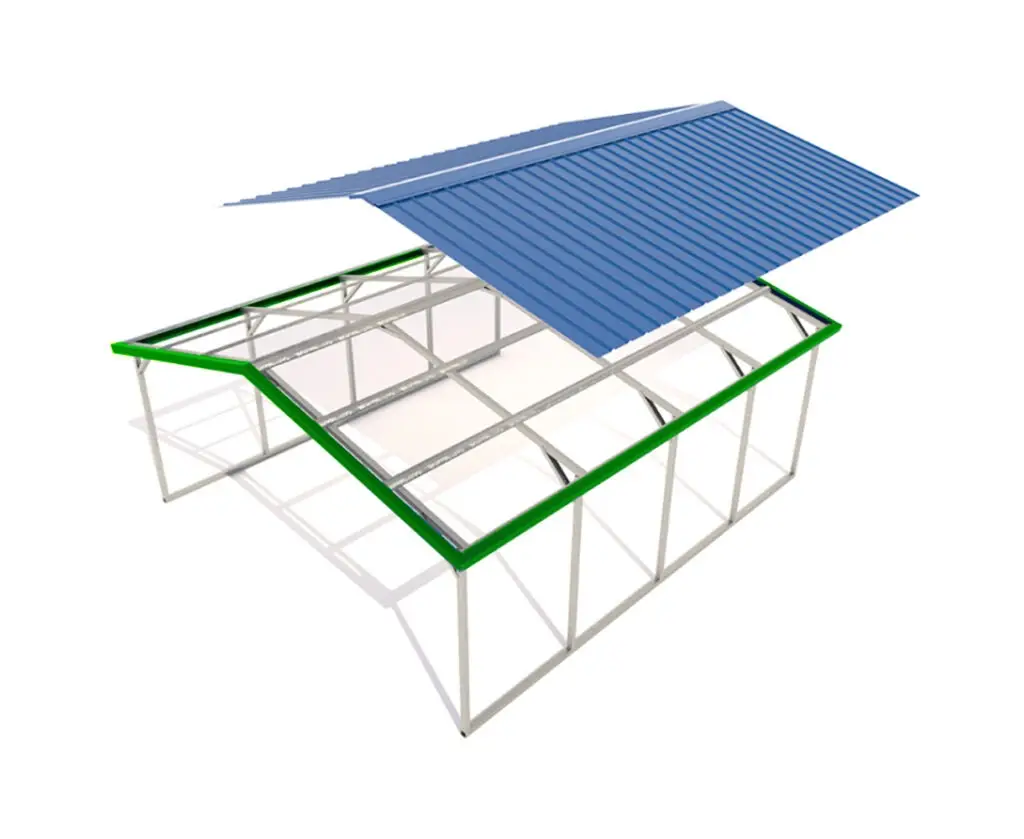
Regular Roof Style: Horizontal roof panels with rounded edges create a curved appearance. This economical option suits mild climates and provides adequate protection for basic storage needs.
Boxed-Eave Roof: Horizontal roof panels with A-frame style edges offer improved water drainage and a more finished appearance. This mid-range option balances cost with enhanced weather protection.
Vertical Roof: Roof panels run vertically from peak to eave, allowing rain and snow to shed quickly. This premium option delivers maximum strength and weather resistance, making it ideal for areas with heavy precipitation or when attaching extensive storage systems.
Foundation and Anchoring Systems
Proper anchoring ensures your carport and storage structure remains secure during severe weather. Foundation requirements vary based on soil conditions, local codes, and structure size. Options include:
- Concrete slab foundations for permanent installations
- Concrete pier systems for level sites with good drainage
- Ground anchors for temporary or portable structures
- Asphalt installations for existing paved areas
The anchoring system must distribute wind and snow loads evenly across the foundation. Metal structures typically include pre-engineered anchor points that align with foundation elements. Professional installation ensures proper alignment and load distribution, protecting your investment for decades.
Planning Your Custom Carport and Storage Solution
Successful projects begin with thorough planning that addresses immediate needs while anticipating future requirements. Custom design options allow you to create exactly what your property needs.
Sizing Considerations
Determining appropriate dimensions requires careful calculation. Start with minimum vehicle clearances and add storage zones. A single-car carport typically measures 12×20 feet, but adding storage increases these dimensions significantly.
For combined carport and storage functionality, consider these enhanced sizes:
- Single Vehicle + Storage: 14×24 feet minimum
- Two Vehicles + Storage: 20×24 feet minimum
- Three Vehicles + Storage: 30×24 feet minimum
- RV + Storage: 14×40 feet minimum (height varies by RV)
Planning your carport space includes accounting for clearance around vehicles. Allow 2-3 feet on sides for door opening and walking space. Height should exceed your tallest vehicle by at least 12 inches, with additional clearance for overhead storage systems.
Customization Options
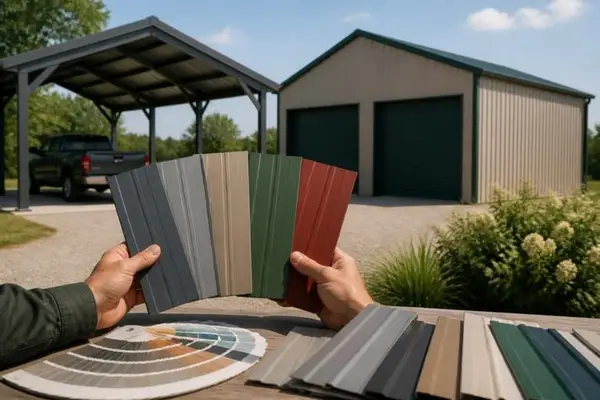
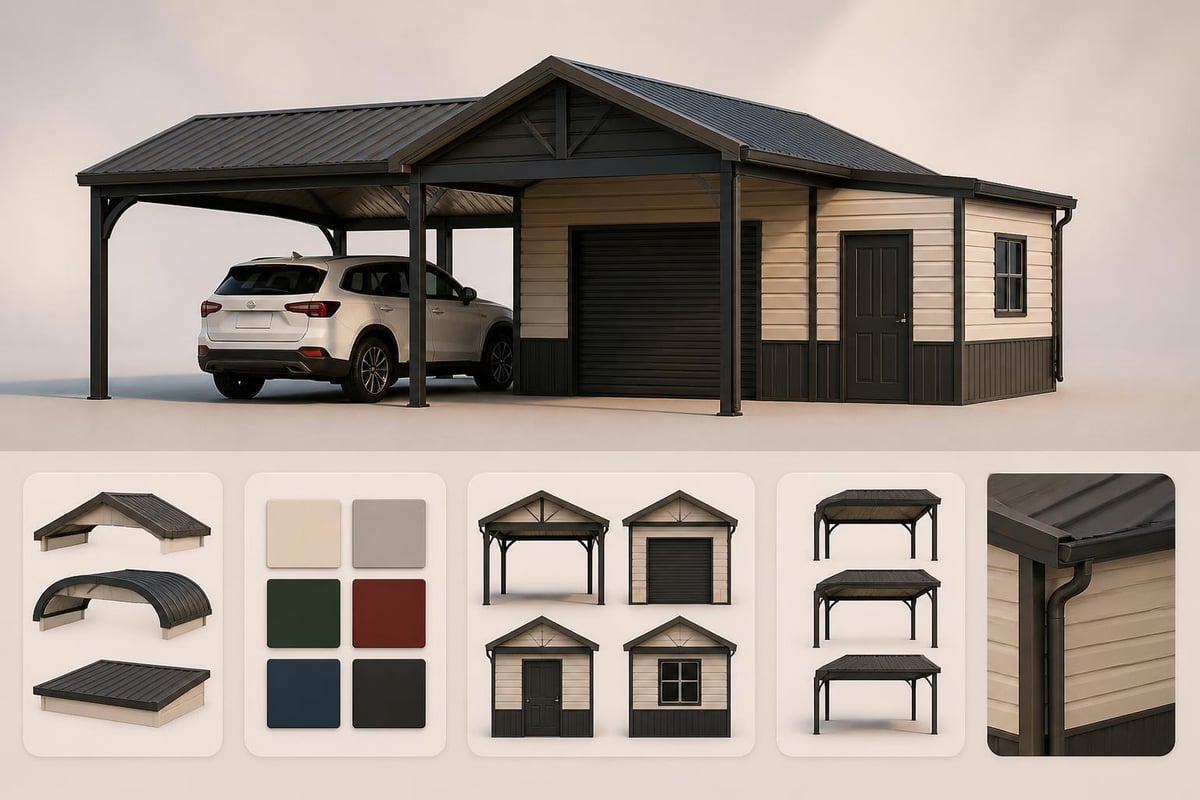
Modern metal structures offer extensive customization possibilities. Color selections match existing buildings or create visual interest. Optional features include:
- Additional leg height for taller vehicles or extra overhead storage
- Enclosed sides or ends for weather protection and security
- Windows for natural light in storage areas
- Walk-in doors and roll-up doors for convenient access
- Insulation packages for climate-controlled storage
- Gutters and downspouts for proper water management
When designing metal coverings for your property, consider how the structure integrates with existing buildings. Matching architectural elements creates visual cohesion. Designing a carport that complements your home's style enhances property value and curb appeal.
Regional Considerations
Climate and local building codes significantly influence design choices. Snow load ratings, wind resistance specifications, and seismic requirements vary by region. Structures must meet or exceed local standards to ensure safety and legal compliance.
Coastal areas require corrosion-resistant finishes to combat salt air exposure. Northern climates benefit from steeper roof pitches that shed snow effectively. Desert regions need UV-resistant coatings to prevent premature degradation. Working with suppliers familiar with regional service areas ensures your structure meets local requirements.
Installation and Professional vs. DIY Approaches
The complexity of carport and storage installation varies based on structure size, site conditions, and customization level. Understanding your options helps you make informed decisions about professional installation versus do-it-yourself approaches.
Professional Installation Benefits
Expert installation eliminates common pitfalls that compromise structural integrity. Professional crews bring specialized equipment, extensive experience, and comprehensive insurance coverage. They complete projects efficiently while ensuring compliance with building codes and manufacturer specifications.
Professional installers handle permitting processes, understand local regulations, and coordinate inspections. This knowledge proves invaluable in jurisdictions with strict building requirements. Installation typically includes site preparation, foundation work, frame assembly, panel installation, and final adjustments.
DIY Considerations
Experienced builders can tackle carport and storage projects independently, but realistic assessment of skills and available time prevents costly mistakes. Building a carport requires construction knowledge, proper tools, and adequate help.
DIY projects demand:
- Construction experience with metal or wood framing
- Specialized tools including drills, levels, and wrenches
- Multiple helpers for lifting and positioning large components
- Several full days dedicated to the project
- Understanding of local building codes and permit requirements
Even experienced builders often choose professional installation for larger structures or complex configurations. The modest additional cost delivers peace of mind and manufacturer warranty protection that DIY installations may void.
Maintenance and Long-Term Care
Proper maintenance extends the lifespan of your carport and storage structure while preserving its appearance and functionality. Metal buildings require less maintenance than wood alternatives, but regular attention prevents minor issues from becoming major problems.
Routine Inspection Schedule
Conduct thorough inspections twice annually, ideally in spring and fall. Check for:
- Loose or missing fasteners in frame connections
- Damage to roof panels or wall sheeting
- Debris accumulation in gutters and drainage systems
- Signs of water pooling around foundation areas
- Proper function of doors and access points
- Condition of anchors and tie-downs
Address issues immediately to prevent progressive damage. A loose screw tightened today prevents panel damage during tomorrow's windstorm. Cleaning debris from gutters maintains proper drainage that protects foundations and prevents water damage.
Protecting Stored Items
The environment inside your carport and storage area affects stored items differently than fully climate-controlled spaces. Temperature fluctuations and humidity levels vary based on enclosure level and local climate.
Storage Best Practices:
- Elevate items off ground level to prevent moisture contact
- Use sealed containers for items sensitive to humidity
- Maintain air circulation to prevent mold and mildew
- Apply rust-preventive coatings to tools and metal equipment
- Cover vehicles with breathable materials, not plastic tarps
- Rotate seasonal items to maintain accessibility
For temperature-sensitive storage needs, consider insulated carports that moderate interior temperatures and reduce condensation. Insulation packages significantly improve comfort for workshop activities and protect stored items from extreme temperature swings.
Seasonal Maintenance Tasks
Different seasons present specific maintenance opportunities. Spring cleaning removes winter accumulation and prepares the space for active-season use. Fall maintenance protects against winter weather challenges.
Spring Tasks: Wash panels to remove winter grime, inspect for damage from ice or snow, check drainage systems, organize storage areas, and refresh work zones.
Fall Tasks: Clear leaves and debris from roof and gutters, secure loose items before winter storms, inspect weatherstripping around doors, verify anchor tightness, and prepare snow removal equipment.
Regular maintenance takes minimal time but dramatically extends structure life. Metal buildings properly maintained routinely exceed 30-year lifespans while maintaining structural integrity and appearance.
Cost Factors and Budget Planning
Understanding the financial aspects of carport and storage projects helps you make informed decisions that align with your budget while meeting functional requirements. Multiple factors influence total investment.
Initial Investment Components
Project costs break down into several categories. Structure purchase price represents the largest single expense, but site preparation, delivery, installation, and permits add to total investment.
| Cost Component | Typical Range | Factors Affecting Cost |
|---|---|---|
| Structure (materials) | $2,000-$15,000+ | Size, style, customization |
| Site Preparation | $500-$3,000 | Grading, drainage, foundation |
| Delivery | $0-$500 | Distance, accessibility |
| Installation | $500-$5,000 | Complexity, labor rates |
| Permits & Fees | $100-$1,000 | Local regulations |
| Customization | $500-$5,000+ | Doors, windows, insulation |
Size dramatically impacts cost. A basic 12×20 single-car carport costs substantially less than a 30×40 combination structure with enclosed storage. Roof style affects pricing, with vertical roof systems commanding premium prices due to superior performance and material requirements.
Value-Added Features Worth Considering
Certain upgrades deliver returns that justify their initial cost. Enclosed storage sections protect valuable equipment and tools from theft and weather damage. Additional height accommodates taller vehicles or overhead storage systems without future modification costs.
High-Value Upgrades:
- Vertical roof design for longevity and weather resistance
- Concrete foundation for stability and permanence
- Gutters and downspouts for proper water management
- LED lighting systems for safety and functionality
- Additional height for storage flexibility
- Quality door systems for security and convenience
Budget-conscious buyers often choose basic configurations initially, adding features over time as needs evolve and finances permit. Metal structures accommodate additions more easily than other materials, making phased implementation practical.
Long-Term Return on Investment
Carport and storage structures provide tangible and intangible returns. Vehicle protection extends automotive life by shielding paint, interiors, and mechanical components from weather damage. Organized storage reduces replacement costs for damaged or lost items.
Property value increases when well-designed structures complement existing improvements. Potential buyers recognize the utility of quality storage solutions, particularly in regions where garage space commands premium prices. Additionally, insurance premiums may decrease when vehicles receive covered protection instead of outdoor parking exposure.
Enhancing Functionality with Strategic Additions
Once your basic carport and storage structure is in place, strategic additions can significantly boost its utility and convenience. These enhancements transform a simple shelter into a comprehensive solution for vehicle protection, storage, and even workspace needs.
Electrical and Lighting Upgrades
Adequate electrical service opens numerous possibilities. Standard electrical packages include dedicated circuits, outlets positioned for tool use and vehicle maintenance, and comprehensive lighting throughout the structure. LED fixtures provide bright illumination while consuming minimal energy.
Consider installing:
- Task lighting over workbench areas for detailed projects
- Motion-activated lights for hands-free convenience
- Outdoor-rated outlets for power tools and equipment
- Dedicated circuits for vehicle charging stations
- Emergency backup lighting for power outages
Electrical work should always comply with local codes and typically requires licensed contractor services. Planning electrical needs during initial design proves more cost-effective than retrofitting later.
Climate Control Options
While many carport and storage applications function well without climate control, some situations benefit from temperature regulation. Ceiling fans improve air circulation during hot months, reducing heat buildup that accelerates vehicle interior degradation and makes workspace areas uncomfortable.
Insulation packages moderate temperature extremes, protecting temperature-sensitive stored items and improving comfort for workshop activities. When combined with ventilation systems, insulated structures maintain more stable interior environments year-round.
Security Enhancements
Open carports deter casual theft through visibility but offer limited security for valuable items. Strategic security additions protect investments without completely enclosing the structure:
- Motion-activated lighting illuminates the area when movement occurs
- Security cameras monitor activity and provide evidence if incidents occur
- Lockable storage cabinets secure valuable tools and equipment
- Partial walls create barriers while maintaining ventilation
- Roll-up doors secure open ends during extended absences
For maximum security, fully enclosed sections with quality locks protect high-value items. Creating enclosed storage within larger carport structures combines open vehicle access with secure storage in a single integrated solution.
Effective carport and storage planning balances immediate needs with future flexibility, creating functional spaces that protect vehicles while organizing equipment and supplies efficiently. By carefully considering size requirements, structural options, and strategic enhancements, you can develop a solution that serves your property for decades to come. Metal Structure Sales LLC specializes in customizable metal carports and storage buildings designed to meet your specific requirements, with delivery and professional installation included to ensure your investment delivers lasting value and performance.